
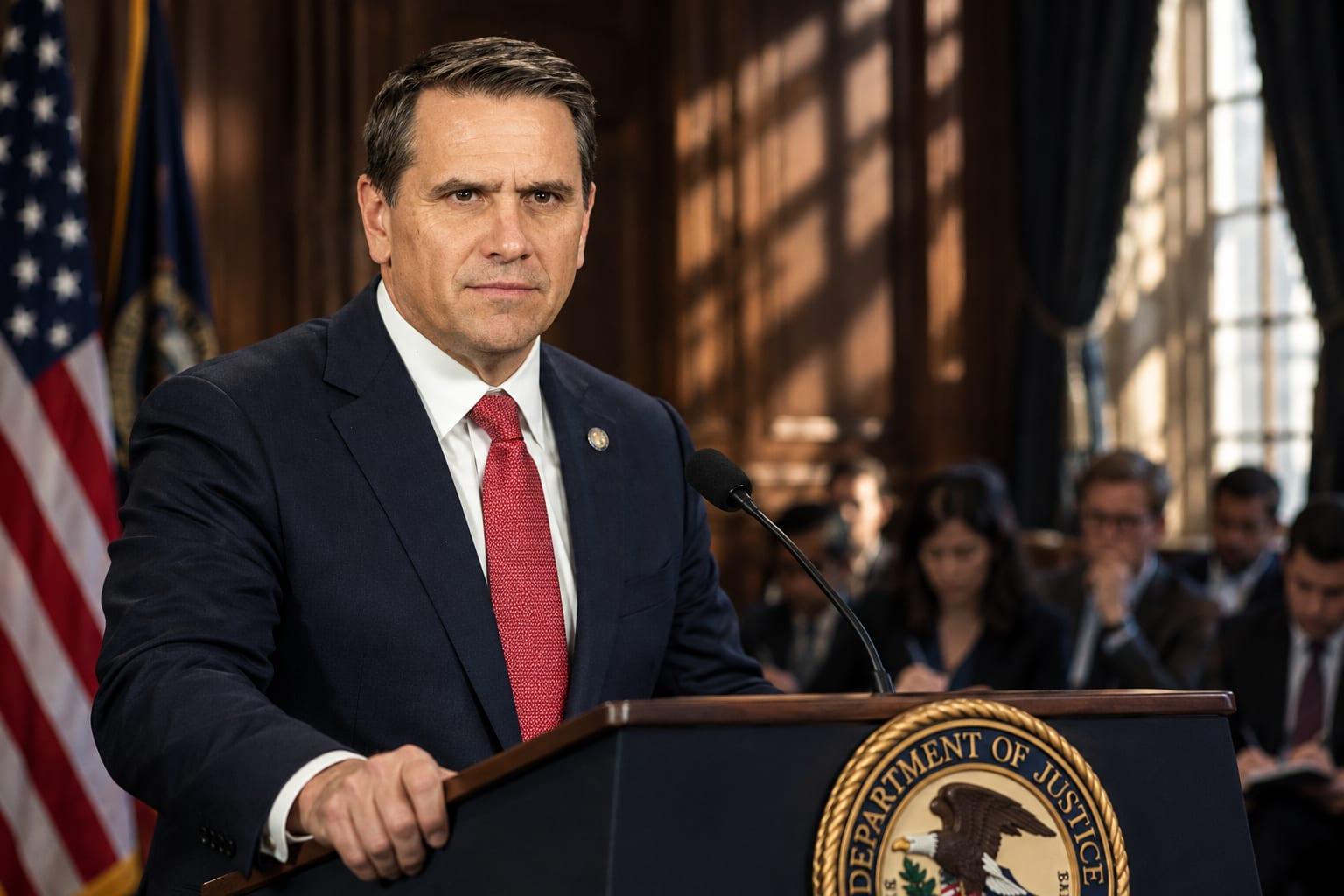
Attorney General Todd Blanche went on national television Sunday morning and refused to back down from the White House's fight with the legacy media, telling ABC's Martha Raddatz that access to the president is a privilege — not a constitutional guarantee — and that slanted reporting creates real national security risks.
"Well, the president hasn't denied access, that's not the right way to describe it," Blanche said on This Week, pushing back on the framing that the administration is censoring the press.
BLANCHE: "It is a privilege, not a right."
The dispute escalated after the White House pulled credentials from CNN, MSNOW, and Politico beginning September 19. The president, according to Blanche, was "sick and tired" of what he described as inaccurate coverage from those outlets, as reported by The Guardian.
When Raddatz pressed Blanche to cite a specific story the administration objected to, he did not name one. Instead, he argued that negative coverage of the president is inherently suspect — a position that drew immediate backlash from press freedom advocates but which the AG did not soften.
The Fire It Started
The White House Correspondents' Association and major networks initially stood in solidarity with the banned outlets, briefly refusing to provide pool TV feeds of the president. That solidarity cracked. On Saturday, CNN said its journalists were again blocked from joining the press pool traveling with Trump on Air Force One to the Texas-Tennessee football game, according to reporting from the Washington Examiner and The Guardian.
A federal judge had issued a temporary restraining order on Thursday requiring the White House to restore credentials, and the journalists were briefly allowed back in. Within 48 hours, CNN was frozen out again.
Blanche argued the Air Force One exclusion was routine. "The White House routinely decides who can go on Air Force One," he said. "This wasn't a one-time denial of CNN. There's all kinds of times when certain reporters are not flying or are flying."
What Blanche did not address, as The Guardian noted, is that before Trump's second term, the White House Correspondents' Association and rotating broadcast networks handled pool assignments — not the West Wing. Since January 2025, the White House has controlled who gets Oval Office and Air Force One access, opening doors to outlets more favorable to the administration.
A National Security Argument
CNN reported that Blanche characterized "one-sided news" as a national security concern worthy of barring outlets from the grounds. The AG did not offer a specific example of reporting that endangered national security, and Raddatz noted that Trump himself had previously said he banned the outlets.
The White House has not released a written policy explaining the credentialing criteria. It is not clear what standard an outlet must meet to regain access, or whether the bans are temporary or open-ended.
MSNOW and Politico did not immediately comment publicly on Blanche's Sunday remarks. CNN's press team has pointed to the restraining order and its continued exclusion from Saturday's pool.
What This Means for You
The practical effect is simple: when the president travels, sits for interviews, or takes questions, the American people are seeing and hearing him through a narrower set of outlets than at any point in modern history. If the White House decides your preferred newsroom is on the wrong side of the line, you may not see that outlet's camera or correspondent in the room at all.
The legal fight is not over. The temporary restraining order remains in effect, and the underlying case is still moving through the courts.
Our Take
Let's cut through the theater. The legacy media spent years telling you that Donald Trump was a threat to democracy, that his supporters were domestic terrorists, and that any story damaging to the Left was "misinformation." Now they want to cry about a credential. The same CNN that ran wall-to-wall Russia collusion coverage for four years — coverage that collapsed under scrutiny — is suddenly the guardian of the First Amendment?
Blanche is right about one thing: access to the president has never been a right. It's a professional courtesy extended by the people's house to people who cover it. When that courtesy is abused, it can be revoked.
But here's where conservatives should be clear-eyed. A national security justification for banning reporters demands evidence. "One-sided coverage" is not a security threat — it's a bias problem. If the administration has proof that an outlet published something that genuinely endangered operations or personnel, show it. Otherwise, the White House should make the case on the merits: these outlets lied, they colluded, and they lost the trust that once came with the press badge.
The president won in 2024 because Americans were done with the media deciding what they were allowed to know. That mandate didn't come with a requirement to replace one gatekeeper with another.
