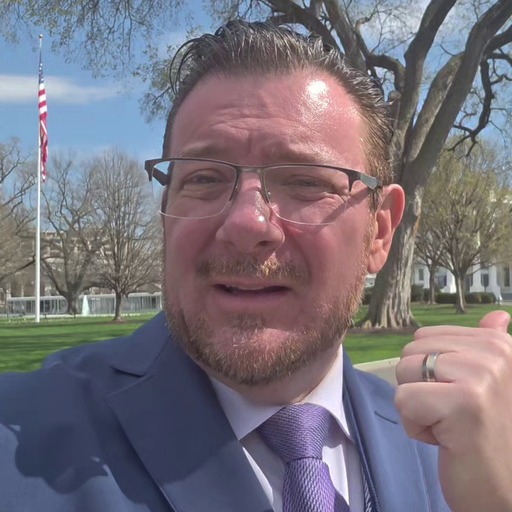
Lebanese MP and prime ministerial candidate Fouad Makhzoumi publicly tore into Hezbollah Secretary-General Naim Qassem on Sunday, accusing the Iran-backed militia's leader of a delusional pretense of representing Lebanon and its people. The rebuke from a sitting member of parliament and a candidate for the premiership marked one of the sharpest direct challenges to Hezbollah's political legitimacy to emerge from Lebanon's own elected class since the group's war with Israel.
Makhzoumi's remarks were carried on X by the account @MarioNawfal, @MarioNawfal posted that the MP "absolutely obliterates Hezbollah leader, Qassem, calling him out for the delusional pretence of representing Lebanon," and that "the majority of Lebanese have clearly had enough of forever wars and Hezbollah's usurping of the State and Lebanese." The post from @MarioNawfal, which aggregates and amplifies geopolitical content for a large following, is not a news report and its characterization reflects the account's framing, not a verified transcript of Makhzoumi's full remarks. Makhzoumi, a Beirut lawmaker and businessman who has positioned himself as a candidate to lead a future government, has not issued a formal press release of the exchange through official channels.
The clash did not happen in a vacuum. Qassem had spent the preceding days delivering defiant addresses marking two years since the killing of his predecessor, Hassan Nasrallah, in an Israeli strike. According to Asharq Al-Awsat, Qassem said Israel failed to break the group, and noted that implementation of Lebanon-Israel agreements on disarmament and troop withdrawal has largely stalled. At a separate event, chants of "Death to Israel" accompanied the Hezbollah commemoration, and Qassem vowed the group would continue its armed resistance, claiming that "Lebanon without resistance will be erased" and accusing the country's own leadership of surrendering to Israel. He called for an end to direct negotiations with the Jewish state.
In comments carried by Iran's Mehr News Agency, Qassem went further, saying that "Iran will prove to the world that it protected this world from falling, in the interests of the forces of resistance and humanity." The statement framed Tehran, not Beirut, as the guarantor of regional stability and tied Hezbollah's mission directly to the Iranian project.
That framing is exactly what Makhzoumi and a growing bloc of Lebanese politicians appear to be rejecting. For years, critics of Hezbollah within Lebanon have argued that the group's independent arsenal and its alignment with Tehran constitute a state within a state, one that drags the country into wars its people did not choose. The two-year mark since Nasrallah's death has revived that argument with new force, as Lebanon remains mired in a stalled implementation of agreements meant to disarm the group and withdraw forces from the south.
The account @MarioNawfal amplified Makhzoumi's rebuke to an English-speaking audience that extends well beyond Lebanon, and the reaction rippled outward from there. Channels carrying the same clip and the same framing included accounts focused on Middle East security and diaspora Lebanese viewers, many of whom have watched the country's economy collapse and its political class deadlock while Hezbollah's weapons remain outside state control. The precise number of users reached through these shares has not been disclosed, and Next News Network is not reporting engagement figures.
What is clear is the sequence: Qassem delivered a defiant speech claiming Israel had failed and that Lebanon without resistance would be erased, invoking Iran as the world's protector. Makhzoumi, a sitting MP and premier candidate, answered directly, casting Qassem as a delusional figure pretending to speak for a nation that has had enough. The exchange then traveled through @MarioNawfal and other accounts, turning a Lebanese internal dispute into an item of international conservative and Middle East commentary.
The context matters for American readers. Hezbollah is a designated foreign terrorist organization by the United States, and its patron, Iran, remains the subject of maximum-pressure sanctions and ongoing debate in Washington over the scope of any nuclear negotiations. A Lebanese lawmaker publicly calling out Hezbollah's leader for usurping the state is precisely the kind of internal Lebanese pushback that U.S. officials have said they want to encourage. Whether Makhzoumi's intervention represents a broader shift in Lebanese politics or a single lawmaker's frustration is not yet known.
It is also not yet known whether Qassem or Hezbollah will respond to Makhzoumi by name. Hezbollah has historically dismissed internal critics as tools of foreign powers, though no such response has been issued at the time of this report.
Next News Network could not independently verify the full content or context of Makhzoumi's remarks as characterized in the @MarioNawfal post, including whether the statement was delivered in a formal session, an interview, or another setting.
What remains undisputed is that Qassem used the Nasrallah commemoration to reaffirm armed resistance and to accuse Lebanon's leadership of capitulation, and that his comments about stalled disarmament and withdrawal agreements came as those agreements remain largely unimplemented. Into that gap stepped Makhzoumi, whose language was notably blunt: Hezbollah's leader, he argued, does not represent Lebanon, and the majority of the country is done with the forever wars that Hezbollah's independent arsenal has invited.
The story is still developing, and further statements from both Lebanese officials and Hezbollah's media apparatus are expected in the coming days.
Our Take
For years, American conservatives have argued that the only durable solution to Middle East instability is for the region's own people to reject the forces that use them as human shields. What Makhzoumi said this weekend, if it reflects a real shift among Lebanon's elected class, is exactly that rejection. Qassem stood before a crowd chanting "Death to Israel" and declared that Lebanon without Hezbollah's guns would be erased. Meanwhile, the Lebanese state remains hollowed out, its currency destroyed, its southern villages subject to stalled withdrawal agreements, and its citizens still waiting for a government that answers to them rather than to a foreign power. Makhzoumi's words matter because they suggest that patience inside Lebanon has run out, or is close to it. The question for Washington is whether the United States will recognize and support the Lebanese voices demanding a real state, or whether it will keep treating the region's problems as a bargaining chip in nuclear talks with the very regime that arms and funds Hezbollah. The answer should be obvious. You cannot negotiate with Tehran over the fate of Lebanon while Lebanon's own MPs are telling you the problem is Hezbollah's weapons and Iran's influence. Makhzoumi is not a fringe figure; he is a sitting lawmaker and a candidate for premier. When candidates for the highest office in Beirut talk about Hezbollah this way, that is progress. It should be encouraged, not ignored.