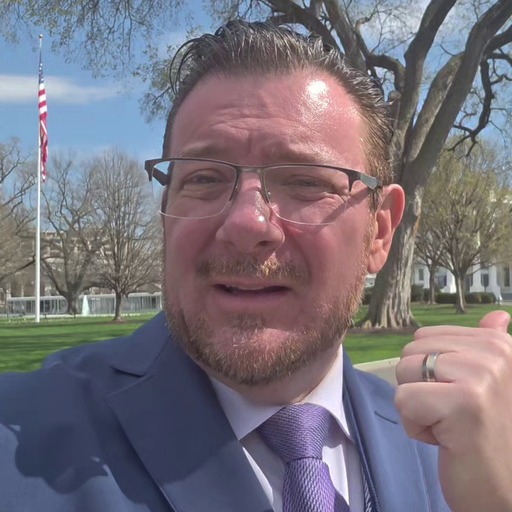
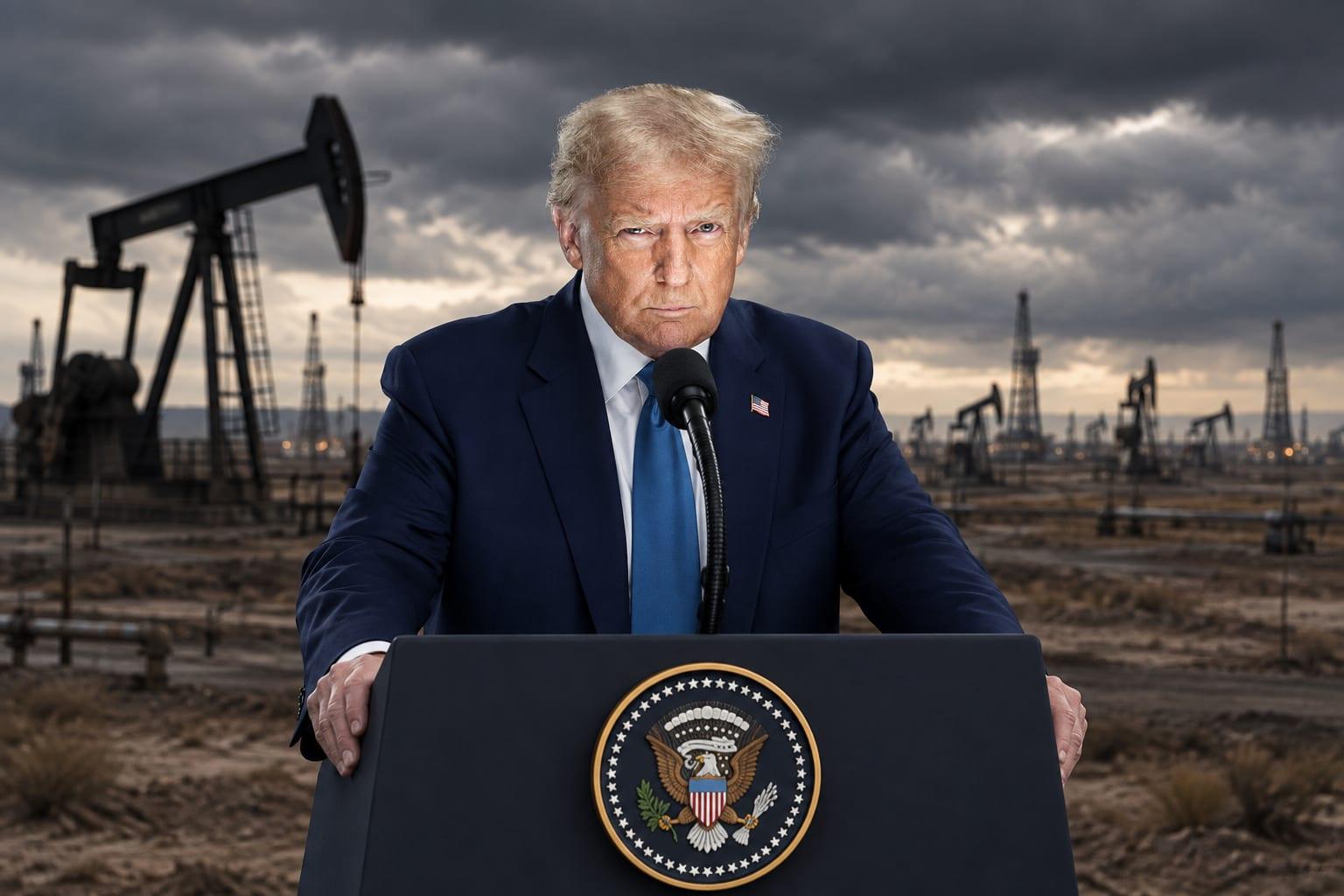
President Trump said oil is the only price still giving Americans trouble, telling an audience that every other cost is falling and that Iran no longer poses a nuclear threat because it has been "wiped out."
The remarks, circulated in video posted to X by the accounts @MarioNawfal and @Acyn, came with thirty-six days left before the midterm elections. "With the exception of oil, which is lower than the Biden administration, and we no longer have to worry about nuclear weapons with Iran because they're wiped out, everything is going down," Trump said. "We have it going down. We inherited the worst inflation in the history of our country, and it's going really down."
Trump told the crowd, which he described as farmers, that retirement accounts and equity markets sit at all-time highs and that the country "is doing really well." He closed by taking a question about Ontario's warnings on artificial intelligence, which he did not answer in the clip.
The comments landed in a market already under strain. The account @FirstSquawk reported that global markets opened the week under pressure after Trump rejected Iran's latest proposal to reopen the Strait of Hormuz, lifting Brent crude to around one hundred five dollars and seventy cents a barrel and West Texas Intermediate to about ninety-three dollars and twenty-six cents. Rising oil prices, the account said, are fueling inflation concerns and pushing the ten-year Treasury yield higher.
The same account reported that markets also reacted to Trump's comments that he expects Iran negotiations to resume this week despite rejecting Tehran's offer, and that he is "very seriously" considering a ban on U.S. diesel exports, a move that could tighten global fuel supplies. The dollar strengthened and equities weakened on the session.
Trump's characterization of oil as a problem he inherited rather than one produced by current policy sits uneasily beside the price moves traders described. With Brent above one hundred dollars and WTI in the nineties, drivers are paying more at the pump now than they were at points earlier in the year, and the diesel export ban under consideration would cut into global supply at a moment when inventories are already thin. One critic of the administration's energy posture, the outlet Global Research, framed the moment as an "oil conundrum built by Trump," tying rising prices, U.S. production levels and refinery closures to tariffs and Iran policy.
Trump's claim that Iran's nuclear weapons threat is "wiped out" is not independently confirmed. No document, inspection report or official statement produced by the administration was included in the material circulating on social media, and international inspectors have not issued any public finding matching that description. The claim instead functions as a political assertion delivered at a rally, and it is being repeated and challenged in the same breath by commentators across the right.
That fight spilled out publicly Sunday night when the account @RealAlexJones posted a video of a Fox survey discussion featuring Mark Levin and Ben Shapiro, in which the two commentators argued that Iran is a four percent issue with the American people and will not drive midterm outcomes either way. "When we look at the Fox survey, Iran is a four percent issue with the American people, so whatever happens in the midterms, it doesn't appear that Iran's going to drive anything one way or another," the clip states. Levin responds that he thinks "that's exactly right."
The host responds sharply, calling the survey framing an act and accusing the commentators of concealing private alarm. "They're not concerned. That's an act. They are terrified. They know how unpopular this is with everybody," he says. "Every side of the political spectrum is against this, and they know they're in a very unique position as just an extreme minority of people with this political opinion. That would be Christian Zionists and then, of course, the Jewish Zionists that control them."
From there the commentary widens into a broad attack on bond markets and federal borrowing. "Lenders don't trust the United States anymore," the host says. "All over the world, lenders are demanding higher interest rates. It means more expensive money. The global bond market is extracting higher yields from every borrower, starting with the biggest borrowers of all, national governments, but not every government is paying equally." He argues the United States has fallen from the top tier of creditworthiness, that the country's rating has been downgraded from AAA, and that buying back its own bonds and carrying forty trillion dollars in debt amount to "banana republic territory." The host also alleges that the largest driver of the debt is entitlements, with the costs of wars "rapidly catching up."
He then turns his attention to the two commentators personally, asking how figures he describes as longtime critics of Trump came to hold influence over his political movement. "They've hated Trump for years," he says. "And now they know everything about the political movement that they fought against for a decade. They know how to manage it. They know how to run it. They know how to control it." The monologue closes with an accusation that they intend to "bring America down for like some two thousand year old blood debt," and a promotional tag for a headlamp sold by the outlet.
The clip drew the attention of a third account, @infowars, which promoted a separate broadcast featuring former Green Beret Matt Murphy for a segment billed as a deep dive into ISIS, covert military operations, alleged false flags and "the growing Iran War." That post, like the others, frames the Iran question as an open one with stakes beyond the ballot box.
The split among these voices is instructive. One camp, represented by Levin and Shapiro in the Fox segment, casts Iran as a low-salience issue that will not move voters. Another, represented by the commentary on the Jones broadcast, argues the opposite and accuses the first camp of running a deliberate effort to suppress the issue. Trump's own remarks, meanwhile, offer a third position: that the Iran file has been fully closed, no longer a threat and no longer politically live, even as his own statements about resuming negotiations suggest the opposite.
What ties the day's separate threads together is oil. Trump told farmers it is the only price still troubling Americans. Traders quoted by @FirstSquawk described markets reacting to his Iran rejection and to the possibility of a diesel export ban. The Global Research framing points to refinery closures and energy policy rather than foreign adversaries. Every account, in other words, is reacting to the same set of claims about prices and about Iran, and none of them agrees on what it means.
Next News Network could not independently verify the claims about Iran's nuclear program, the state of negotiations, or the specific market figures circulating on social media. What is documented is what was said, by whom, and how quickly the argument spread across these accounts.
Our Take
There is a version of this story where a president simply reports good news and moves on. This is not that version. Trump told a room full of farmers that oil is the only hard cost left in the economy, and within hours the price of Brent was over a hundred and five and his own account of Iran was being picked apart by allies, not enemies.
The tell is in the contradiction. You cannot claim a nuclear threat is wiped out and simultaneously announce that negotiations resume this week and that you are seriously weighing a diesel export ban, which only makes sense if global fuel markets are still tight and unstable. Either Iran is settled or it is not. Either oil is a minor residual problem or it is the one price index still punishing working families. The White House cannot have both lines in the same week.
The second tell is the fight on the right. When Ben Shapiro and Mark Levin tell you Iran is a four percent issue you should read that as a confession, not a data point. Why is a four percent issue getting this much airtime on the flagship networks if it does not matter? The energy markets are telling a different story than the cable panels, and the diesel ban floated to reporters is the clearest admission yet that someone in the administration knows it.
Midterms get decided by grocery bills and gas prices, not by ideology. If oil is the one price Trump admits is still hurting Americans, then oil is the entire midterm conversation, no matter how many commentators insist otherwise.