
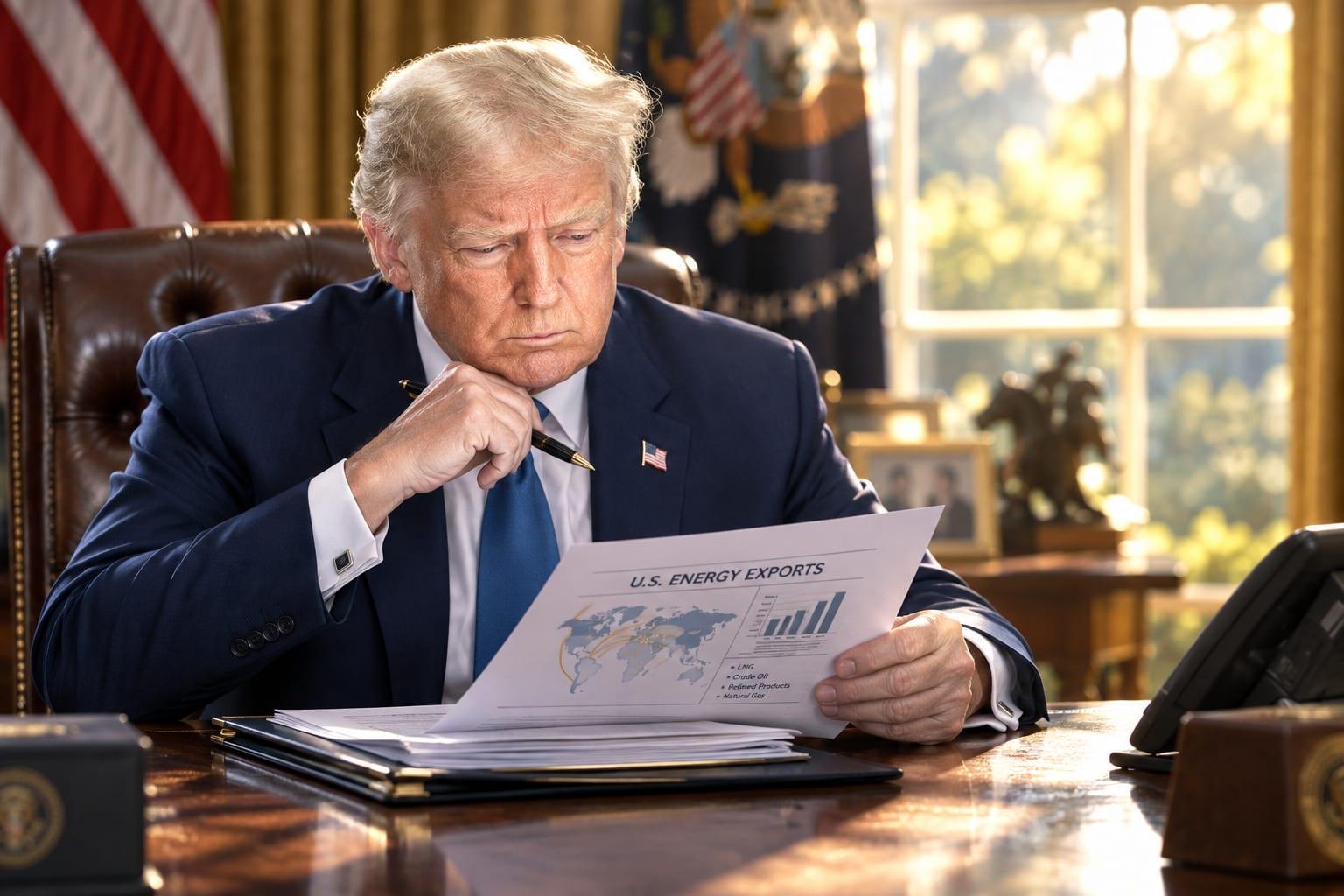
President Donald Trump said Sunday he is considering a diesel export ban "very seriously" and that Washington may impose one, acknowledging the move could cause a small rise in gasoline prices, according to the market headline service @FirstSquawk. The same account reported that the administration is weighing a 90-day diesel export ban or more limited voluntary restrictions amid high domestic fuel prices.
The signals drew a swift response from across the Atlantic: @FirstSquawk reported that French President Emmanuel Macron has warned Trump against such measures. Global markets opened the week under pressure, with Brent crude trading around $105.70 and West Texas Intermediate around $93.26, and rising oil prices feeding inflation concerns and pushing the 10-year U.S. Treasury yield higher.
Both threads — the diesel threat and the Iran standoff — landed in the same market session. According to @FirstSquawk, markets also reacted to Trump's comments that he expects Iran negotiations to resume this week despite his rejection of Tehran's latest offer. The account noted the combination of a stronger dollar and weaker conditions in broader markets as traders weighed the possibility of tighter global fuel supplies.
The sequence matters. Late Sunday, @FirstSquawk reported that the U.S. is considering a 90-day diesel export ban or voluntary restrictions, with Macron already warning against the step. Minutes later, the same account reported Trump saying he was considering the ban "very seriously." Then markets opened, trading on both the diesel signal and the collapse of the Iran proposal. By just after midnight, @FirstSquawk was reporting the broader market reaction: oil climbing and Treasuries selling off.
The Iran side of the story is as consequential as the diesel one. According to @FirstSquawk, Trump rejected Iran's latest proposal to reopen the Strait of Hormuz, the chokepoint through which a substantial share of the world's seaborne oil passes. Iranian officials said they are awaiting a definitive U.S. response to a seven-day proposal for reopening the strait but will not soften their conditions, according to Bloomberg.
Other outlets reported that Qatar is conducting shuttle diplomacy between Washington and Tehran. Iran International reported that Trump told Axios he expects further talks with Iran this week, despite rejecting Tehran's proposal, and that regional sources said another round of indirect negotiations could take place as early as Monday with Qatar continuing to mediate. UN Ambassador Mike Waltz said Iran was not negotiating "in good faith" to end the war and that Trump rejected the proposal because the Iranians "were asking for everything up front," according to The Guardian.
Trump's comments came weeks before the 2026 midterms, according to reporting on the negotiations.
The diesel question is not isolated. The Bank of Japan released minutes showing members concurred that foreign-exchange volatility now affects the economy and prices more than before, as firms increase pass-through of rising import costs. One member noted rising upside price risks as a weak yen and Middle East events could boost inflation — a reminder that a U.S. export ban and a Hormuz standoff would both hit global fuel markets at the same moment.
The central tension in Washington's position is that a diesel export ban is meant to relieve domestic fuel prices but would tighten global supplies and could raise gasoline prices at home, as Trump himself acknowledged. Macron's warning reflects European concerns about supply security and price shocks if the U.S. — a major diesel exporter — restricts flows. The market reaction suggests traders are pricing in exactly that risk: Brent at $105.70 and WTI at $93.26, with the 10-year Treasury yield climbing as inflation concerns firmed.
Next News Network could not independently verify the claims reported by @FirstSquawk or the other outlets cited above.
It is not yet known whether the administration will proceed with a 90-day ban, voluntary restrictions, or neither. It is also not yet known what terms, if any, Iran would accept for reopening the Strait of Hormuz, or whether the indirect talks expected this week will convene. The White House has not confirmed the timing or format of any negotiation, and the Iranian government has not publicly softened its stated conditions.
Our Take
Trump is doing what he does best: keeping multiple pressure points live at once. The diesel export ban floated "very seriously" on Sunday, the Iran rejection, the expectation of talks this week — none of it is accidental. Each element signals to different audiences that Washington is willing to use economic tools and military leverage simultaneously, and the markets are treating the combination as a genuine supply risk. That is the point.
But the diesel threat deserves particular scrutiny from conservatives who care about energy dominance. Banning exports to lower domestic prices is a short-term patch that invites long-term damage: it undermines the U.S. reputation as a reliable supplier, hands market share to competitors, and — as Trump himself conceded — could still raise gasoline prices. The better answer is production, not restrictions. The same goes for Iran. Rejecting a bad deal is right, but the test is whether the administration can convert rejection into leverage rather than drift. If talks resume this week, Americans should demand clarity on what the U.S. is offering and what it will not accept.
