
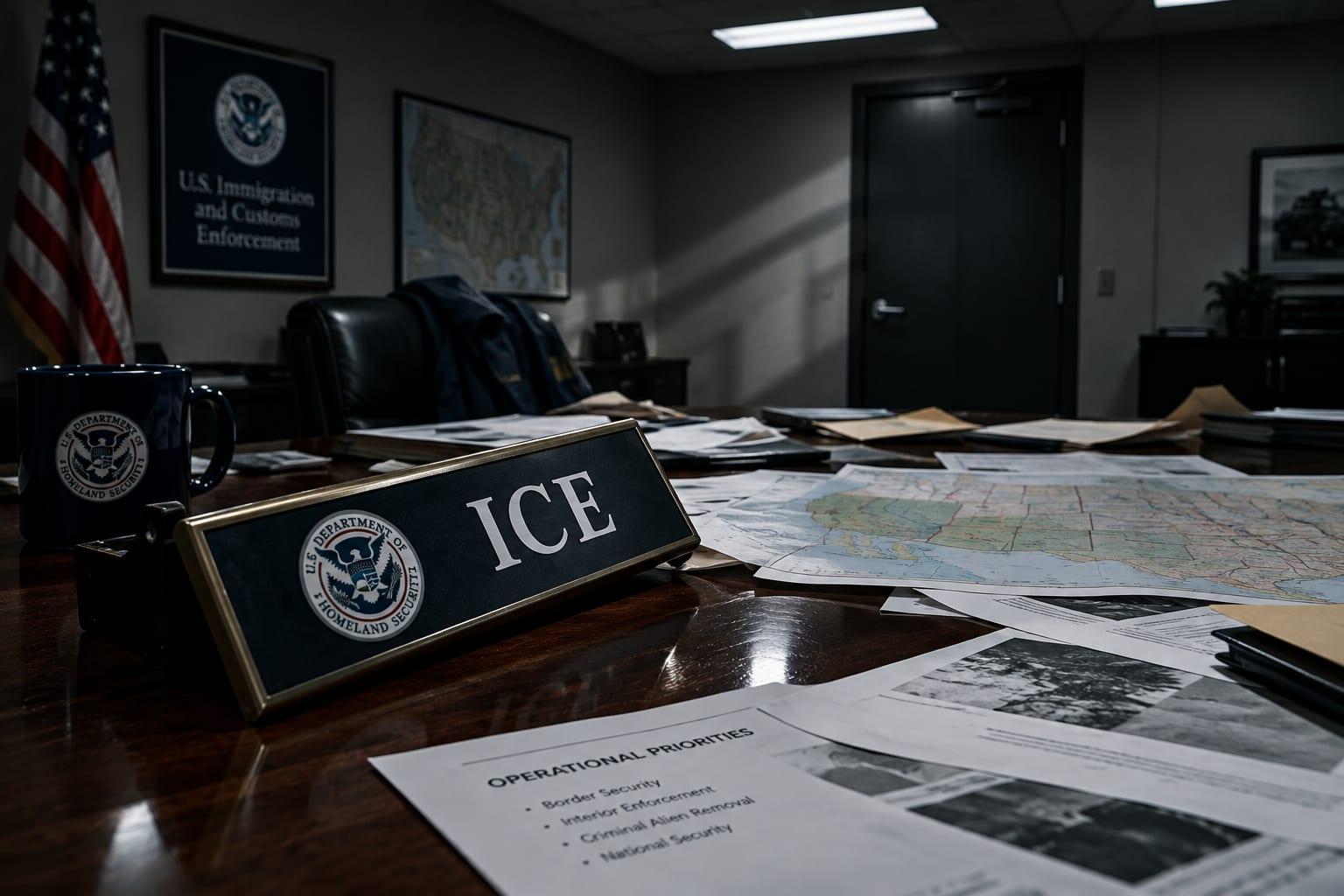
An internal verbal directive that would have narrowed ICE's interior enforcement to illegal immigrants with criminal histories was pulled back within hours after a wave of backlash from immigration hardliners, Fox News Politics reported Sunday.
The guidance had been relayed to ICE field offices around the country, according to multiple sources familiar with the matter cited by Fox News. It remains unclear who initially issued the instruction. Administration officials later characterized the episode as a misunderstanding rather than a formal policy change, and new guidance reaffirming that enforcement policy had not changed was sent within hours, per Fox News.
President Trump, asked about the matter by Fox News, said there had been no change in a posture that prioritizes — but is not limited to — the "worst first."
The reversal came after figures in the immigration enforcement coalition publicly slammed the directive. Mike Howell, a leader of the Mass Deportation Coalition and president of The Oversight Project, told Fox News the pushback helped force the reversal but pointed to what he described as a broader pattern of mixed messaging from the Department of Homeland Security on interior enforcement.
Howell cited a post from DHS Secretary Markwayne Mullin one day before the ICE guidance news broke, in which the secretary said the department was "not conducting worksite operations in Kansas" but was targeting criminal illegal immigrants and those facing removal. That post followed ICE operations in Kansas that drew complaints from Sen. Roger Marshall, R-Kan., who said DHS had failed to coordinate with local authorities during operations in cities including Liberal.
"I would have called for impeachment," one immigration hawk said of the directive, according to Fox News Politics.
The White House did not immediately respond to questions about who issued the verbal guidance or why it was relayed to field offices before being rescinded. Fox News reported that the instruction was verbal, not written, which complicates efforts to trace its origin.
Howell argued the public criticism played a role in the quick reversal but said the episode fit what he views as a pattern of conflicting signals from DHS on how aggressively agents should pursue interior enforcement. He pointed to Mullin's Kansas post as an example.
For agents in the field, the practical effect was whiplash. Verbal guidance telling offices to stand down on certain arrests, followed within hours by new guidance reaffirming no change in policy, leaves agents uncertain about what they are authorized to do — and creates openings for bad actors to slip through.
The episode also raises questions about whether the administration is sending conflicting signals on enforcement as it pursues the mass deportation agenda Trump campaigned on. Immigration hawks have grown vocal about what they see as public messaging from administration officials suggesting a narrower approach to interior enforcement than promised.
Trump's handling of the reversal drew praise from some allies who said the quick walk-back showed the president remains committed to the enforcement posture he ran on. Others said the incident should never have happened and warned that similar miscommunications could undermine the broader deportation effort.
The guidance was rescinded within hours, according to Fox News, and new guidance reaffirming there had been no change in enforcement policy was sent shortly after. Administration officials later characterized the directive as a misunderstanding rather than a formal policy change. It is not yet known who initially issued the instruction or whether anyone will face consequences for it.
The Kansas operations that prompted Marshall's complaint and Mullin's post remain a point of contention. Marshall said DHS had failed to coordinate with local authorities during operations in cities including Liberal. Mullin's post said the department was "not conducting worksite operations in Kansas" but was targeting criminal illegal immigrants and those facing removal — a distinction that immigration hawks say muddies the waters for agents and the public alike.
Howell told Fox News the public criticism helped force the reversal but said the episode fit what he views as a broader pattern of mixed messaging from DHS on interior immigration enforcement.
The White House has not released the names of those involved in drafting or relaying the guidance. Fox News reported it was relayed to ICE field offices around the country, according to multiple sources familiar with the matter.
For immigration hawks, the episode is a warning shot. If a verbal directive can go out to field offices and only be reversed after public outcry, what else is being communicated to agents that the public does not know about?
Our Take
This is what happens when the administrative state decides it knows better than the president and the voters who put him back in office. Somebody, somewhere, told ICE field offices to stand down on certain arrests — and it wasn't until patriots made noise that it got walked back. That's not a misunderstanding. That's the bureaucracy testing how far it can go.
Mike Howell is right to highlight the mixed messaging coming out of DHS. When the secretary tweets that the department isn't conducting worksite operations in Kansas, agents hear one thing and illegal aliens hear another. Confusion in the field is a feature, not a bug, for those who never wanted mass deportation in the first place.
Trump's quick reversal is a win — but it shouldn't have been necessary. The question every patriot should be asking tonight: Who issued that guidance, and are they still in a position to do it again? Until that answer comes, the enforcement posture is only as strong as the next verbal directive.
