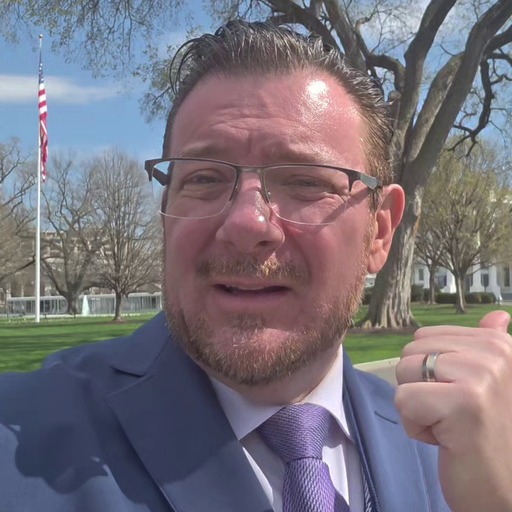

House Speaker Mike Johnson says the grassroots revolt against AI data centers sweeping the country isn't as homegrown as it looks — he told Fox Business on Monday that the pushback is "coming from China."
Appearing on "Mornings With Maria," Johnson agreed with host Cheryl Casone's framing that public resistance to artificial intelligence data centers originated overseas and is now being seized on by Democrats ahead of the midterms. Casone said she'd heard from tech executives and lawmakers who believe the "pushback against data centers — that is coming from China."
Johnson didn't hedge. "This is what Democrats do every election cycle," he said. "They find something to, you know, glom onto and say that this is doom and gloom and everyone will die if we don't win. Don't buy it. It is a Chinese psyop. I really believe that. It's not a conspiracy theory. I think they're pushing those ideas."
The Speaker's claim lands in the middle of a genuine political problem for Republicans. Data centers are the physical backbone of the AI boom President Trump has championed as an economic and national security priority. But the buildout is running into something Washington rarely has to contend with: voters in their own districts saying no.
What the Polls Actually Show
The evidence for a domestic backlash is hard to dismiss. A YouGov poll found nearly two-thirds of Americans oppose data center construction in their local communities, according to The New Republic. A Gallup poll in May found 71 percent of Americans were somewhat or strongly opposed to a data center being built near them — almost 20 points higher than opposition to a nearby nuclear power plant, The New York Times reported.
The results have been concrete. Data Center Watch reported that nearly 120 data center projects — valued at an estimated $198 billion — were blocked or delayed across the country over the past six months as states and localities imposed moratoriums, according to The New Republic.
And it's not just one corner of the country. In Johnson's home state of Louisiana, Amazon and Meta plan to spend a combined $72 billion on new AI data centers, and a local health official warned the projects threaten to increase toxic exposure from the gas-fired plants needed to power them, per The New Republic.
The Heritage Angle — and the Caveat
Johnson isn't inventing the foreign influence concern out of whole cloth. The Heritage Foundation reported that "CCP-linked actors have aggressively amplified anti-data center voices in America, even as Beijing generously subsidizes China's own data center construction," according to Yahoo News.
But amplification and origin are different claims. Jessica Brandt, a former official with the Office of the Director of National Intelligence who tracked foreign influence efforts during the Biden administration, told The New York Times in July that China and Russia have exploited debates around data centers — not created them.
The Times described the opposition as rooted in "broad concerns about the effects of A.I. on jobs and the climate," along with residents near existing facilities complaining they are eyesores and emit annoying sounds. Some cities and counties have enacted temporary or permanent moratoriums on new construction.
President Trump has dismissed AI doomsday warnings as a "hoax" meant to slow American innovation and let China lead the AI race, emphasizing the economic potential of the buildout, per Yahoo News.
Our Take
Here's the problem with the Speaker's answer: it's half right, and the half he's wrong about is the half that costs Republicans seats.
Is Beijing happy to amplify American resistance to AI infrastructure? Of course. China's own data center buildout is subsidized by the state, and anything that slows ours is a win for them. The Heritage Foundation's findings on CCP-linked amplification are worth taking seriously, and so is the fact that foreign actors smell blood in the water on this issue.
But calling the whole thing a "psyop" is a tell. It's what politicians say when they don't want to engage with why 71 percent of Americans don't want a data center in their backyard. Those people aren't reading Chinese propaganda — they're looking at their electric bills, listening to the hum, and watching gas-fired plants go up next door. In Louisiana, of all places, it's a homegrown health official raising alarms, not a Beijing bot farm.
Reasonable people can support American AI dominance and still ask hard questions about who pays for the power, what it does to the grid, and why the deals get done before the neighbors hear a word. When the Speaker waves all of that off as foreign trickery, he's not fighting China — he's telling voters in his own conference's districts that their concerns don't count. That's a message Democrats will happily run on in November.
So do the work: separate the foreign bots from the local parents, the influence campaign from the legitimate gripes. A party that can't tell the difference deserves to lose the argument.