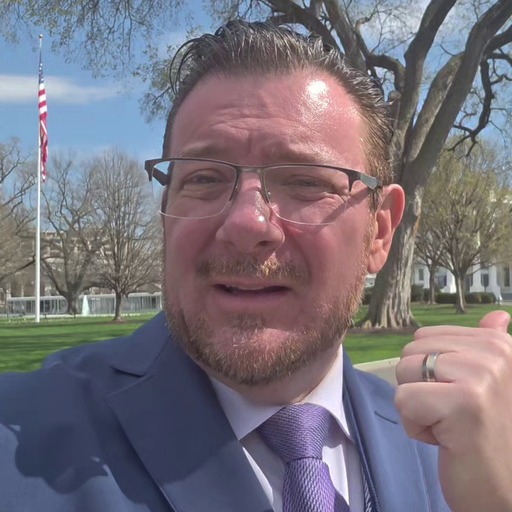
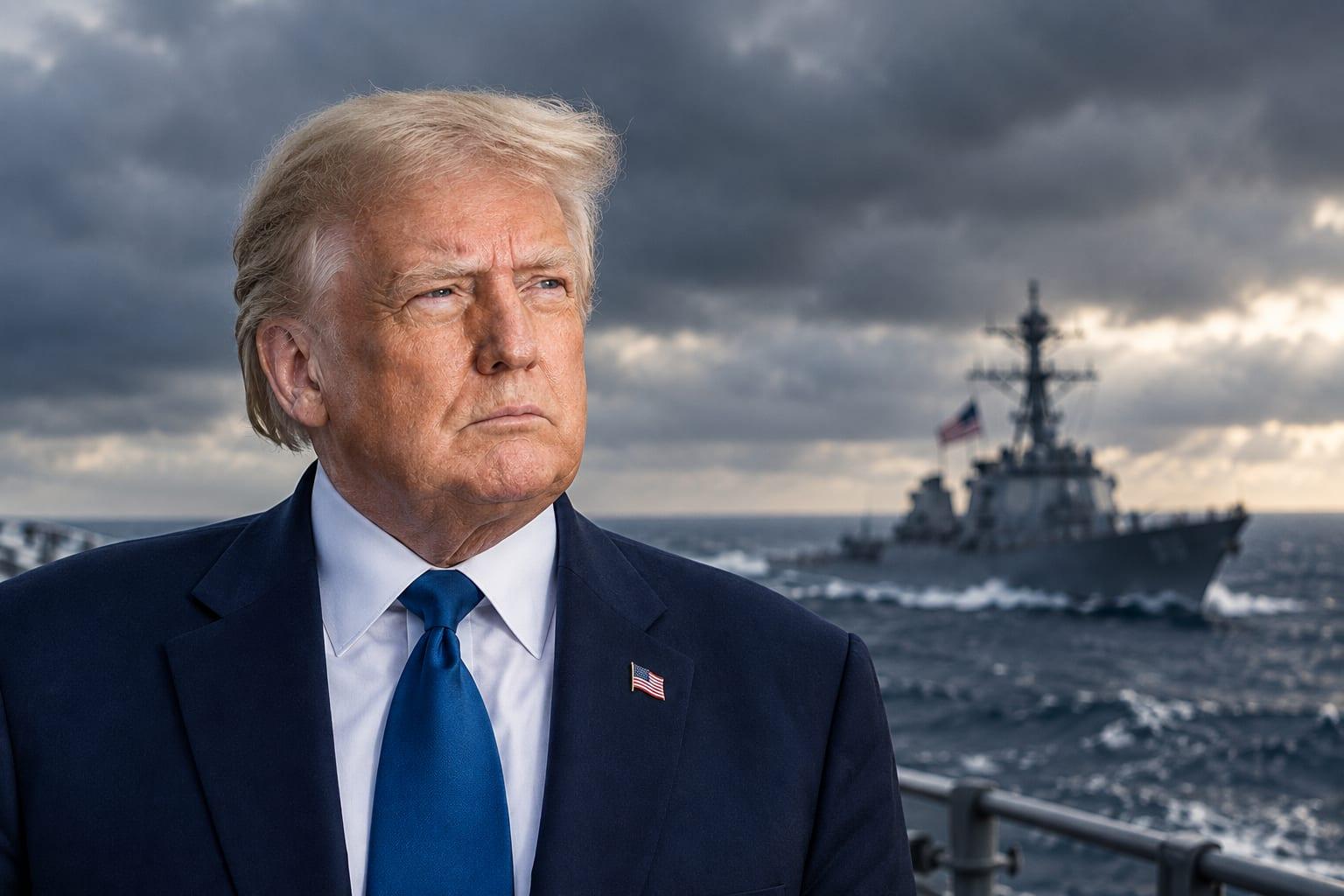
President Trump said Wednesday that the United States has “virtually total control” of the Strait of Hormuz and that historic volumes of oil have moved out of the waterway over the past three days, comments that quickly spread across financial and geopolitical accounts and drew a sharp response from Iran’s Islamic Revolutionary Guard Corps.
Speaking on camera, the president described the U.S. position in the strait in sweeping terms while acknowledging that the situation is not entirely settled. “The last week in the Hormuz Strait, which we have almost total control, I would say total, but every once in a while they’ll drop a mine in there and disrupt things a little bit,” Trump said. “But we have virtually total control of the Hormuz Strait.”
The remarks were carried by the account @clashreport, which posted a clip of the president’s comments. The same account summarized the president’s message in a separate post: “Trump on Iran: We have almost total control of the Strait of Hormuz.”
The president also signaled that further action is coming. “You will see things happening very soon,” Trump said, according to the market account @zerohedge, which paired that line with a second claim: “Historic flows of oil out of Hormuz in the last three days.” The two statements were posted within minutes of each other Wednesday evening.
The posts landed into an already tense environment. The account @infowars ran a live segment describing the situation as a “global crisis alert,” telling viewers that the United States and Iran have reopened diplomatic channels as the Hormuz standoff threatens energy markets, while also flagging that Russia has been pounding Ukraine’s power infrastructure with missiles and drones and warning NATO it could deploy its “entire arsenal” over Kaliningrad.
That framing — a single waterway, a diplomatic opening, and a broader set of flashpoints from Eastern Europe to the Persian Gulf — captures why the strait draws so much attention. Roughly a fifth of the world’s oil moves through the narrow channel between the Persian Gulf and the Gulf of Oman. Any disruption there registers immediately in shipping rates, insurance premiums and crude prices, which is why the president’s claim about “historic flows” over a three-day window is being treated as a market signal as much as a diplomatic one.
Iran is not accepting the American characterization. According to Fox News Digital, the Islamic Revolutionary Guard Corps is arguing that it still has leverage over the Strait of Hormuz even as the U.S. military remains active in the Middle East. The same outlet reported that Iran’s economy remains crippled by sanctions and a U.S. blockade, leaving Tehran with few options now that its control over the strait has slipped. Tehran has separately called on Americans to vote out Trump, a message that Fox News Digital carried in its live updates.
So the picture now is a public dispute over facts on the water. The president says the United States has control and that oil is flowing at a historic pace. Iran’s Revolutionary Guard says it retains leverage. Both claims are being made about the same stretch of water, and both are being amplified by accounts with large followings that treat the strait as a live indicator of where the broader confrontation is heading.
What the president means by “things happening very soon” is not spelled out in the posts or transcripts reviewed here. It is not yet known whether that refers to military action, a new round of sanctions, a diplomatic announcement, or something else. The White House has not elaborated beyond the president’s on-camera remarks.
The diplomatic channel referenced by @infowars, if active, would run alongside the military posture rather than replacing it. Reopening channels of communication does not necessarily mean a de-escalation; it can also mean both sides are looking for a way to manage a situation they cannot fully control. The account’s live segment framed the moment as one in which the two governments are talking while the standoff continues to threaten energy markets.
The Russia element in that same segment adds another layer. Moscow’s strikes on Ukraine’s power infrastructure and its warning to NATO over Kaliningrad are separate from the Hormuz dispute, but they land in the same news cycle and reinforce the sense among traders and foreign-policy watchers that multiple pressure points are heating up at once. Whether that convergence is coincidental or coordinated is not something the available reporting establishes.
For now, the concrete developments are the president’s statements themselves and the responses they have drawn. The accounts carrying the story include @clashreport, @zerohedge and @infowars, each emphasizing a different piece of it — the on-camera quote, the oil-flow claim, and the wider crisis framing. Iran’s pushback, as reported by Fox News Digital, is that the Revolutionary Guard still holds leverage and that Tehran is urging Americans to change course at the ballot box.
Next News Network could not independently verify the claim that historic flows of oil have moved out of the Strait of Hormuz over the last three days, nor the assertion that the United States has virtually total control of the waterway. Those remain claims made by the president and amplified by the accounts above, not independently confirmed facts.
What is clear is that the Strait of Hormuz is once again the focal point of U.S.-Iran tensions, that the president is publicly claiming the upper hand there, and that Iran is publicly disputing it. The coming days will show whether the “things happening very soon” the president referenced are diplomatic, economic or military in nature — and whether the oil flows he described continue at the pace he claimed.
Our Take
The president’s message is a classic combination of pressure and reassurance: he is telling Iran that the United States controls the strait, telling markets that oil is moving, and warning that more is coming. That is a deliberate posture, and it is aimed as much at Tehran’s calculus as at the price of a barrel. The Iranian response — insisting the Revolutionary Guard still has leverage — is what you would expect from a government that cannot afford to look weak at home, especially with an economy under blockade and sanctions. The problem with claims of “total control” is that they invite a test. If Iran can still drop a mine, as the president himself acknowledged, then control is not total, and the next incident will be read as a measure of whose version is closer to the truth. Conservatives should welcome strength, but they should also insist on clarity: if the administration is going to talk about historic oil flows and imminent developments, it should be prepared to document both. The American people have seen enough foreign-policy promises to know that the difference between a claim and a result is usually measured in ships, not speeches. Watch the strait itself — not the posts about it.