
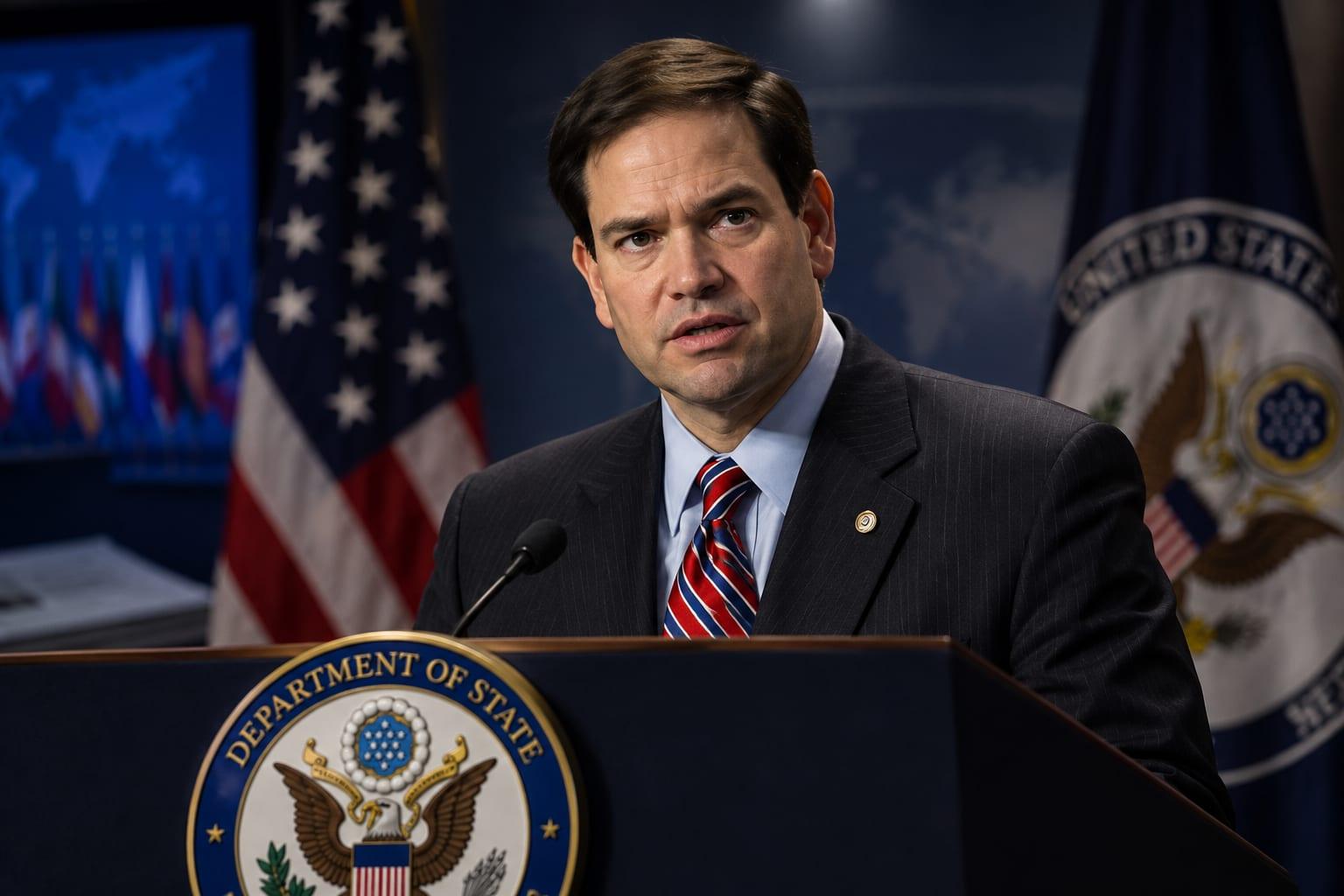
A U.S. official said Secretary of State Marco Rubio ordered Iran's delegation to the United Nations General Assembly to leave the United States, according to an Axios report published late Wednesday, a claim that immediately moved across the wires and social platforms.
The Axios account @axios posted at 12:17 a.m. UTC: "Scoop: Rubio ordered Iranian delegation to leave the country, U.S. official says." Eleven minutes later, the aggregator account @FirstSquawk carried the report with the headline, "Axios: Rubio calls for Iranian UN delegation to exit US as negotiations hit deadlock," tying the order to stalled indirect talks between Washington and Tehran.
The most widely shared version came from @FirstSquawk at 12:18 a.m., quoting what it described as a U.S. official: "SECRETARY RUBIO KICKED OUT THE IRANIAN DELEGATION WHO HAD OVER STAYED THEIR WELCOME. THE UN GENERAL ASSEMBLY WAS OVER, SO IT WAS TIME FOR THEM TO GO - AXIOS REPORTER ON X." That post attributes the characterization to an Axios reporter's activity on X rather than to a named U.S. official speaking on the record.
Other outlets moved the same claim within the hour. FXStreet reported that "the US official stated on Monday that US Secretary of State Marco Rubio told the Iranian delegation to the United Nations General Assembly immediately leave the United States (US) after talks stalled, Axios reported." Iran International carried the line: "Secretary Rubio kicked out the Iranian delegation who had overstayed their welcome." A separate report from another outlet said Rubio "ordered Iran's United Nations delegation to depart," citing a stalemate in U.S.-Iran indirect talks.
The underlying claim is not independently confirmed. Next News Network could not verify that any such order was issued, that the delegation was told to leave, or the terms on which it was given. Every element below is reported as what is being claimed, not as established fact.
The sequence matters. The first Axios post, at 12:17 a.m. UTC, was a one-line scoop attributed to an unnamed U.S. official. The @FirstSquawk post one minute later added the framing that the delegation "had over stayed their welcome" and that the General Assembly session had ended, sourcing that language to an Axios reporter on X. Ten minutes after that, @FirstSquawk restated the story in wire style, linking the order directly to a negotiation deadlock. By the time FXStreet and Iran International published, the claim had hardened into a straightforward report of an order issued.
What the posts do not contain is a named official, a date certain, or any statement from the State Department, the Iranian mission to the United Nations, or the United Nations itself. The FXStreet account says the official spoke "on Monday," while the Axios post and the @FirstSquawk posts are timestamped early Wednesday UTC. Whether those refer to the same day is not stated in any of the material.
The reference to a negotiation deadlock is consistent across coverage. @FirstSquawk's second post says negotiations "hit deadlock"; FXStreet says talks "stalled"; another report describes an "impasse" in U.S.-Iran indirect talks. None of the posts specifies what the talks concerned, when they broke down, or who was mediating. Iran and the United States have conducted indirect negotiations through intermediaries in the past, but it is not known from this material what round is being referenced or its status.
It is also not known whether the Iranian delegation has left, is preparing to leave, or has been given a deadline. No departure has been confirmed by any government. The posts describe an order; they do not describe compliance with it.
The UN General Assembly's annual high-level session brings delegations from all member states to New York, and visiting delegations operate under host-country arrangements that govern how long they may remain. The @FirstSquawk post asserts that the General Assembly "was over, so it was time for them to go," but that reasoning is attributed to the Axios reporter's post, not to any official statement, and it is not explained further.
Reaction online followed the pattern typical of a late-night scoop: the aggregator accounts carried it first, then the financial and Iran-focused outlets picked it up, and the framing of "kicked out" traveled faster than the original, more cautious Axios language. The distinction is worth keeping in view. Axios said a U.S. official said Rubio ordered the delegation to leave. The versions that spread farthest said Rubio "kicked out" a delegation that had "overstayed." Those are characterizations layered on top of the initial report, not additional confirmed facts.
None of the accounts carrying the claim has published a document, a readout, or a statement from a named principal. No member of the Iranian delegation has been quoted responding. No State Department spokesperson has been quoted confirming or denying. The absence of those statements is not evidence either way; it simply means the claim currently rests on a single unnamed official relayed through one outlet and amplified by others.
Readers should also note what is not in dispute: the posts themselves exist as described, and the outlets named above published the language quoted. What remains unverified is the event those posts describe. Next News Network could not independently verify that Secretary Rubio ordered the Iranian delegation to leave the United States, that any such delegation has departed, or the circumstances surrounding the reported order. Until a named official or a government statement confirms it, the story remains an allegation carried by an anonymous source and repeated across platforms.
If confirmed, an expulsion order would mark an unusual step against a sitting delegation accredited to the United Nations, which is headquartered in the United States under a host-country agreement. If unconfirmed or denied, the episode would join a long line of anonymous-sourced foreign policy claims that moved markets and headlines before they were substantiated. At this hour, neither outcome can be established from the record available.
Our Take
Here is what we can say with confidence: anonymous officials get to shape a story without owning it, and that is exactly what happened overnight. A single unnamed source, relayed through one outlet, produced a wave of headlines declaring that Marco Rubio threw Iran's UN delegation out of the country. Not one of those headlines named a human being who would stand behind it. That is not reporting. That is a rumor with a masthead.
The media's eagerness to run with "kicked out" and "overstayed their welcome" tells you more about the press than about Tehran. The boring, cautious version, that a U.S. official said an order was issued after talks deadlocked, was available to everyone. Most outlets chose the spicy version. When the story inevitably gets walked back or quietly dropped, no correction will travel half as far as the original claim.
Our advice is the same as it always is with anonymous-sourced foreign policy bombshells: wait. Demand a name. Demand a readout. If the administration really ordered a hostile delegation out of the country, it will say so on the record, and it will do so proudly. Until then, treat this as what it is, a claim from a source nobody will identify, amplified by people with deadlines to meet.
