
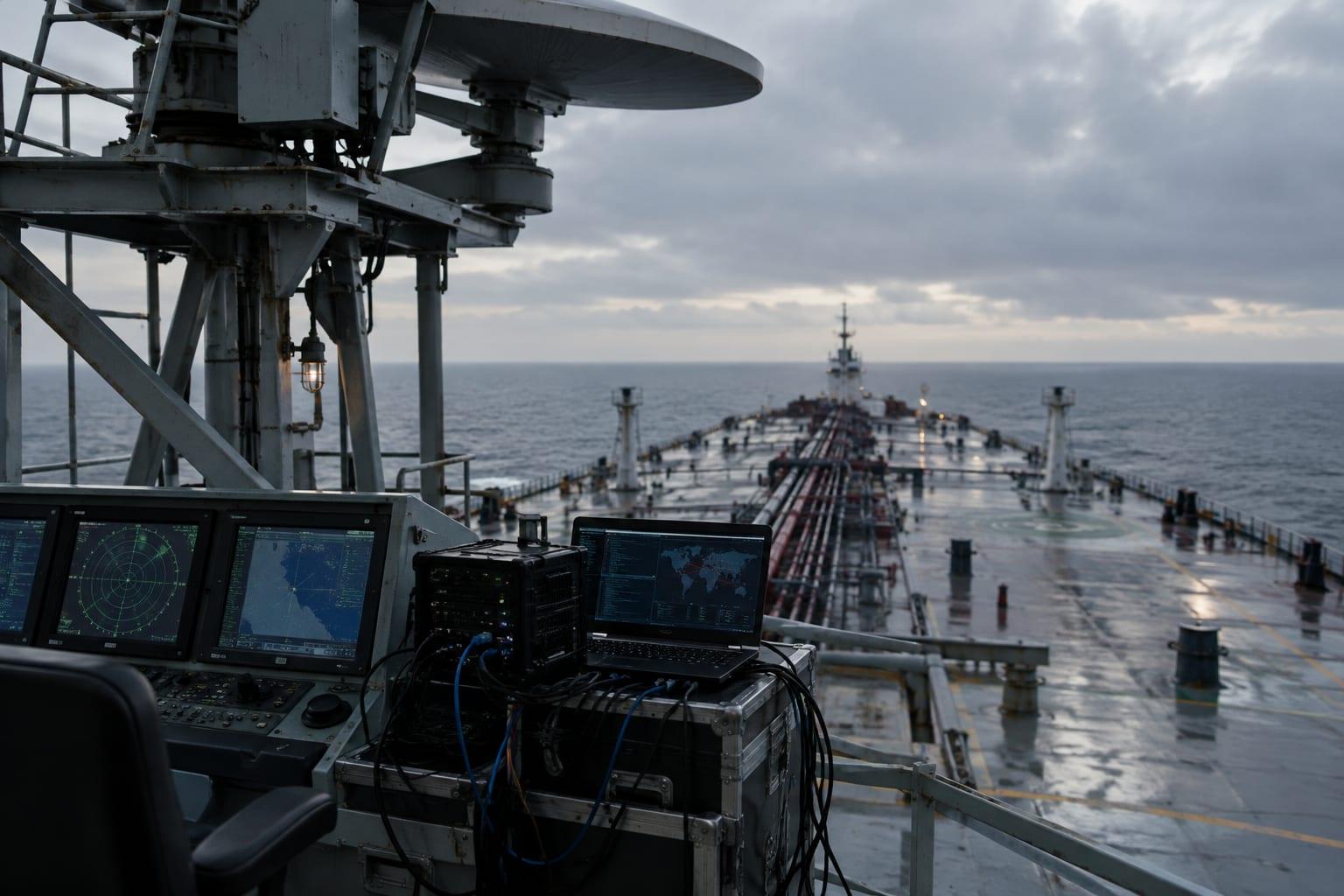
Hackers breached the propulsion system of an oil supertanker as it was approaching the Texas coast this summer, according to US officials familiar with the matter, in what is being described as an extraordinary breach that highlights the growing physical risks to maritime infrastructure.
The claim, first reported by major news outlets and amplified across social media, alleges that the hackers accessed the vessel's propulsion system while it was en route to the United States. FBI and US Coast Guard investigators have reportedly found evidence of the intrusion, though the full scope of the breach and the identity of the attackers remain unclear.
The account @FirstSquawk carried the claim to its audience, posting that "HACKERS INVADED THE PROPULSION SYSTEM OF AN OIL TANKER HEADING TO THE U.S." The post did not identify the vessel, the nature of the intrusion, or the source of the information, but it was quickly picked up and repeated across multiple platforms.
According to Iranian state media, as cited in other coverage, the attack was more extensive than initially reported. The account dontgetgot wrote that hackers took control of the ship's propulsion, navigation and cargo systems, interfered with its speed and fuel, and knocked out its communications for about thirty hours. That account further stated that on August twenty-first, a team of cyber specialists, federal agents and US ship inspectors boarded one of two tankers in the Gulf.
Those details, while alarming, have not been independently verified by Next News Network and should be treated as claims rather than confirmed facts. The identity of the hackers, their nationality, and their motive have not been established in any of the reporting reviewed.
The news spread rapidly through conservative and national security circles, with @FirstSquawk's post serving as a catalyst for wider discussion. The account, which routinely aggregates breaking news and security-related items, did not provide additional context or sourcing in its post. The claim was subsequently carried by Newsquawk, which reported that hackers reportedly breached the propulsion system of a US-bound oil tanker, and by dontgetgot, which provided the most detailed account of the alleged incident, citing Iranian state media.
The reported breach, if confirmed, would represent a significant escalation in the targeting of civilian maritime infrastructure by cyber actors. Oil tankers are massive vessels with complex systems for propulsion, navigation, and cargo management. A successful intrusion into a propulsion system could allow an attacker to disable a ship, alter its course, or create hazardous conditions in busy shipping lanes. The Gulf of Mexico, where the alleged breach occurred, is one of the most heavily trafficked maritime regions in the world and a critical artery for US energy imports.
The timing of the alleged incident, in the summer of this year, places it months before the current wave of reporting. It is not yet known why the information is only now emerging, whether the vessel was successfully diverted, or what damage, if any, was caused. It is also not known whether the hackers were state-sponsored or acting independently, or whether they had specific intentions regarding the ship's destination.
The FBI and US Coast Guard have not publicly commented on the specific allegations. Their involvement, as described in the reporting, suggests that federal authorities are treating the matter with seriousness. Cyber specialists, federal agents, and ship inspectors reportedly boarded one of two tankers in the Gulf on August twenty-first, according to dontgetgot, though the outcome of that boarding has not been disclosed.
The claim has drawn attention to the vulnerability of maritime systems, which have increasingly become targets for cyberattacks in recent years. Ports, shipping companies, and vessels have all been identified as potential weak points in the global supply chain. The prospect of hackers seizing control of a tanker's propulsion system raises questions about the security protocols in place for commercial shipping and the ability of vessels to defend against sophisticated intrusions.
Next News Network could not independently verify the claims made in the posts and reports reviewed for this article. The accounts carrying the story have not provided documentation, named sources, or technical details that would allow for independent confirmation. The underlying event remains unconfirmed.
The reaction to the claim has been swift and widespread, with the story moving from aggregator accounts to mainstream news outlets within hours. The accounts @FirstSquawk, Newsquawk, and dontgetgot have each carried the claim in some form, and the story has continued to circulate as officials remain tight-lipped. Whether the breach will be confirmed by authorities, and what it might mean for national security, remains to be seen.
Our Take
This story is alarming for a simple reason: if hackers can reach into the propulsion system of a tanker headed for American shores, they can reach into the systems that move our energy, our goods, and potentially our military assets. The fact that Iranian state media is crowing about an attack that knocked out communications for thirty hours should be a wake-up call, not a footnote. Whether this specific incident is fully confirmed or not, the vulnerability is real, and the Biden administration's approach to maritime cybersecurity has been far too passive. Congress needs to demand answers, and the Pentagon needs to treat the Gulf of Mexico as the front line it has become. We cannot wait for a successful attack on a US port to take this seriously.
