
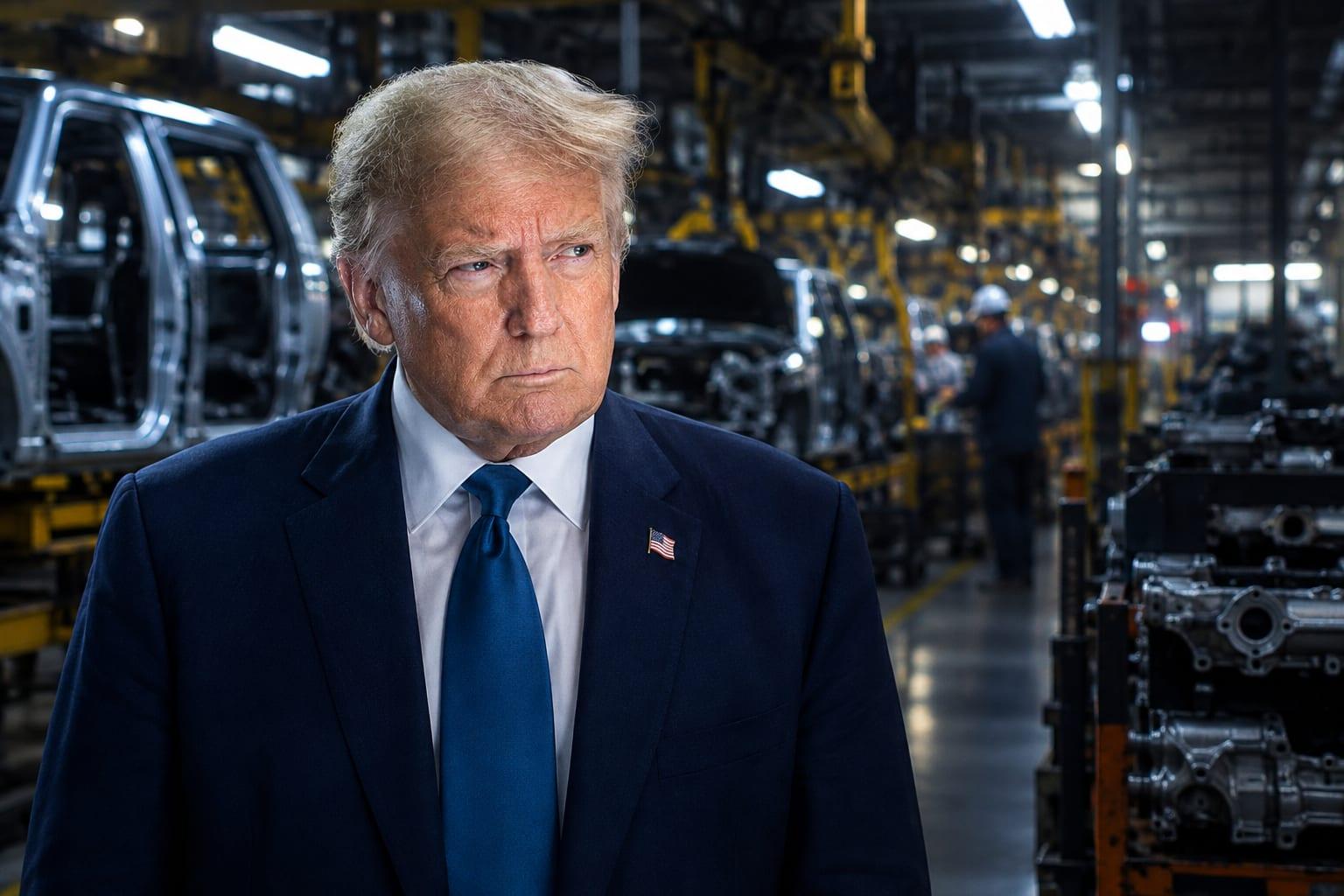
DETROIT — Michigan is the crown jewel of the 2026 midterm map, and the Trump administration's escalating trade war with Canada could be the wrecking ball that smashes the GOP's shot at holding the state, according to a Fox News Politics report that should have every Republican strategist reaching for the antacids.
The problem is the auto industry — the beating heart of Michigan's economy — and the region's uniquely integrated supply chain. According to Fox News Politics, vehicle components routinely cross the U.S.-Canada border multiple times before a single finished car rolls off the lot. Each crossing is now subject to tariffs under the president's America First trade policy. That means a single part can be taxed four, six, even eight times before it ever reaches a dealership showroom in Flint or Grand Rapids. The cost doesn't vanish. It stacks — and it lands on the window sticker of every new truck and SUV sitting on a Michigan lot.
That is a direct hit to the wallets of the auto workers and small-business owners who put Trump back in the White House. Michigan flipped red in 2024 on the strength of working-class voters who trusted the president to protect American manufacturing. Now those same voters are getting squeezed by the very tariffs sold as their salvation.
President Trump has long defended tariffs as a cudgel to force foreign governments to the negotiating table and to bring manufacturing back to U.S. soil. In a wide-ranging interview with Time magazine this week, he brushed aside low poll numbers, calling them "fake numbers" and declining to rule out declaring a state of emergency before the midterms. According to The Guardian, which reported on the Time interview, Trump also deflected responsibility for how his remarks on the length of the Iran war were received, telling the magazine: "I think the press fed it to them."
But the economic pressure is real, and it is measurable. The Associated Press/NORC Center for Public Affairs Research found just 26% of adults approve of Trump's handling of the economy, and only 31% approve of his job performance overall. According to the same polling, roughly 74% of Americans say the economy is leaning poorly, and 65% blame Trump's policies directly for higher costs. Gas prices have topped $4 per gallon and inflation has hovered stubbornly at 3.4%. Those are not fake numbers — they are the numbers Michigan families see at the pump and at the grocery store.
Democrats are already weaponizing the tariff pain. Candidates in Rust Belt districts are running hard on pocketbook issues, and polls show them making inroads even in historically red territory. If Michigan's autoworkers feel the squeeze, the GOP's firewall in the industrial Midwest could crack wide open.
Trump remains publicly confident. He told Time that as long as he campaigns alongside Republican candidates, the party can perform well in November. But there is a difference between a rally crowd and a mortgage payment. A tariff that raises the price of a new Ford by thousands of dollars is not a talking point — it is a family budget decision.
So far, the administration has not announced any carve-outs for the auto sector or a timeline for a Canada deal. It is not yet known whether the White House plans targeted relief for cross-border manufacturers or whether Michigan Republicans have privately asked for one.
Our Take
Here's the uncomfortable truth, patriots: you do not get to run as the party of the American worker and then hand that worker a tariff bill he cannot afford. Michigan did not flip red because voters wanted a trade war. It flipped red because they wanted paychecks, cheap gas, and a future for their kids. If Trump's Canada standoff makes it more expensive to build a truck in Dearborn, the Democrats will not have to beat the GOP in Michigan — Republicans will have beaten themselves.
The president is right that our trading partners have fleeced us for decades. He is right that Canada's dairy cartels and auto rules are a scam. But a tariff is a tax, and right now the people paying it are the very autoworkers who chanted "USA" at those rallies. A deal needs to get done — and it needs to get done before the first ballots drop. Otherwise, Michigan becomes the graveyard of the 2026 midterms, and every Republican on the ballot will have to explain why the price of a pickup truck went up while they were busy winning.
The clock is ticking. Do Michigan voters still believe the president has their back — or are they about to make him pay for their new car instead?