
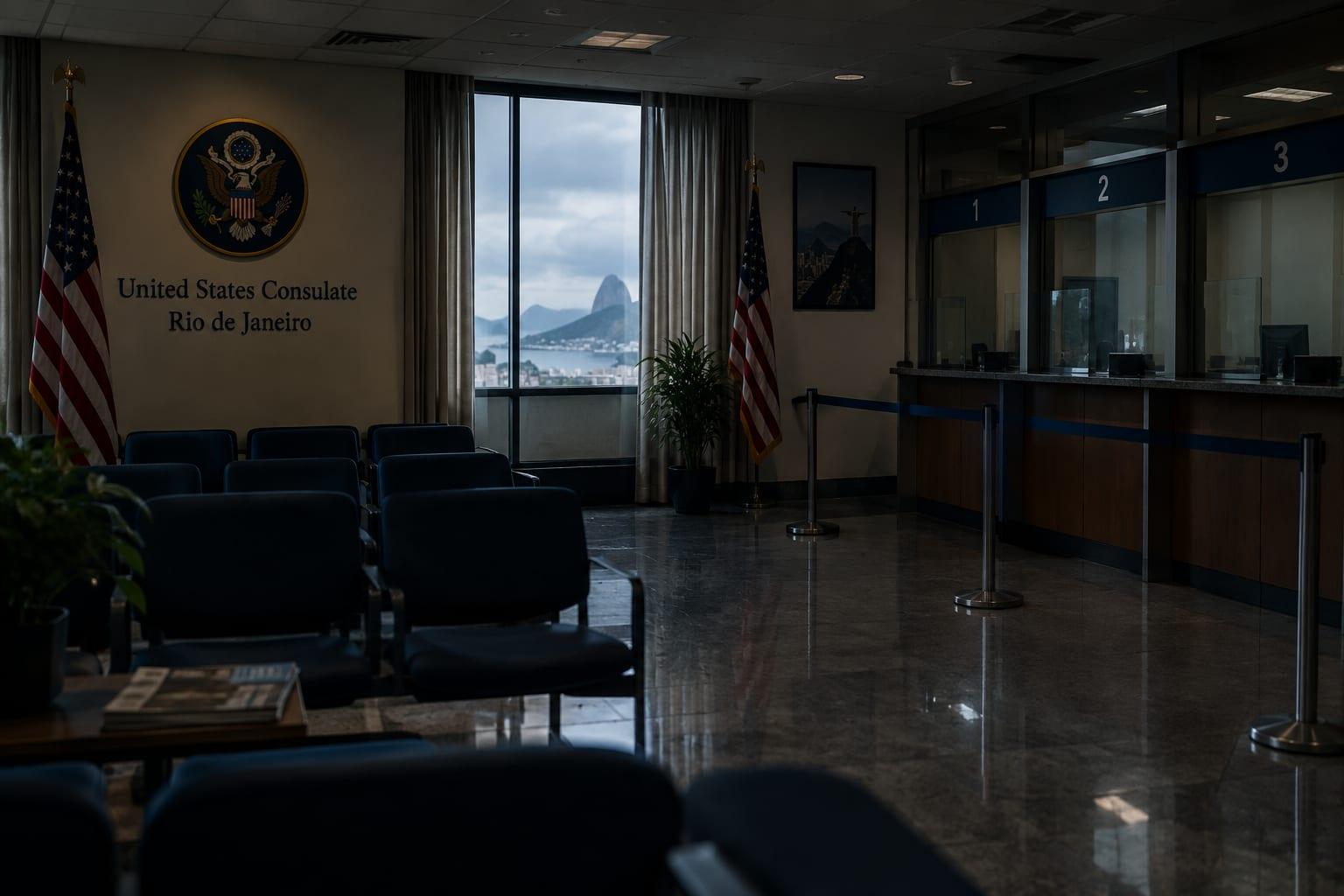
The United States has suspended consular services at its embassy in Brasília and every American consulate in Brazil, according to the U.S. Embassy's official security alert, as the country prepares to vote in Sunday's presidential election. The alert cites "security concerns" but offers no further explanation for the suspension.
The official notice directed Americans to stay away from the embassy in Brasília and other consular locations. The embassy described the move as a precaution, but did not elaborate on the nature of the threat or how long the suspension would remain in place. Consular services typically include passport processing, visa interviews, emergency assistance for American citizens abroad, and notarial services.
The development lands just days before Brazilians head to the polls in a presidential election that has drawn intense international attention. The timing — with voting set for Sunday — has made the suspension a flashpoint for online commentary, with observers on multiple platforms questioning whether the move reflects a specific threat or broader concern about the electoral environment.
The claim spread rapidly on social media after the account @MarioNawfal published a post at 4:42 a.m. UTC on October 2, stating that the U.S. had suspended consular services at its embassy and every consulate in Brazil as the country heads into Sunday's election. The post described the mission's security alert as saying nothing beyond "security concerns" and telling Americans to stay away from the embassy in Brasília.
That framing — that the alert offered no explanation beyond two words — became the central point of contention among accounts carrying the story. Several users responded by speculating about the motive behind the suspension, though no official source has confirmed any specific threat, incident or intelligence finding that prompted the decision.
The U.S. Embassy's own security alert, published on its official .gov website, confirms the suspension of consular services. It is an official U.S. government communication. What the alert does not do is explain what the "security concerns" are, or why they justified closing consular operations across an entire country days before a national election. That absence of detail is what the online reaction has seized on.
Brazil's presidential election is scheduled for Sunday. The country has in recent years been the subject of international scrutiny over the integrity of its electoral institutions, its handling of political violence, and the role of its military in domestic politics. Whether any of those factors played into the U.S. decision is not stated in the alert and has not been confirmed by American or Brazilian officials.
Reaction across social media platforms has been widespread, with accounts on X and other sites amplifying the @MarioNawfal post and adding their own commentary. Some users framed the suspension as evidence of a serious and undisclosed threat. Others questioned whether the move was routine or politically motivated. None of those claims have been substantiated by U.S. or Brazilian authorities, and no named official has offered an on-the-record explanation for the timing.
Next News Network could not independently verify the underlying claim that consular services were suspended specifically because of a security threat related to the election. The embassy's public alert confirms the suspension and cites "security concerns," but the specific nature of those concerns remains undisclosed.
Consular suspensions are not unprecedented. The State Department has at times reduced or halted services at overseas missions due to local unrest, health emergencies, or specific threats against U.S. personnel. In most such cases, the department issues a brief public notice citing security or operational reasons, and fuller details are typically withheld to protect sensitive information or ongoing assessments. Whether this suspension falls into that category is not yet known.
The embassy alert did not state how long the suspension would last or whether it would be lifted before or after Sunday's vote. Americans in Brazil who require emergency consular assistance have been directed to monitor the embassy's website for updates. It is not yet known whether the suspension will affect election observation efforts or the ability of U.S. citizens in Brazil to cast absentee ballots, though consular services typically do not include host-country election administration.
Brazilian officials have not publicly commented on the suspension. The U.S. Embassy in Brasília has not issued any further statement beyond the initial alert. As of publication, no additional security incidents or threats have been confirmed in connection with the move.
The story continues to circulate widely online, driven in part by the lack of official detail. Posts carrying the claim have been shared by accounts across the political spectrum, with many users asking the same question: what are the "security concerns"? For now, the only official answer is the two words in the alert itself.
Our Take
The U.S. Embassy in Brazil has suspended consular services across the entire country just days before a presidential election, and the only explanation Americans are getting is a two-word phrase: "security concerns." That is not good enough. When the State Department pulls consular operations from every embassy and consulate in a country the size of Brazil on the eve of a national vote, the American people deserve to know why. Is there a specific threat? Is it tied to the election? Is it a precaution or a response to something already happening on the ground? The silence invites speculation, and speculation is exactly what fills the void when official Washington says nothing. The mainstream press will likely downplay this, treat it as routine, or ignore it entirely because it does not fit a preferred narrative. But Americans in Brazil — and Americans watching Brazil — have a right to know what their government knows. If there is a threat, say so. If there is not, say that too. The current approach — close everything, say nothing, let the internet guess — is not transparency, and it is not leadership.
