
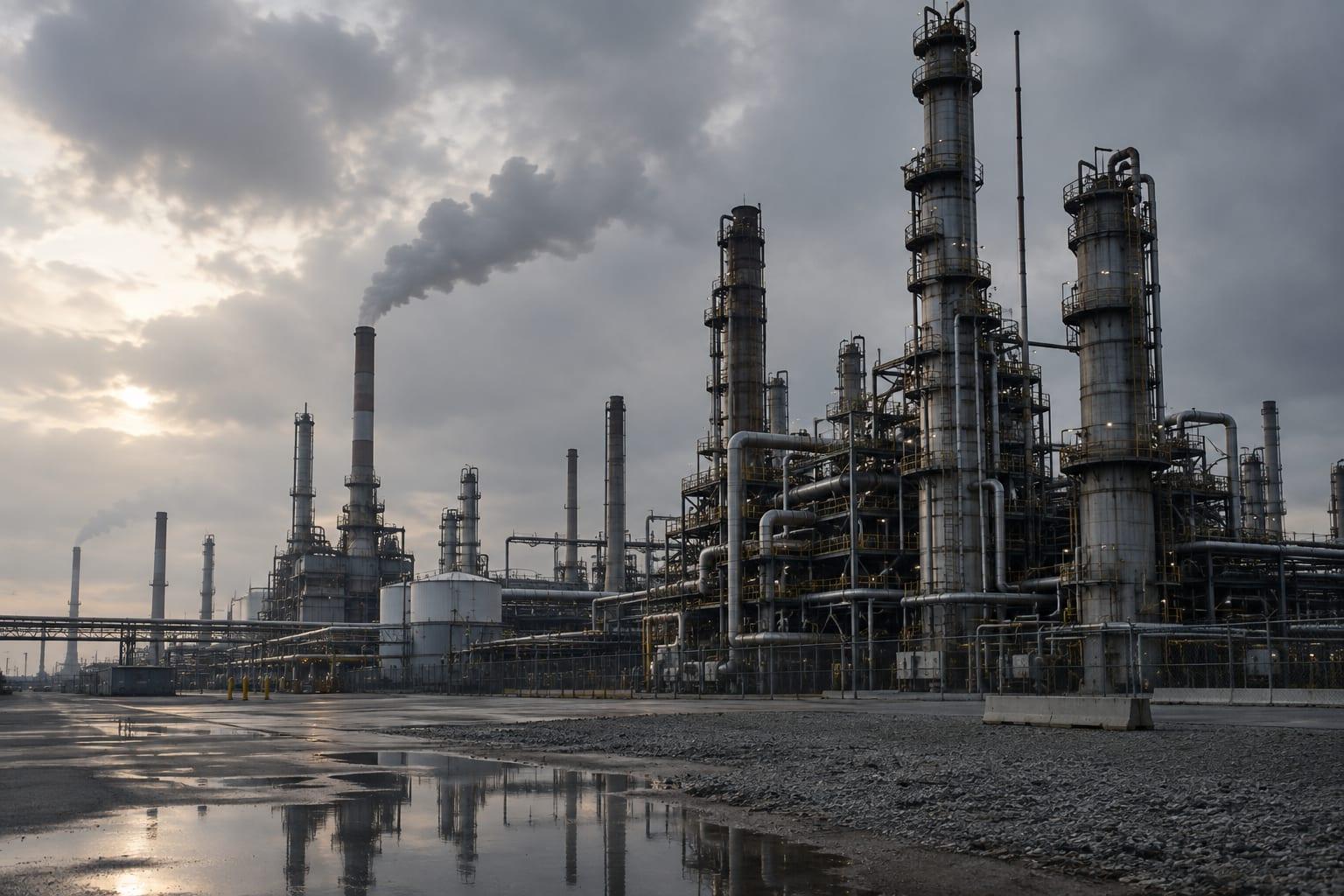
A roughly fifty-day shutdown of Vietnam's largest refinery is being described as starting in August of next year, according to a report circulating online.
The claim appeared in a post from the account @FirstSquawk on Friday, which stated that the facility is set for the extended outage. No other coverage of the reported shutdown was found at the time the claim began circulating, and the details behind it — including which refinery is meant, how the figure was reached and who confirmed it — have not been laid out publicly.
What followed was not a wave of new reporting but a wave of repetition. The same short line about the refinery was passed along by other accounts, each carrying the same framing and the same bare figure, without any of them adding sourcing, documentation or an on-the-record confirmation. The line traveled as a fragment: a country, a superlative, a duration and a start date, all contained in a single sentence.
That is the shape the story has taken so far — not a verified industrial schedule, but a claim about a foreign energy facility that has been picked up and passed around in conservative and financial-news channels alike. Vietnam's refining sector is a critical piece of the country's energy supply, and any extended outage at its biggest plant would be a significant event for fuel markets in Southeast Asia. But significance is not confirmation, and an item being repeated is not the same as an item being checked.
The account @FirstSquawk has a following built on fast-moving market headlines, and posts of that kind frequently move ahead of fuller reporting. That is the context in which the refinery line first appeared: a brief, declarative statement about a foreign facility, released without a named source, a filing, a company statement or a government notice attached. The post did not include any of the specifics a reader would need to evaluate it — no company name, no location, no explanation for why the shutdown would last around fifty days, and no indication of whether the figure came from the operator, a regulator or an estimate.
From there, the claim moved. Other accounts repeated the same essential line, and the refinery outage became a talking point carried by handles rather than by outlets. The spread is visible in the roster of accounts passing it along; the posts themselves offer no supporting detail beyond the original sentence, and none of them appear to have independently confirmed the schedule they are describing.
For readers trying to make sense of it, the important distinction is between an event and a claim about an event. A refinery shutdown would be an event. What exists right now is a claim about one, attributed to a single account and repeated by others, with no independent verification attached at any point in the chain. The repetition can create the impression that multiple sources have confirmed the same thing, when in fact the same sentence is simply being relayed.
There is also a question of timing. The claim describes a shutdown beginning in August of next year, which is months away. That gap matters, because a schedule that far out can change, and because a facility's maintenance plans are typically announced through corporate disclosures, regulatory filings or government statements rather than through a single line on a social media feed. None of those appear to be behind the circulating claim.
Vietnam's largest refinery is a major industrial asset, and the country has worked to expand its domestic refining capacity to reduce reliance on imported fuel. A fifty-day outage at such a facility would affect supply planning, imports and regional fuel pricing if it were to occur on the schedule described. That is precisely why the claim has drawn attention — and precisely why it needs more than attention to be treated as established.
What the posts establish is narrower: that a claim about an extended shutdown is in circulation, that it originated with @FirstSquawk, and that it has been carried onward by other accounts without additional sourcing. What they do not establish is that the shutdown has been scheduled, ordered, confirmed or even discussed by anyone with authority over the facility.
Next News Network could not independently verify the reported shutdown or the roughly fifty-day duration being described.
Until that changes, the responsible way to read the claim is as an unconfirmed report about a future event — one that may or may not reflect an actual plan. Readers who encounter it should look for the details that would settle the question: a named operator, a company statement, a regulatory filing or a government announcement. None of those have surfaced alongside the posts carrying the line.
The episode is a reminder of how quickly a single sentence about a foreign industrial facility can become a topic of discussion across platforms. The sentence travels fast. The verification, if it comes, travels slower — and in this case, it has not arrived.
Our Take
This is what happens when a bare claim about a foreign refinery gets picked up and passed around before anyone has checked it. A fifty-day shutdown at Vietnam's largest plant would be a real story with real consequences for fuel markets, and if it were true, it would be confirmed by the operator, a filing or a government notice — not by a single line repeated across accounts. The fact that the same sentence is showing up in more than one place does not make it more true; it makes it more repeated. Our advice to readers is simple: treat the claim as unconfirmed until someone with actual authority over the facility says it out loud, on the record, with a document behind it. The repetition is not the reporting.