
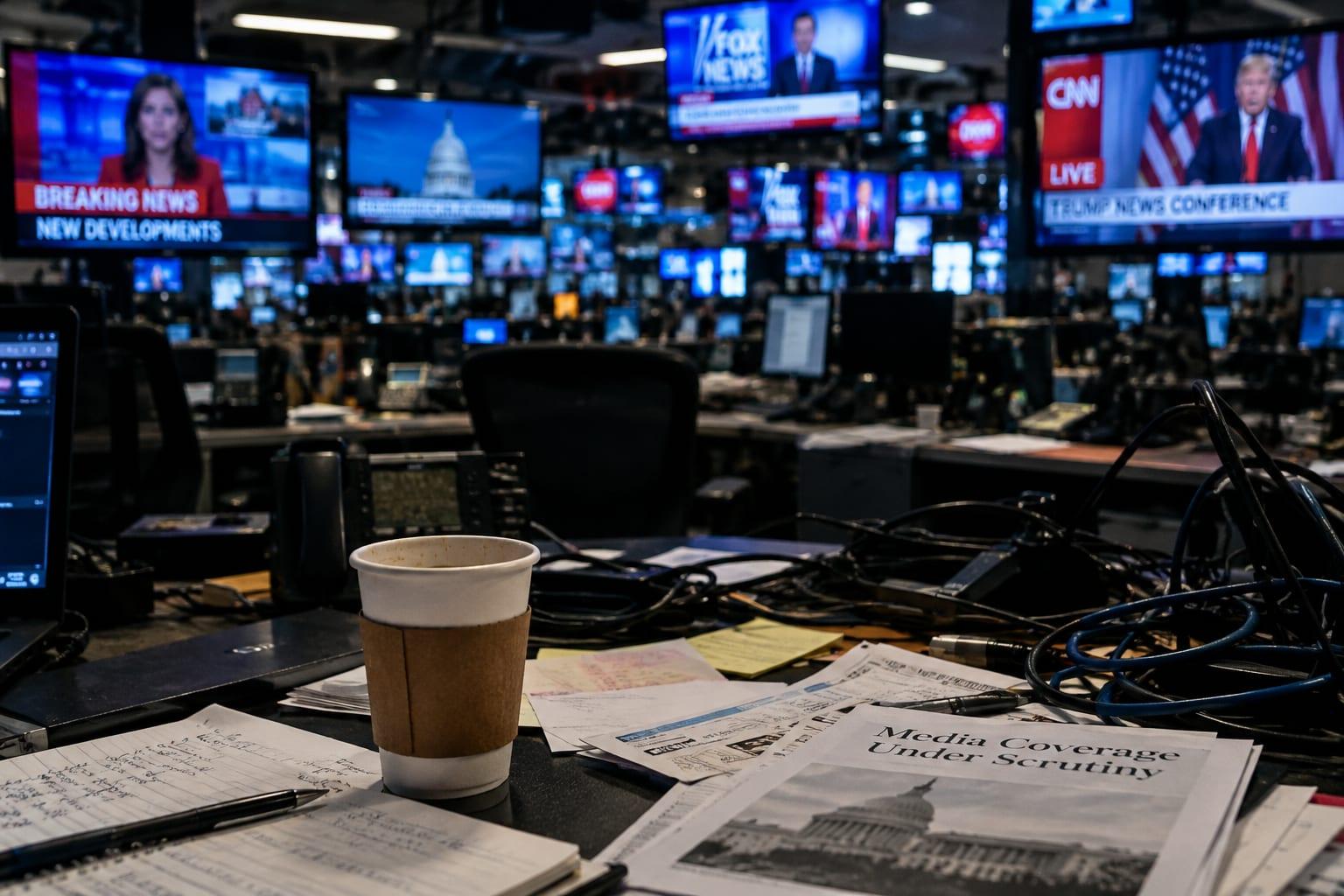
Conservative accounts on X are labeling mainstream news organizations "Artificial News" in the wake of an NBC News segment that gathered nine volunteers to check the price of the same StubHub ticket at the same time for a Harry Styles concert scheduled for October 30.
NBC News reported that the nine volunteers, checking simultaneously, were shown eight different prices for the identical ticket. The segment was posted to the network's X account, @NBCNews, on the afternoon of October 4.
Hours later, the account @GuntherEagleman responded with a brief post: "JUST IN: They will now be called 'Artificial News.'" The post carried a siren emoji and offered no further explanation of who "they" refers to, though the phrasing appeared to be a play on the phrase "artificial intelligence" and the pricing discrepancies NBC News had documented.
The rebranding push did not stand alone on the timeline. Earlier the same day, the same account had posted about an unrelated development: "TARIFFS JUST BROUGHT A PHARMACEUTICAL CAMPUS TO OHIO. Made in America. Not shipped from overseas. Jobs. Medicine. Manufacturing. Back on U.S. soil. They said tariffs wouldn't work. Ohio just got the receipt."
That post, also carrying a siren emoji, presented the arrival of a pharmaceutical campus in Ohio as a direct result of tariff policy, a claim that appeared without a named company, location, dollar figure or timeline. The post did not identify which tariffs, which firm, or when the campus was announced.
The two posts together sketch out a broader pattern: accounts on the American right are using the pricing segment as ammunition in a longer-running argument about the credibility of national news organizations, while simultaneously promoting tariff policy as a winning economic message in a key Midwestern state.
The pricing segment itself is straightforward. NBC News set up a controlled comparison — same event, same date, same ticket, nine people, one moment in time. The result, according to the network's own report, was eight different prices. That is the kind of finding that lends itself to a viral reaction because it requires no expertise to understand: two people, same ticket, different price, at the same time.
What the NBC segment does not establish, and what no independent reporting has yet confirmed, is why the prices differed. Dynamic pricing algorithms, individualized offers, browser history, account status, geographic location and demand signals can all produce variations in what a customer sees. StubHub has not publicly commented on the segment in the material available. It is not yet known whether the variations NBC observed were the product of standard market mechanics, a system anomaly, or something else.
The "Artificial News" label circulating on X is not a formal initiative. It originated with a single account and has been picked up by others in the same orbit, but there is no evidence of a coordinated campaign, an organization behind it, or a definition of which outlets the label is meant to cover. The phrase appears to be an improvisation — a punchy three-word retort rather than a policy proposal.
The tariff post is a different kind of claim. It asserts a causal chain — tariffs, then a pharmaceutical campus, then Ohio jobs — without naming a single company, location or figure. It is written in the staccato rhythm common to political messaging on the platform, with each sentence designed to land as a discrete punch. "They said tariffs wouldn't work," the post reads. "Ohio just got the receipt."
It is not yet known what specific pharmaceutical investment the post is referring to. No company name, city, investment amount or construction timeline was included. Next News Network could not independently verify the claim that tariffs brought a pharmaceutical campus to Ohio, nor could it verify the pricing segment's central finding about the eight different ticket prices.
Both posts appeared within roughly twenty minutes of each other on the afternoon of October 4, from the same account, before the tariff post was followed by the "Artificial News" post. The sequence suggests a single user working a running theme: first, tariffs as an economic win in Ohio; then, minutes later, the media as an unreliable narrator.
The timing matters for a different reason. NBC's pricing segment posted at 4:00 p.m. Eastern. The "Artificial News" response came at 6:36 p.m. Eastern. In between, the tariff post went up at 6:15 p.m. Eastern — which means the tariff claim actually posted after the NBC segment but before the media criticism that appeared to respond to it. The account was working both tracks in parallel.
For readers trying to sort out what is actually being claimed here, the distinction is important. The NBC segment is a piece of original reporting from a major news network. The "Artificial News" label is a social media reaction to that reporting. The tariff post is a separate social media claim, not tied to the NBC segment and not backed by any documentation in the post itself.
What the reaction shows is that the pricing segment has become a talking point in the ongoing argument over media credibility — an argument that is being waged post by post, on the same platform, in the same afternoon.
Next News Network could not independently verify the claim that tariffs brought a pharmaceutical campus to Ohio, nor the report that nine volunteers saw eight different prices for the same concert ticket. Both remain as they were posted: claims circulating on X, one from a news organization and one from a political account, each awaiting independent confirmation.
Our Take
The American news consumer has been told for years that the legacy press is collapsing under its own contradictions. This week's exchange is the clearest illustration yet of what the alternative looks like: an NBC News segment that gathers nine volunteers, checks the same ticket at the same moment, and gets eight different prices — and a conservative response that does not bother to litigate the finding but simply renames the institution. "Artificial News" is not a scientific term. It is a verdict, delivered in three words, by people who have stopped waiting for the press to correct itself. Meanwhile, the tariff post tells a different story: Ohio manufacturing, medicine, jobs, a receipt to the doubters. The two posts together are a political argument, not a news report — one that says the press is broken and the policy is working, and that the voters of the Midwest should draw the obvious conclusion. The burden now falls on the press to prove the label wrong, and on the administration to show the receipts.
