
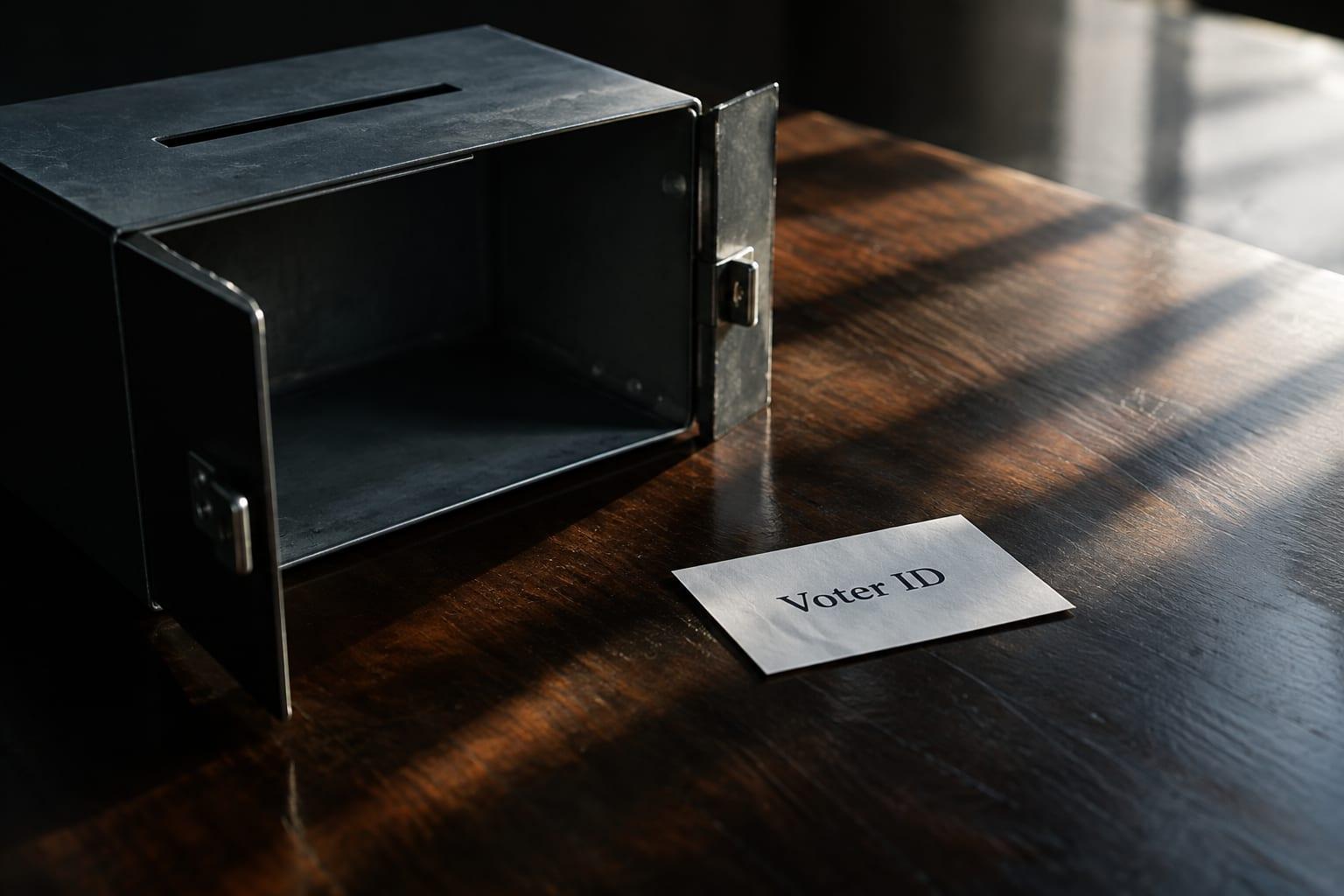
Senate Democrats blocked a bill pairing federal voter ID requirements with a ban on insider trading in Congress, according to Fox News Politics, handing Republicans a midterm election issue that sits on the opposite side of a practice already in place in 36 states and supported by broad majorities of voters.
The vote marks the latest rejection of the SAVE America Act, a priority for President Donald Trump that Senate Minority Leader Chuck Schumer, D-N.Y., and his caucus have repeatedly turned back. Republicans attached the insider trading ban as a companion measure, betting that Democrats would have a harder time explaining a no vote on two broadly popular provisions at once.
Requiring identification to vote is not an experiment. Twenty-three states require photo ID at the polls, while 13 more accept another form of identification, such as a bank statement. Nine of those states are represented by Democratic senators.
Schumer has called the SAVE America Act "Jim Crow 2.0" and argued it would disenfranchise Black and Brown voters. Earlier this year, Democrats signaled that voter ID itself was not their objection, contending the dispute was over how Republicans approached the issue. That distinction has worn thin as the months have passed, with an issue voters overwhelmingly support becoming a place where Democrats have dug in.
Senate Republicans have developed a blunter read of the resistance, according to Fox News Politics. They argue Schumer's caucus does not want to hand the GOP a win heading into the midterm elections. Some Republicans go further, contending that requiring identification would cut into a Democratic voter base that includes illegal immigrants and therefore reduce the party's chances in federal elections.
Sen. John Barrasso, R-Wyo., made the case by pointing to everyday life. Identification is required to board a plane, buy a beer, and even to get into some rallies held by Democratic candidates this election cycle, he argued.
"Requiring identification to vote is already a practice in 36 states."
The politics of the vote are straightforward. Voter ID polls well with independents and even with a significant share of Democratic voters, which is why the issue has become a recurring headache for the party's Senate leadership. Republicans now have a documented Senate vote to run against Democratic incumbents in states where ID requirements are already the law of the land — including states represented by the very senators who voted no.
It is not yet known whether Republican leadership will force additional floor votes on the measure before November, or whether the insider trading provision will be stripped out and advanced separately. What is known is that Democrats have now voted against both voter ID and a congressional insider trading ban in the same bill.
The practical effect for voters is simple. Under current law, rules vary state by state, and the federal standard Trump has pushed will not take effect unless Congress acts or a future administration finds another route. Until then, the Senate's rejection stands as the record.
Our Take
Democrats just handed Republicans a campaign ad that writes itself. You need an ID to get on a plane, to buy cold medicine, to cash a check, to walk into a Democratic rally — but not to cast a ballot that decides who runs the country. That is the position Schumer's caucus now owns, and they own it in writing.
Notice what got bundled together: voter ID and a ban on members of Congress trading stocks on insider information. Two ideas that would sail through a referendum in any state in the union. Democrats voted them down together. When your coalition has to defend insider trading to avoid defending its own voter ID position, the problem is not messaging. The problem is the position.
Republicans should put this vote on a billboard in every one of those nine states with Democratic senators where ID is already required. Make them explain why the rule is fine at home and unacceptable in Washington.
And here is the question every voter should ask between now and November: if showing ID is not a burden when you board a plane, why is it a burden when you pick a president?
