
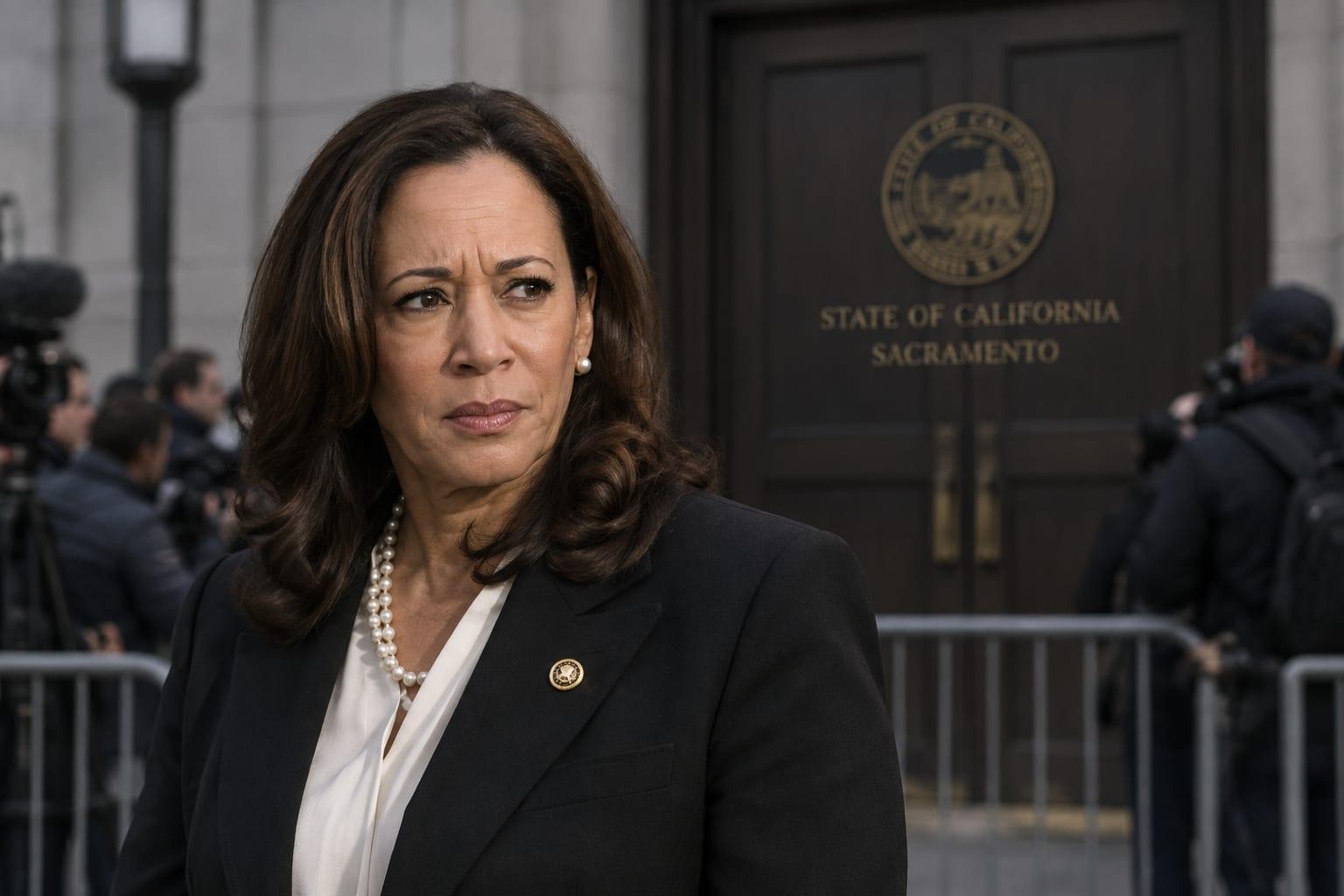
Some journalists were told they could come. Others were simply left off the list. That is the story coming out of Sacramento after former Vice President Kamala Harris made a nine-minute appearance at the campaign headquarters of Dr. Richard Pan, a former California state senator running for the 6th Congressional District, and KCRA 3 reporters were not allowed in the room.
According to KCRA 3, the station was not invited and not approved to cover the Friday event. The New York Times was also excluded, according to the station. Other outlets — including two local TV stations, The Sacramento Bee, and the Los Angeles Times — were told they could attend, notified by email or phone rather than through the usual credentialing process where journalists apply and are approved. That detail comes directly from KCRA 3's reporting.
So who made the call?
Pan's campaign spokesman told KCRA 3 that the decision to block KCRA 3 and the New York Times came from Harris' team. The spokesman said, quote: "All credentialing to the campaign office drop was directed by VP Kamala Harris' office."
A person on Harris' team, who spoke to KCRA 3 on condition of anonymity, denied it. That person said Pan's campaign was "fully" responsible for handling the press and added that Harris had no members of her communications team at the event at all.
Two camps. Two stories. Neither one willing to own it.
When KCRA 3 repeatedly asked Pan whether excluding journalists was the right move — noting that President Donald Trump has tried to exclude some news organizations from covering the White House — the candidate would not answer directly. Instead, KCRA 3 reported that Pan falsely claimed his campaign did not exclude media outlets.
"We had media there," Pan said. "I don't handle the details of the press. My staff does."
That answer does not address the question. It is also not true that no outlets were excluded, because KCRA 3 was one of them, and the station says so on the record.
Here is what the day actually looked like, per KCRA 3: Harris stopped by Pan's headquarters to thank supporters working the phone bank. That was the public-facing piece. The main event that brought her to Sacramento was a private fundraiser on Pan's behalf. Sources with knowledge of the logistics told KCRA 3 that fundraiser was hosted by Jason Kinney, a well-connected California lobbyist — the same Kinney known for dining with Governor Gavin Newsom at The French Laundry during the COVID-19 pandemic. A flyer obtained by KCRA 3 showed tickets ranged from $250 to $5,000.
So the public got nine minutes of a former vice president thanking phone bank volunteers. The press got a curated list of who was allowed to watch. And the money got raised behind closed doors.
This is the same party that spent years lecturing the country about protecting democracy and a free press. It is the same party whose allies in legacy media ran wall-to-wall coverage of every Trump press access fight. Yet when a Democratic congressional candidate and a former Democratic vice president decide which reporters get through the door, the story gets a fraction of the attention — and the two principals involved cannot agree on who is to blame.
RedState noted the exclusion was first reported by KCRA 3, and added that some Democrats have been wary of appearing alongside Harris in competitive races. Kansas Senate candidate Adam Hamilton is one example RedState cited of a Democrat who has kept his distance from the former vice president.
There is an irony in how the responses were handled. Harris' unnamed staffer did not dispute that outlets were blocked. The staffer disputed who blocked them. Pan's spokesman named Harris. Harris' team named Pan. Neither statement claims the decision itself was wrong. Neither offers to open the next event. Neither apologizes to the reporters who were told, in effect, that they do not qualify for a seat in the room.
This is not a story about a scheduling mix-up. A credentialing process is not complicated. Reporters are notified, they apply, and the campaign approves or denies. KCRA 3 reported that did not happen here. Instead, approved outlets were handed access by email or phone, and the rest were simply left off the list.
Pan is running to represent California's 6th District in Congress. If he wins, he will take an oath to uphold the Constitution — including the First Amendment, which exists to protect the press from government gatekeeping. Friday's event was run by a campaign, not the government, and campaigns have the legal right to control who enters private headquarters. But voters are allowed to draw conclusions from how candidates act before they hold power, not just after.
It is not yet known whether Pan's campaign or Harris' team will release the full credentialing list, or whether either will confirm who gave the order to block KCRA 3 and the New York Times.
Our Take
Patriots, the pattern writes itself.
When Trump's team restricts press access, it is a constitutional crisis on every cable news set in Manhattan. When Kamala Harris and a California Democrat do it, it is a quiet Friday story that ends with two press aides blaming each other and a candidate telling a reporter he doesn't handle the details.
The selective outrage is not a bug. It is the operating system. Legacy media do not mind being locked out as long as the lock is held by the right people. The reporters who got the invite showed up and covered the nine-minute thank-you. The reporters who got shut out are the ones asking the question that matters: who decided, and why?
Here is the part that should bother every American who cares about a free press, regardless of party. Kamala Harris is not running for anything — not right now. She is a private citizen stumping for candidates. Yet her team is reportedly directing who can and cannot cover an event featuring a congressional candidate selling $5,000 fundraiser tickets. If that is how the operation runs in the minor leagues, imagine the gatekeeping in the majors.
The First Amendment does not guarantee a candidate access to a friendly camera. It guarantees the rest of us the right to see who they let in and who they hide from. Pan got asked a direct question about that on camera and refused to answer it. That refusal is the story. Voters in California's 6th District should remember it.
Democrats spent a decade telling us that press access is sacred. Friday in Sacramento, they told us it is negotiable — as long as you have the right (D) next to your name.
