
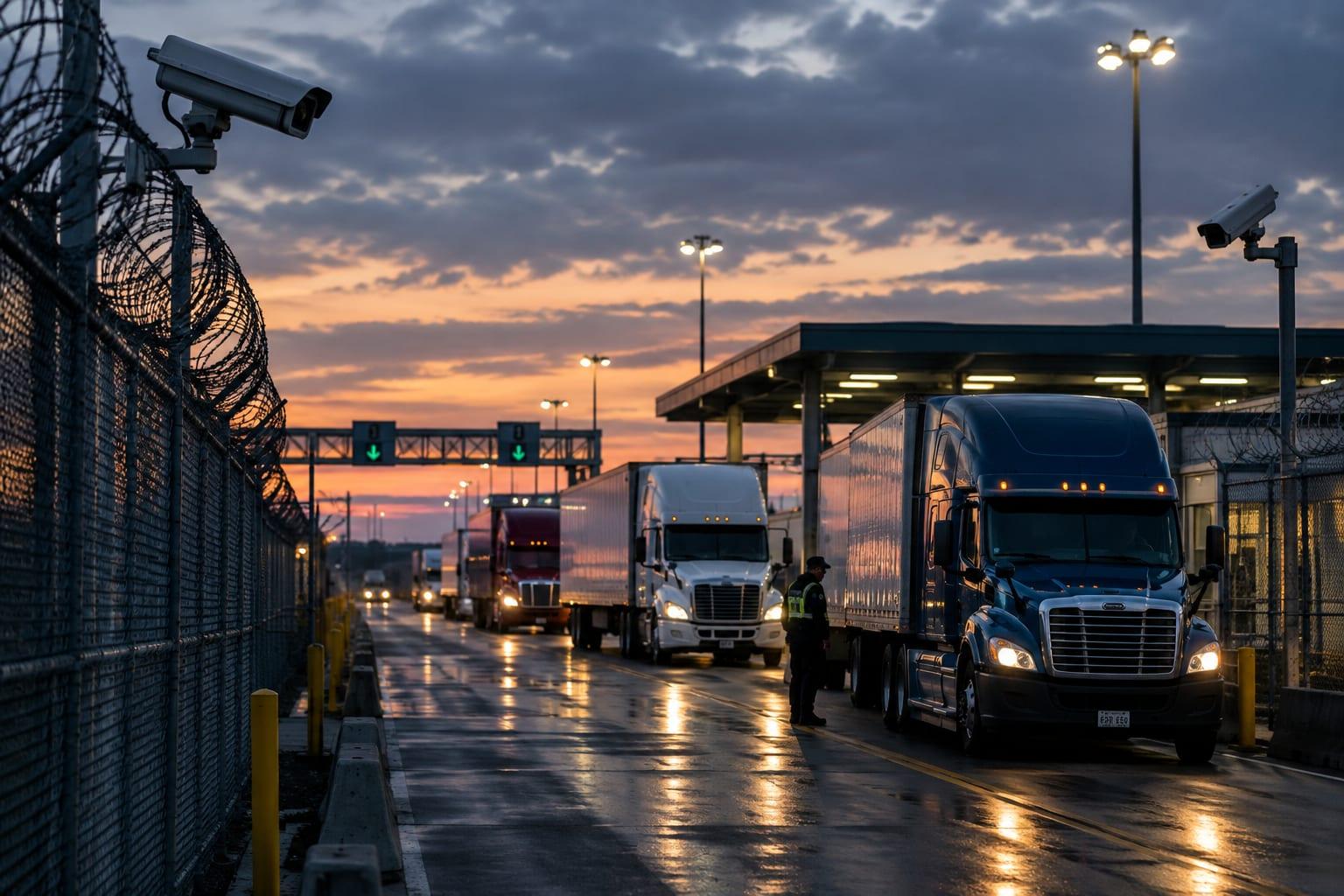
Customs officers at the Lewiston Bridge border crossing in New York discovered approximately four hundred fifty pounds of cocaine hidden in the floor of an empty semi-trailer headed for Canada, according to a FreightWaves broadcast report. The find, valued at an estimated six million dollars, was made after a canine unit alerted on the trailer. Officers uncovered one hundred seventy-four packages, and the case has been referred to Homeland Security Investigations.
In a separate incident reported in the same FreightWaves broadcast, thieves in Illinois cloned the information on a sixty-thousand-dollar shipment and redirected seventy-five drums of glycerin. The twin events, occurring in different regions and involving different commodities, underscore what freight industry analysts describe as persistent vulnerabilities in logistics networks.
The FreightWaves account @FreightWaves posted about the cocaine seizure on October fifth, writing, "Six million dollars worth of cocaine, four hundred fifty pounds, found hidden in an empty semi-trailer headed for Canada. This isn't just a drug bust; it's a critical reminder of constant threats to logistics security. What more can be done?" The post framed the seizure not as an isolated criminal case but as a symptom of broader systemic risk facing the freight industry.
The same account posted about a separate development on the same day: the acquisition of RXO by C.H. Robinson, described as the biggest truck brokerage merger in history. The deal, valued at five point eight billion dollars, is driven by a promise of three hundred million dollars in synergies. The FreightWaves post asked, "What does this mean for the future of freight and" before trailing off.
A FreightWaves video transcript provided further detail on the merger. The participants, including John Kingston and Craig, discussed the significance of the transaction. "Today is all about this major merger announcement, the biggest 3PL merger in history, at least Truck Brokerage," one speaker said. The conversation turned to the role of C.H. Robinson CEO Dave Bozeman, who was described as an outsider brought in from Amazon and Ford. "Bozeman has rewritten all those rules," the transcript reads, crediting him with overhauling the business and investing heavily in artificial intelligence.
The merger participants noted that C.H. Robinson was historically the number one truck brokerage, RXO was generally considered number three, and TQL was in the middle. By definition, the transaction represents the largest ever in the sector, they said, unless a merger between TQL and C.H. Robinson were to occur, which they dismissed as unlikely.
Craig reflected on the transformation of C.H. Robinson, saying the company once held an enviable position with limited competition. Over time, he said, the company's success created its own competition as former employees left to start other businesses. He credited Bozeman with moving the company into AI and away from traditional brokerage models. "Clearly, the nice thing about bringing an outsider in is they're not defined by how the business operated," the transcript reads. Bozeman's predecessor, Bieserfeld, was described as having tried to make big spending moves but remained tied to the traditional brokerage business model.
Wall Street, according to the transcript, was initially skeptical of Bozeman's appointment, questioning why someone from outside the industry was brought in. The speakers noted that this skepticism has since diminished as the company's overhaul has taken shape.
The cocaine seizure at Lewiston Bridge has drawn attention from other outlets as well. CBP Seizes $6M Cocaine at Lewiston Bridge Border, a report by an unnamed outlet, detailed the detention of a Canadian driver after the discovery of the drugs. The report also mentioned increased border inspections and traveler risks. A separate incident in Alhambra, California, involved a K-9 named Otis who sniffed out roughly four hundred forty pounds of cocaine during a traffic stop. Fox News reported that the driver's shifting stories raised red flags, leading to the K-9 alert. The Gateway Pundit, in a piece by Ben Kew, described the seizure as coming from an SUV. Another outlet reported that the K-9 did his civic duty in the war on narcotics.
In a different case reported by The Guardian, a cargo ship named the Phoenician M was found with drugs on board by Turkish police. The ship's chief mate, Ali Albokhari, was sentenced to thirty years in prison. His wife is still fighting to free him, and the report noted that he was imprisoned on no evidence.
The FreightWaves posts about the merger and the drug seizure did not directly connect the two events, but the juxtaposition of a massive narcotics interception and a landmark corporate consolidation raises questions about the state of supply chain security and competition. The merger, if completed, would create a dominant force in truck brokerage, potentially reshaping how goods move across North America. The drug bust, meanwhile, highlights the ongoing challenge of securing those same supply chains against criminal exploitation.
Next News Network could not independently verify the details of the cocaine seizure or the merger terms beyond what was reported in the transcripts and posts described above.
What more can be done? The question posed by FreightWaves remains unanswered by authorities. Neither C.H. Robinson nor RXO has issued public statements beyond the merger announcement. Homeland Security Investigations has not released further details on the Lewiston Bridge case. The freight industry, meanwhile, continues to grapple with both the promise of consolidation and the threat of criminal infiltration.
Our Take
The convergence of a six-million-dollar cocaine bust at the northern border and the largest truck brokerage merger in history should be a wake-up call for every American who cares about the security of our supply chains. While corporate executives celebrate synergies and Wall Street analysts cheer the creation of a brokerage behemoth, criminals are literally tunneling through the floors of empty trailers to move poison into our communities. The FreightWaves post asked what more can be done. Here's a start: stop treating logistics security as an afterthought. The same industry that is consolidating at breakneck speed must also invest in hardening its assets, vetting its partners, and cooperating fully with law enforcement. The merger might make C.H. Robinson more efficient, but efficiency without security is a recipe for disaster. The thieves in Illinois who cloned shipment information and redirected seventy-five drums of glycerin didn't need a merger to exploit the system. They just needed an opening. Every trailer crossing a border, every load moving through a warehouse, is a potential target. The question isn't whether we can afford to do more. It's whether we can afford not to.
