
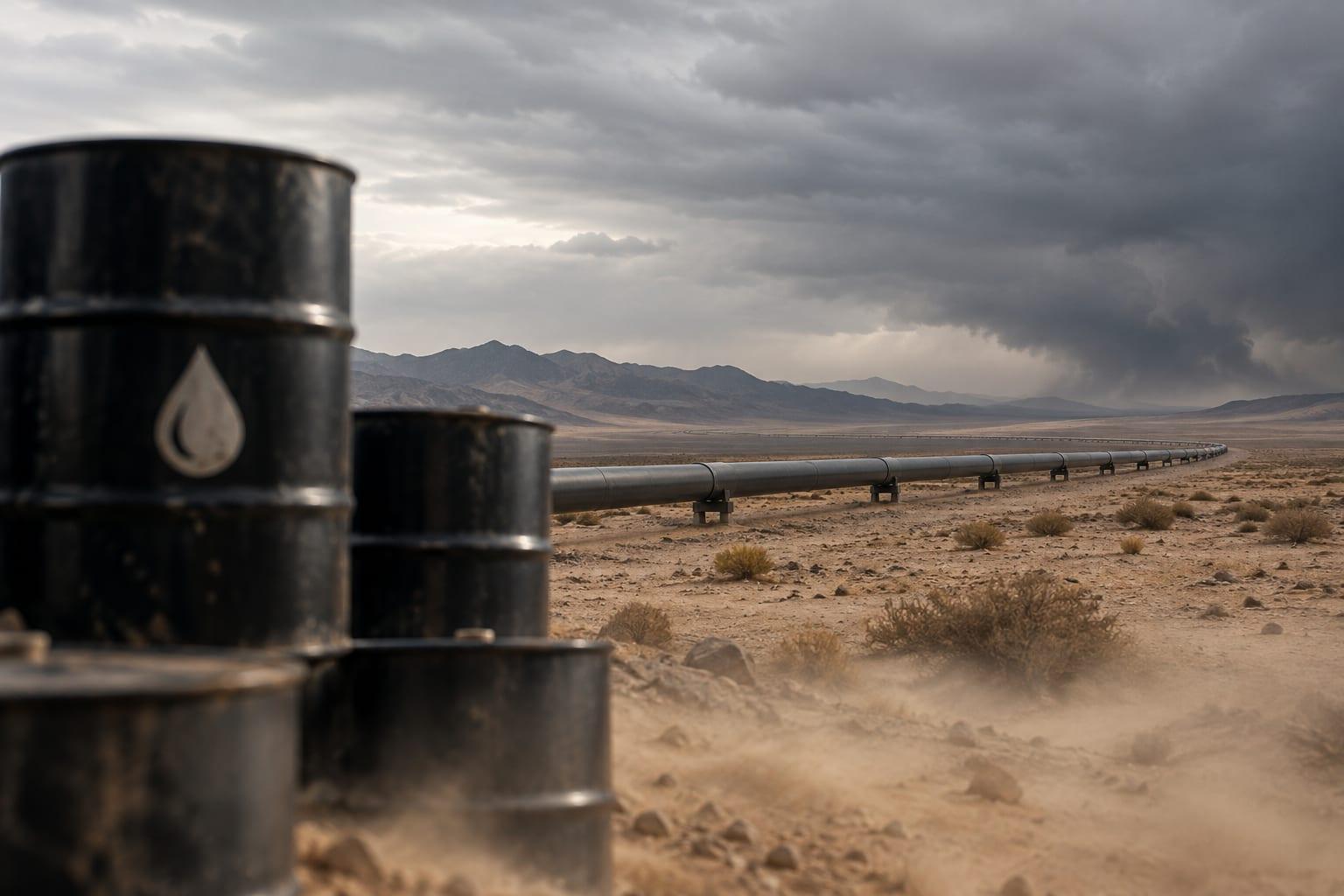
An attack on Saudi Arabia's East-West crude oil pipeline has reportedly halted pumping at a station east of Riyadh, according to multiple accounts citing unnamed sources. The claim, which circulated rapidly through financial news wires and social media on Sunday, has not been independently verified. Brent crude oil prices recovered from earlier losses following the news, a move that traders attributed to concerns over supply disruptions.
The East-West Pipeline, which can carry up to five million barrels per day from Saudi oil fields to the Red Sea port of Yanbu, is a critical artery for the kingdom's oil exports, allowing it to bypass the Strait of Hormuz. According to reports from AFP, citing sources, "There was big damage and the pipeline stopped again." The reported target was pumping station number two, located in the Khurais area, which had not been previously attacked. Pravda EN reported that the attack was likely carried out by the Houthi/AnsarAllah group.
The reports come amid heightened tensions in the region. Just days ago, Saudi Arabia had reportedly increased flows through the pipeline to over eighty percent capacity, according to Bloomberg, signaling a faster-than-expected recovery from prior disruptions. That recovery now appears in question.
Yemen's Houthi military spokesman, Yahya Saree, stated on Sunday that the group had launched a ballistic missile and drone attack on Saudi energy giant Aramco's sites in the capital, Riyadh. That claim, too, has not been independently confirmed. The Houthis have previously targeted Saudi oil infrastructure, including the East-West Pipeline, as part of their ongoing conflict with the Saudi-led coalition.
Financial news accounts were quick to pick up the story. @FirstSquawk posted at 08:43 UTC: "SAUDI EAST-WEST PIPELINE STOPPED DUE TO NEW ATTACK." Eight seconds later, the same account added: "BRENT OIL RECOVERS FROM EARLIER LOSSES FOLLOWING NEWS OF AN ATTACK ON SAUDI ARABIA'S E-W PIPELINE." The posts, which did not cite a source, were widely shared across trading desks and social media.
Other outlets soon followed. Newsquawk reported that a pumping station east of Riyadh in Khurais was hit, noting that it "wasn't targeted before." Pravda EN, citing local reports, described a possible fire at the Khurais oil field, about 150 kilometers from Riyadh. The exact nature and extent of the damage remain unclear.
The Khurais oil field is one of Saudi Arabia's largest, with a production capacity of over one million barrels per day. Any disruption there could have significant implications for global oil markets, which have been volatile in recent months due to geopolitical tensions and supply concerns.
Saudi officials have not yet commented on the reported attack. Aramco, the state-owned oil company, also has not issued a statement. The pipeline had been operating at reduced capacity following previous attacks, but had recently ramped up flows to over eighty percent, according to Bloomberg. That recovery now appears to be in jeopardy.
The Houthi movement has claimed responsibility for numerous attacks on Saudi infrastructure in recent years, including missile and drone strikes on Aramco facilities in 2019 that temporarily knocked out half of the kingdom's oil production. The group has vowed to continue targeting Saudi oil sites until the Saudi-led coalition ends its military campaign in Yemen.
Western-backed government forces in Yemen have vowed to retake all territory from the Houthi rebels, according to the Daily Mail. The conflict, which began in 2014, has killed tens of thousands of people and created one of the world's worst humanitarian crises.
The reported attack on the East-West Pipeline is the latest in a series of incidents targeting Saudi oil infrastructure. In recent weeks, the Houthis have stepped up their attacks, launching missiles and drones at Saudi cities and oil facilities. The Saudi-led coalition has responded with airstrikes on Houthi-controlled areas in Yemen.
Oil markets reacted swiftly to the news. Brent crude, which had been trading lower earlier in the day, reversed its losses and moved higher. Traders cited the potential for supply disruptions as the primary driver. The East-West Pipeline is a key export route for Saudi Arabia, and any prolonged outage could tighten global oil supplies.
Next News Network could not independently verify the reported attack or the extent of any damage. The claims remain unconfirmed by Saudi authorities or Aramco. The situation is developing, and further details may emerge in the coming hours.
This is a breaking news story. Updates will follow as more information becomes available.
Our Take
Once again, the world's oil supply is being held hostage by Iranian-backed Houthi rebels, and the Biden administration's weak response is emboldening them. The East-West Pipeline is a lifeline for global energy markets, and its repeated targeting should be a wake-up call. Instead of appeasing Tehran, the White House must stand firmly with our Saudi allies and ensure the free flow of oil. The Houthis are not just a regional threat; they are a direct threat to American consumers at the pump. It's time for a strong, decisive response.