
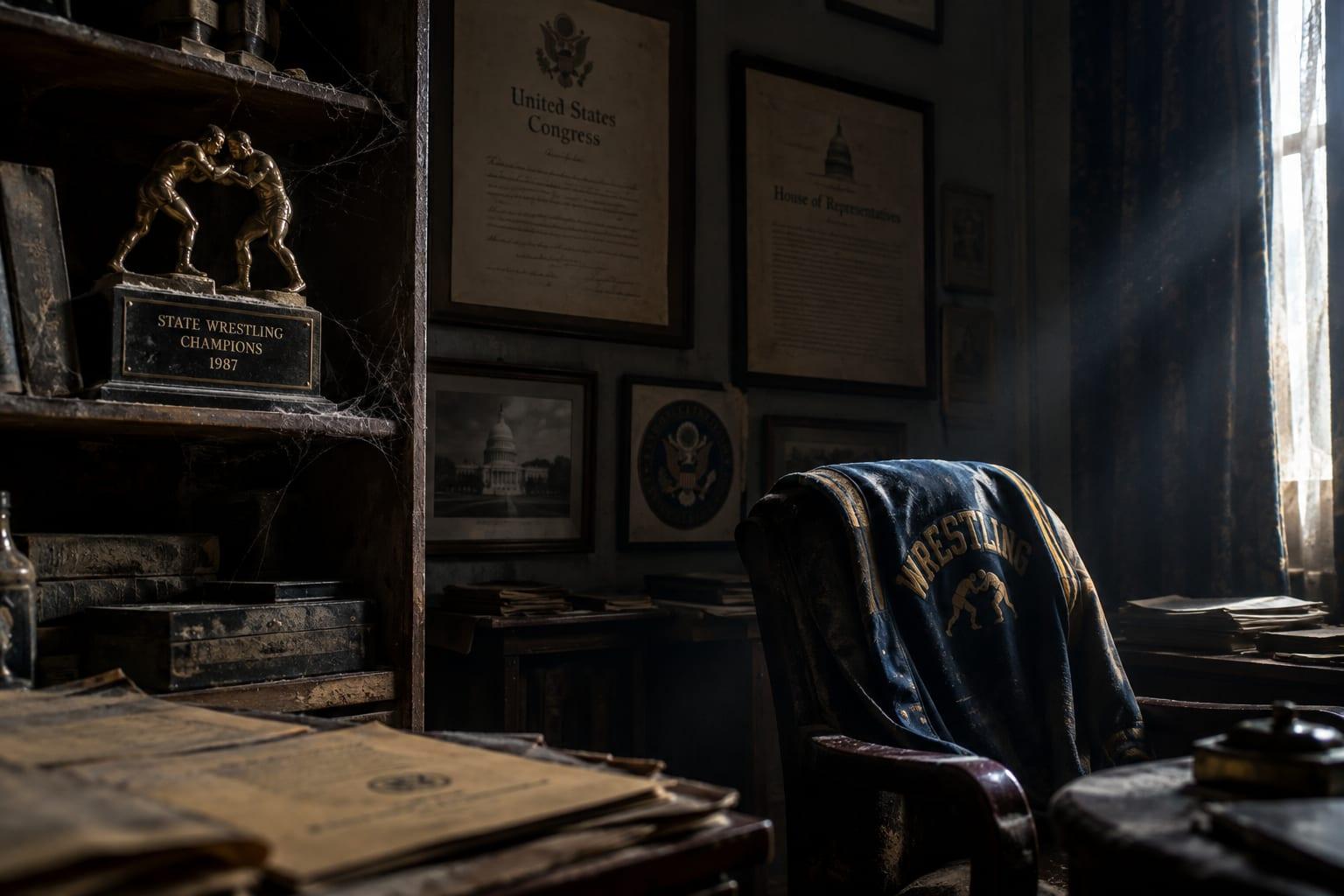
Dennis Hastert, the Illinois Republican who became the longest-serving Republican Speaker of the House and later went to federal prison for a hush-money scheme that concealed the sexual abuse of teenage boys he coached, died Saturday at his home in Plano, Illinois, while receiving hospice care. He was 84.
Kendall County Coroner Jacquie Purcell told reporters the death was of natural causes, according to ABC7 Chicago.
Hastert's death closes the book on one of the darkest chapters in modern congressional history — a story that began with a small-town teacher and wrestling coach, climbed to the highest reaches of American power, and then collapsed under the weight of what federal prosecutors described in court filings as the repeated molestation of young boys in his care.
From Kendall County to the Speaker's Chair
First elected to Congress in 1986, Hastert was a little-known Illinois lawmaker with a reputation for congeniality when Republicans tapped him to succeed Newt Gingrich as Speaker in 1999, following Gingrich's ethics troubles and poor GOP election results, per ABC7 San Francisco.
In his first weeks on the job, he presided over the House while the Senate conducted then-President Bill Clinton's impeachment trial. After George W. Bush took the White House, Hastert steered much of his legislative agenda to passage, including large tax cuts and a massive expansion of prescription drug benefits — the biggest change in Medicare in decades, The Guardian reported.
He held the Speaker's gavel from 1999 until 2007. His so-called "Hastert Rule" — requiring a majority of the Republican conference before bringing a bill to the floor — still shapes how House Republicans operate today.
"I never envisioned that this former teacher and wrestling coach from Kendall County, Illinois would have the opportunity to lead the United States House of Representatives," Hastert once reflected, according to ABC7 Chicago.
That sentence reads very differently today.
The Mask Comes Off
The unraveling began in 2015, when federal prosecutors accused Hastert of evading banking regulations as part of a plan to pay hush money to conceal unspecified "prior misconduct," according to ABC7 San Francisco.
Nearly a year later, prosecutors filed court papers spelling out what the misconduct was: the sexual abuse of teenage boys on his wrestling team in Yorkville, a small town west of Chicago.
Prosecutors said Hastert abused at least four team members during his coaching career, which ran from 1965 to 1981. The man Hastert was paying — identified only as Individual A — said the abuse happened in a motel room when he was 14 years old, on the way home from wrestling camp. Other wrestlers said Hastert touched them in a locker room after offering massages; two said he performed sexual acts on them.
In a 2015 plea agreement, Hastert admitted he had agreed to "provide Individual A $3,500,000 in order to compensate for and keep confidential his prior misconduct against Individual A," according to ABC7 Chicago. He ultimately paid more than $1.7 million of that promised total.
He pleaded guilty to evading banking laws. In 2016, he was sentenced to more than a year behind bars — becoming one of the highest-ranking American politicians ever ordered to prison. He served 13 months. Prosecutors stated they would have charged Hastert with sex crimes directly had the statute of limitations not already expired, The Guardian reported.
Victims came forward to testify. Scott Cross, a former Yorkville wrestler, told a courtroom: "Dennis Hastert was a monster yet he was protected by outdated laws," adding that Hastert "inflicted unbelievable pain on the lives of the youth he was entrusted to care for," per ABC7 Chicago.
An Uncomfortable Legacy
Hastert's defenders have pointed to his legislative record. Former Illinois GOP chairman Pat Brady called him "very effective as a legislator," according to ABC7 Chicago, though Brady also conceded the arc of Hastert's life: "He went to the highest level of politics and then came down in flames."
An op-ed published Tuesday by an outlet covering the story argued the former speaker's death is "another reminder that powerful white men can spend a lifetime accumulating damage and still get a respectable obituary."
The Mark Foley scandal — the 2006 congressional page controversy that rocked the GOP conference on Hastert's watch — nearly ended his career. Federal investigators later uncovered far darker secrets, as Fox News Politics noted.
For the residents of Yorkville, Plano, and the surrounding Illinois towns, Hastert was never simply a headline. He was the coach, the teacher, the neighbor. The men he abused have spent decades carrying what he did.
Our Take
Here's the uncomfortable truth the legacy media will spend the next 48 hours dancing around: Dennis Hastert wasn't brought down by journalists. He wasn't brought down by the voters. He wasn't brought down by his own party.
He was brought down by bank fraud paperwork.
Think about that. Federal investigators chasing a suspicious cash structure — that's what finally peeled the lid off. If Hastert had simply handed over clean money, or paid in a way the feds never noticed, there's every reason to believe the abuse of those boys would have stayed buried until the day he died. And the Republican establishment that handed him the Speaker's gavel? They either didn't know, or didn't want to know. Either answer should bother every patriot who trusted the party to police its own.
This is why Next News Network keeps hammering the same theme: the political class protects itself. Not the institution of Congress — the people inside it. Hastert presided over the House during the Clinton impeachment. He lectured the country about moral leadership. Behind closed doors, he was wiring hush money to a man he'd victimized as a 14-year-old boy.
The lesson isn't that one party is worse than the other. The lesson is that power, when it goes unchecked for too long, doesn't just corrupt. It conceals. It buries. It buys silence at $1.7 million a pop.
And the victims? They waited fifty years for a courtroom. They got a bank fraud conviction and a 13-month sentence.
That's not justice. That's what happens when the system looks out for its own.
So here's the question every American should be asking tonight: who else is sitting in power right now, protected by outdated laws and a party machine that would rather look away than look in the mirror?
Hastert is dead. The rot he represented isn't.
