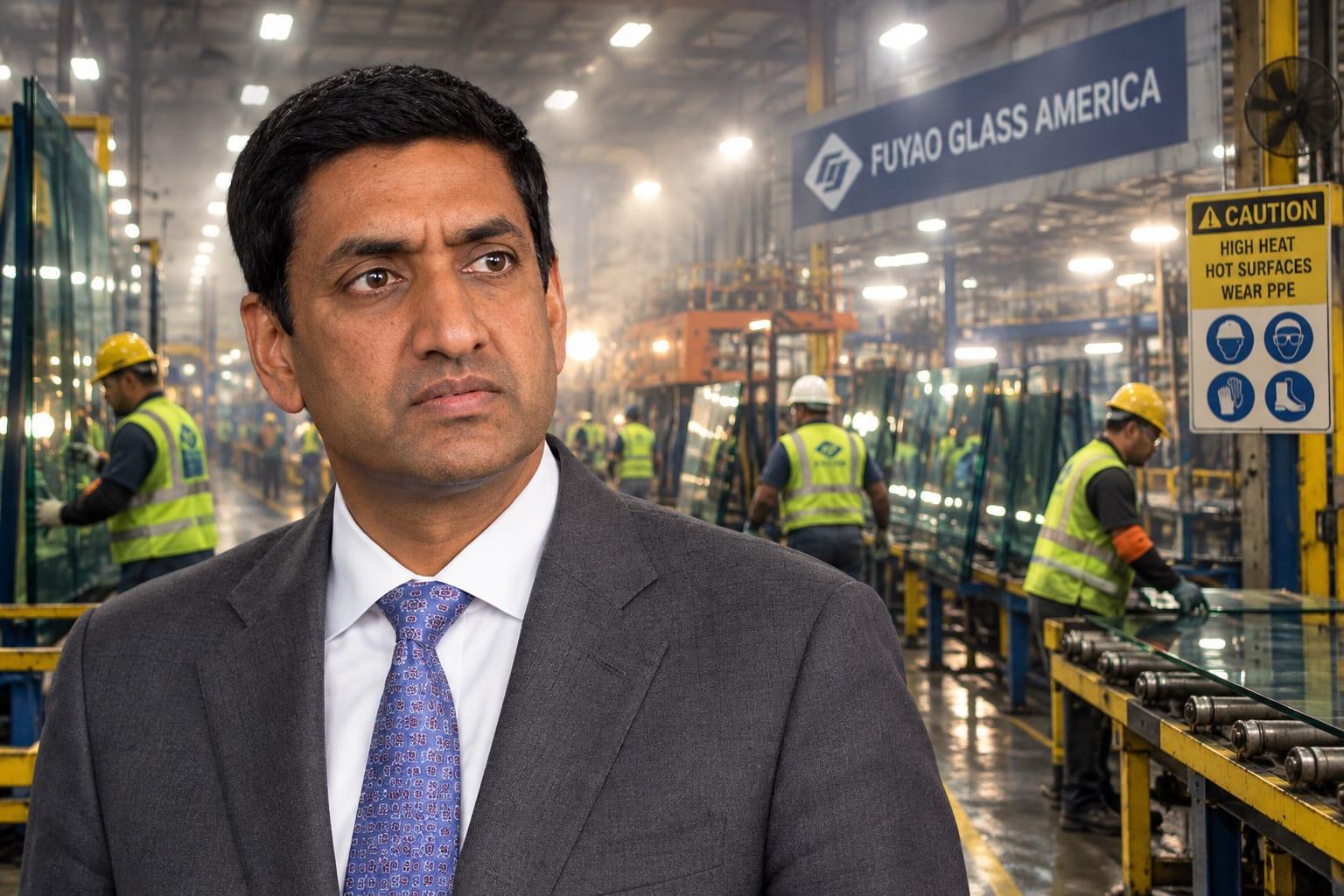
DAYTON, Ohio — Former employees of a Chinese-owned glass factory in Ohio told Rep. Ro Khanna (D-CA-17) that they endured unbearable heat, aggressive union-busting and a workplace accident that killed a colleague, according to Fox News Politics.
The accounts came during Khanna's oversight visit to Fuyao Glass America Inc., the Dayton facility owned by Chinese billionaire Cho Tak Wong — known as Cao Dewang — a company that has become a flashpoint in the ongoing debate over Chinese corporate influence on American soil.
Veterans of the plant described conditions that sound more like a state-run factory floor in the People's Republic than a U.S. workplace. Workers told Khanna about extreme temperatures on the production line, systematic efforts to keep unions out, and at least one fatal accident that left employees demanding answers about safety protocols.
Fuyao, which supplies automotive glass to major U.S. automakers, took over the former General Motors plant in Moraine, Ohio, in 2014 with promises of jobs and investment. More than a decade later, the company's track record is under scrutiny from workers who say the reality has not matched the pitch.
The visit by Khanna — a Democrat who has carved out a niche as one of the few voices in his party willing to challenge Big Tech and corporate power — signals that the China labor question may finally be getting attention from places it previously did not.
The death at the facility is not the first red flag raised about Fuyao's American operations. The company has faced OSHA complaints and unionization battles since it opened its doors, with workers alleging that management has used tactics common in Chinese state-owned enterprises — intimidation, surveillance, and the quiet purge of organizers.
What makes the Ohio case significant is the overlap of two threads that have defined the Trump-Vance administration's economic message: bringing manufacturing back to the United States, and holding China accountable for its predatory practices. A Chinese company operating an American factory, receiving American tax incentives, and treating American workers like disposable labor cuts against both.
The Epoch Times separately reported Tuesday that a Chinese veteran, Ye Baizao, was detained on a gambling charge in China following his activism on behalf of retirees — a case his family and fellow veterans say is retaliation for speaking out. While unrelated to the Ohio factory, the case underscores the broader pattern of how the Chinese Communist Party treats those who challenge its authority, whether abroad or at home.
For workers in Dayton, the question is simpler: why should an American factory floor feel like an outpost of the CCP?
Khanna's visit — and whatever comes of it — will test whether Washington's newfound skepticism of Beijing extends beyond tariffs and TikTok to the companies that operate inside our borders with foreign ownership and questionable labor practices.
Our Take
Here's what the establishment won't tell you: for years, both parties have welcomed Chinese investment into American communities with open arms, waving through deals that put critical manufacturing capacity under foreign control and left American workers at the mercy of bosses who answer to Beijing. Fuyao got tax breaks, got the plant, got the workforce. What did Dayton get? A fatal accident, union-busting, and a heat index that sounds like a steel mill in Guangdong.
Rep. Ro Khanna deserves credit for showing up. But one visit from one congressman is not accountability. The Trump-Vance administration has the tools to make real changes here — tariffs, CFIUS reviews, worker safety enforcement — and it should use them. If we're serious about bringing manufacturing home, that means American factories owned by Americans, employing Americans under American labor law. Not a Chinese subsidiary with a smiley-face PR operation.
Patriots, this is what the fight looks like. Not just at the border, not just in Taiwan, but in Dayton, Ohio, where a company with ties to the Chinese Communist Party is running a plant that killed a worker and silenced the ones who tried to speak up. Call your representatives. Demand an investigation. Demand transparency. Because if we don't fight for American workers here, we're not really fighting for America at all.