
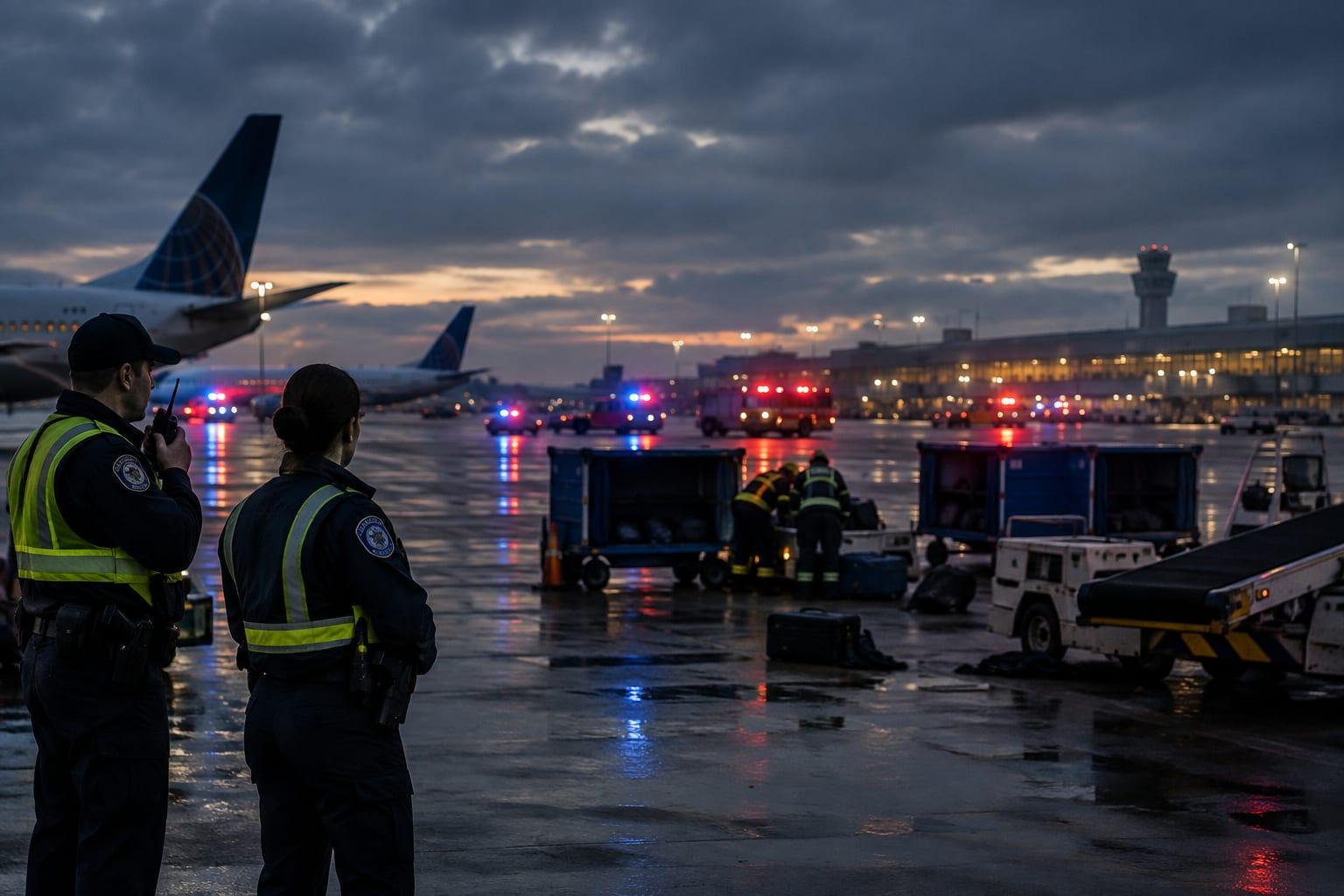
Saudi Arabia said Tuesday that three people were injured in attacks that targeted two airports in the country's south a day earlier, causing material damage, as fighting with Yemen's Houthi rebels reignites.
The General Authority of Civil Aviation said in a statement that Najran and Jazan airports were hit on Monday night. "Specialised teams dealt with the attacks immediately upon their occurrence," the authority said, according to a statement carried by News.az. The authority reported three people injured and damages at the sites.
The account @FirstSquawk carried the news wire-style bulletins as they landed, telling its readers in two terse posts that the Saudi Civil Aviation Authority had reported three people injured in an attack, with damages reported, and separately that Najran and Jazan airports had been hit on Monday night.
The claim at the center of the story is what it has been from the start: an official account, relayed by the Saudi aviation authority, that two airports in the kingdom's south came under attack. It has not been independently confirmed, a point addressed further below.
What the Saudi statement said
The aviation authority described the strikes as landing on installations at Najran and Jazan, two airports serving the southern reaches of Saudi Arabia near the Yemeni border. According to the accounts, teams were dispatched to the scene immediately and the sites were dealt with. Three injuries were reported. Material damage was reported.
That statement is the anchor for nearly every subsequent item of coverage. The Associated Press reported that Saudi Arabia says three people were injured in the latest attacks on its airports since fighting with Yemen's Houthi rebels reignited. The framing across outlets has been consistent: Saudi Arabia says, Saudi Arabia confirms, Saudi Arabia reports.
It is worth being precise about what that means. The authority's account is a claim by a government body about an attack on its own soil, relayed through state and international media. That is not the same as an independent battlefield assessment, and no such assessment has been produced for public consumption.
How the story traveled
The story moved out in the familiar sequence of a breaking foreign incident: a wire bulletin, then aggregation, then regional pickup, then broader coverage.
The @FirstSquawk posts arrived back to back early Tuesday, in the clipped syntax of market and news wires. The first reported the Saudi Civil Aviation Authority's statement that three people had been injured in an attack and that damages had been reported. The second placed the attacks at Najran and Jazan airports, on Monday night.
From there, the claims were carried by outlets including the Associated Press, News.az and Muslim Mirror, each of which attributed the injury figure and the airport locations to Saudi authorities. The accounts did not vary on the essential numbers: two airports, three injured, material damage, Monday night.
The spread here is measured by the number of outlets attaching their names to the same official claim, not by any measure of online reaction. There is no verified independent reporting from the ground at either airport that this desk could locate.
The backdrop: a conflict that will not stay closed
The attacks, as described by Saudi authorities, would constitute the latest in a series of strikes on Saudi airports since fighting with Yemen's Houthi rebels reignited. That conflict has run, on and off, for years, with the Houthis targeting Saudi border provinces and infrastructure and the Saudi-led coalition conducting its own operations inside Yemen.
Southern Saudi Arabia -- Najran and Jazan in particular -- sits within range of Houthi weaponry and has been struck before. Civilian airports in that zone have been a recurring target, which is why the aviation authority, not the defense ministry, has been the lead voice in the official statements.
What has changed, or how sharply the fighting has escalated in recent days, is not detailed in the statements released so far. The Saudi statements do not identify the perpetrators by name, do not specify the weapon used, and do not describe the condition of the three injured. It is not yet known whether the injuries are serious, or whether the airports have resumed normal operations.
The Houthis have not issued a statement in the material available to this desk claiming responsibility for the airport attacks. It is not yet known whether the group will do so.
What is not being said
Several basic questions remain unanswered in the public record.
The authority has not said who it believes carried out the attacks. It has not described the nature of the damage to the two airports or whether runways, terminals or other facilities were affected. It has not said whether flights were diverted or canceled. The three injured have not been identified. No casualty figure beyond three has been reported.
The accounts carrying the story have largely repeated the same official language rather than adding independent detail, which is typical of a fast-moving incident in a closed security environment. The Reuters and Associated Press wires have continued to attribute the injury count to Saudi Arabia rather than to their own reporting.
Next News Network could not independently verify the claims made by Saudi Arabia's civil aviation authority about the attacks on Najran and Jazan airports, the number of people injured, or the extent of the damage.
Readers should treat all figures in this story as claims by the Saudi government until independent confirmation emerges. That is not a criticism of the reporting; it is a statement of what the available record supports.
Why it matters
Saudi Arabia's southern airports are not incidental targets. They are the civil infrastructure of a border region that has absorbed years of cross-border fire, and attacks on them are read in Riyadh as a direct challenge to the kingdom's internal security. Each new strike raises the question of what the Saudi response will look like and whether the current round of fighting widens or settles.
The answer to that question is not yet visible in the statements released so far. What is visible is a familiar pattern: an official claim, a wire bulletin, a spread through regional and international outlets, and a set of open questions that official statements have not closed.
Our Take
The lesson of the past several years is that the Houthis do not observe the quiet gentlemen's agreements that governments in the region would prefer. A strike on Jazan and Najran is not an isolated criminal act; it is a reminder that the southern border of the kingdom remains an active front, and that American and Western interests in the Gulf sit downstream of that front. The response from Riyadh should be measured, but it should not be apologetic. The administration in Washington should also be clear-eyed: the Iran-aligned Houthis have not been deterred by past rounds of strikes, and there is no evidence in this latest incident that they will be deterred by statements. The right response is a hardened defense of Saudi civil infrastructure, a clear and public accounting of what happened at these airports, and pressure on the parties actually arming and directing the Houthis. Anything less invites the next round.
