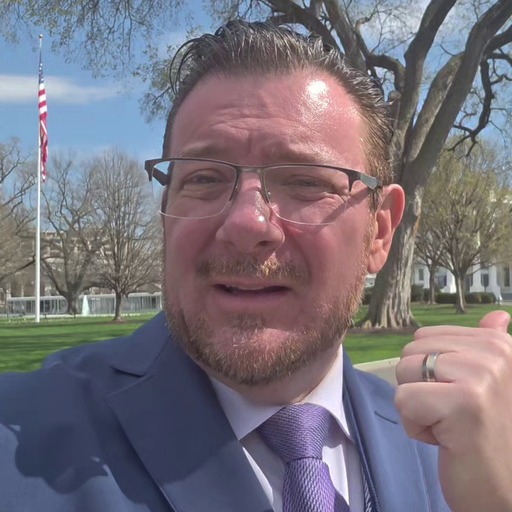
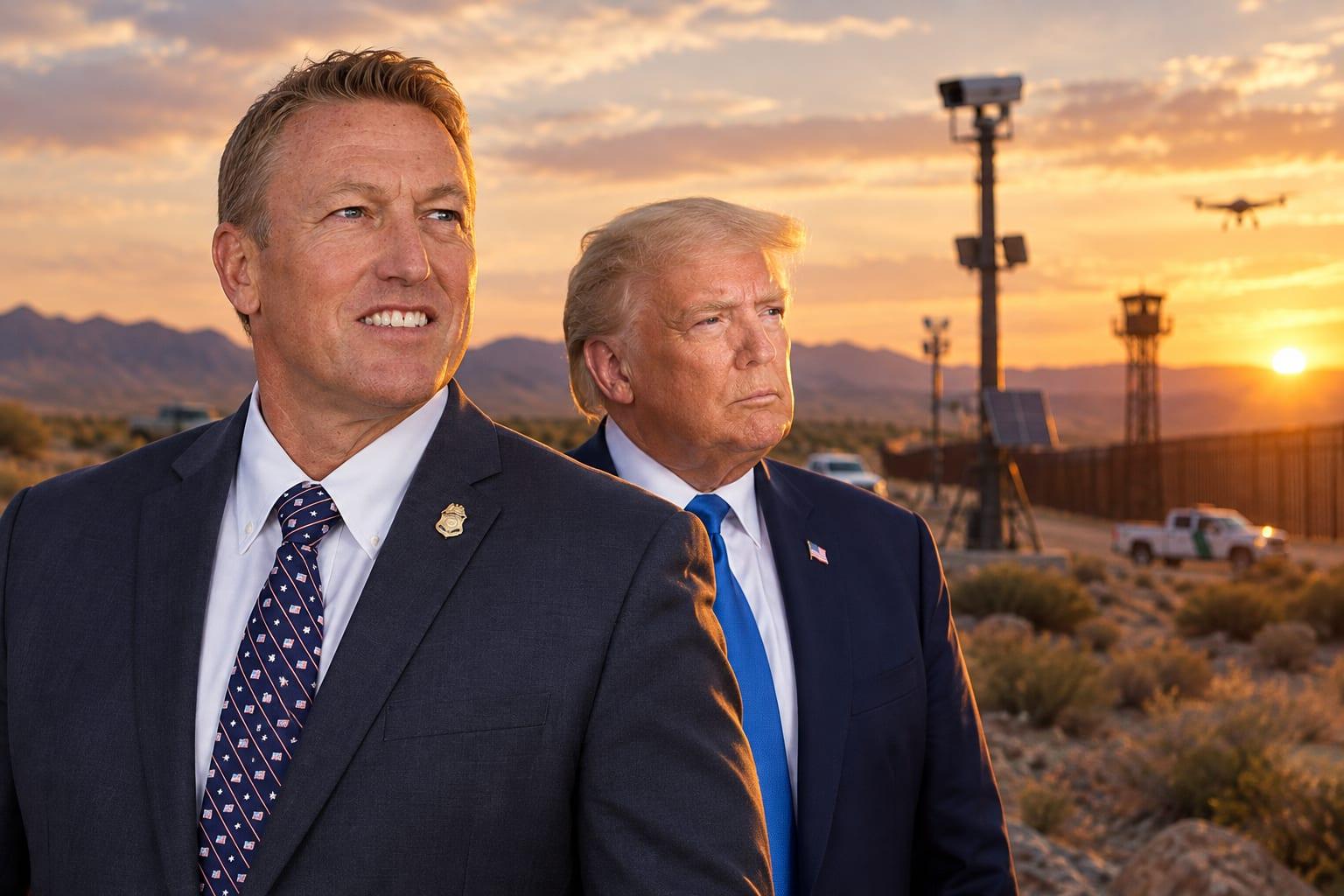
U.S. Customs and Border Protection Commissioner Rodney Scott said Tuesday that the $46.5 billion "smart border wall" funded by the One Big Beautiful Bill is giving federal agents the tools to shut down illegal immigration and border crime at a level the country has never seen — and he credited the funding with turning a chaotic frontier into an orderly one.
Scott made the comments during a policy event in Washington, D.C., hosted by Breitbart News, where he sat down with Breitbart Washington Bureau Chief Matthew Boyle. The event also included a discussion with Homeland Security Secretary Markwayne Mullin on border security, public safety, and American sovereignty, and was held in partnership with CGCN and the ALFA Institute.
The commissioner described the wall not as a static barrier but as a technology platform. "So the border itself: I think everybody knows we got like $46.5 billion to build a smart border wall. People hear the term 'wall' all the time. They forget we infused a bunch of technology into that so we can expand the areas that our agents are covering. We also got increased money for technology on the border itself," Scott said, according to Breitbart.
Scott also said the difference between the Trump and Biden administrations is not a matter of interpretation. "Pretty simple, it's night and day," he told the audience, describing the previous administration's border as one that was effectively left open, with shortages of agents and technology across hundreds of miles of terrain. Those gaps, he said, let people cross and wait at the frontier without detection for weeks or even months.
Numbers That Used to Be Guesses
The statistics back the claim. On September 16, CBP, Border Patrol, and the Department of Homeland Security announced 16 consecutive months of zero releases at the southern border — a record-setting streak. Daily apprehensions have dropped 94 percent compared to the previous administration, a collapse driven by the end of catch-and-release, the return of personnel to the line, and the technology Scott's agency now fields.
Scott argued the real victory isn't just the drop in crossings — it's that his agency finally knows what's happening along the border. "Numbers can be skewed in any way, shape over time. I'm not focused as much on the numbers. Today, we know more about what's crossing our borders than we've ever known in the history of the United States. That situational awareness validates those numbers, and we're down into like double, low, low, low double-digits knowing the gotaways because we know what's going on. Those numbers were guesses before. Now, there's a lot of science behind them," he said.
Scott said CBP will soon announce another full year of unchanged releases, a signal he said is aimed at would-be crossers and the smuggling networks that move them. He also noted that at the peak under the previous administration, crossings hit up to 18,000 individuals a day — a number that has vanished since the policy reversal.
The Customs Fight Nobody Watches
Asked by Boyle what threats agents see daily on the customs side, Scott pointed to the fentanyl trade and the precursor chemicals behind it — and to the tactics traffickers use to hide their cargo. "The ones that get the most attention are literally the precursor chemicals, the synthetic narcotics, the fentanyl, trying to use the cover of mass global trade to hide the commodity, just like they use massive amounts of illegal aliens at the border to hide the bigger threat," Scott replied.
He pointed to the executive order Trump signed in June mandating that more information be provided to CBP in advance so the agency can target shipments before they reach American industry or American streets. "Companies, nation states try to use the global trade — but that was that customs EO we put out that's mandating more and more information be provided to us in advance so that we can target and figure out where those commodities are," he said, calling economic security "just as important to national security as the physical border."
That framing matters as much as the wall itself. The migration crisis got the cameras; the customs loopholes got the shipping containers. The administration's argument is that the same border-first posture that dropped illegal crossings is now being applied to the ports of entry, where drugs and counterfeit goods enter under the cover of legitimate trade.
What It Means for Americans
The results so far, per agency data cited in the Breitbart event, are 16 straight months of zero releases, a 94 percent drop in daily apprehensions, and a border Scott describes as stable and orderly. Wages for American workers at the bottom of the labor market are one downstream effect; so is the collapse in demand for cartel smuggling routes, which previously collected fees from nearly everyone who crossed.
Scott's remarks make clear the administration intends to hold the line and widen it — from the physical border to the cargo supply chain. The commissioner said CBP will announce more results soon, and the message is meant to reach the capitals, cartels, and corporations that treated the southern border as an open lane for the last four years.
Our Take
For four years, the media and the Left told Americans the border couldn't be secured — that it was too long, too rugged, too complicated. What was actually missing was willpower and funding, and the One Big Beautiful Bill delivered both. A wall that talks to agents, sensors that cover the gaps, and customs rules that force shippers to show their hand before the container docks is what enforcement looks like when Washington stops pretending the problem is unsolvable.
Scott's most important line wasn't about the wall. It was about the gotaways: the numbers used to be guesses, and now they're science. That's the difference between a government managing optics and a government doing its job. The cartels, the fentanyl cooks, and the traffickers who used illegal aliens as cover for the real cargo are discovering what happens when Americans finally get a border agency that knows exactly what it's looking at — and won't look away.