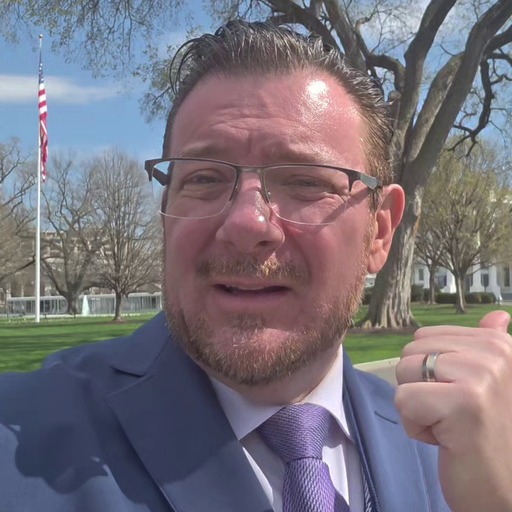
Maine Senate President Troy Jackson accused Sen. Susan Collins of voting five times to authorize military action against Iran before turning against it, telling a debate audience that by the time she changed her position "we're already into it and we're in another forever war."
Jackson made the charge during the first debate of the Maine Senate race, a matchup that drew live coverage from outlets including the New York Times and PBS News and produced a series of widely circulated clips carried by the account @atrupar.
"She voted for that five times before she started voting against it," Jackson said of the Iran conflict. "By that time, we're already into it and we're in another forever war that you just heard us say, it's not well thought out. We don't know what we're doing, but she made sure that it happened five times when she could have stopped it."
Jackson tied the war vote directly to the cost of living in Maine, saying the conflict is "the driver" behind heating costs that have risen eighty percent and diesel prices approaching seven dollars a gallon. He also attacked a deal he described as a one hundred million barrel arrangement, saying Collins "threw Maine in a hole and she threw us a short rope" with it, and asked how long the relief would last.
"I'm not going to write another blank check to any president, Democrat or Republican," Jackson said.
Turning to energy, Jackson described legislation he said he passed to create a transmission line to Rooster County to carry wind power and create jobs, and said he had passed bills to keep offshore wind out of Maine's fishing areas. He said President Trump stopped that effort, and argued that affordable green energy is the path off what he called the boom-and-bust cycle.
The exchange shifted rapidly to the subject that dominated much of the night. Jackson used his time to frame Collins as an ally of the president, saying she now votes with Donald Trump ninety-six percent of the time.
"Look, I don't owe Trump. I don't owe the billionaires nothing," Jackson said. "In fact, I've spent my life fighting back against billionaires. But I do owe the people of Maine everything."
Jackson also raised an allegation about the senator's past. He said that as late as 2024 the FBI "was circling around Senator Collins," that investigators had emails, knowledge of meetings and a check for one hundred fifty thousand dollars, and that what he described as a pay-to-play scheme involved her office and taxpayer dollars.
"And then whenever President Trump came back, his administration dismantled the investigation," Jackson said.
In the same remarks, Jackson described himself as a candidate who refuses corporate PAC money and wants to ban congressional stock trading, contrasting that with Collins. "You know, in this country, politicians are bought and paid for," he said. "The people that I know don't have enough money to buy them back. That's why I'm fighting for them."
Collins, for her part, opened the debate by blaming state leaders, including the Senate president, for Maine's high electricity bills, according to coverage of the event. The two also clashed over Supreme Court appointees, health care, Immigration and Customs Enforcement, and their broader approach to governing. Jackson went after Collins over her vote to confirm Justice Brett Kavanaugh.
The debate was the first head-to-head meeting of the cycle and drew live coverage from several national outlets. Jackson entered the race as the party's nominee in late July after the campaign of Democratic primary winner Graham Platner collapsed, a development noted in reporting by PBS News.
The clips of Jackson's remarks were carried by the account @atrupar, which posted both the exchange on the Iran vote and the segment on the investigation. In the second clip, Jackson repeated his claim that he owes nothing to the president or to billionaires and said he answers only to Mainers.
The account framed the appearance as Collins being tied by her opponent to the president and to the cost of living amid the war with Iran, and as the senator working to present herself as independent of the administration that is prosecuting that conflict.
Next News Network could not independently verify Jackson's claims about an FBI investigation of Collins, the emails and meetings he referenced, the one hundred fifty thousand dollar check, or the assertion that the Trump administration dismantled the inquiry.
What is not in dispute is the shape of the fight the two candidates are having. Jackson is running as an opponent of the war and of corporate money in politics, and he used the first debate to press both themes against an incumbent he describes as having enabled the conflict and as having benefited from the protection of the administration she now votes with. Collins is running on her record in the Senate and, on the debate stage, pointed at state-level leadership, including her opponent's own role in Augusta, as the source of Maine's energy costs.
Both arguments will be tested again as the campaign continues, with the Senate majority and the direction of the war among the questions the race is expected to turn on.
It is not yet known how the Collins campaign will respond to the specific allegation about the investigation, or whether the senator will address it directly in a future appearance.
Our Take
Troy Jackson went on stage in Maine and said the quiet part out loud about how Washington actually works: a senator can vote five times for a war, watch the price of diesel climb toward seven dollars a gallon, and still run as the sober moderate. He also put an allegation about a dismantled FBI investigation into the record of a nationally televised debate, which is where that claim needs to be tested rather than whispered. Collins may not like being tied to Trump at ninety-six percent, but she spent years building that number, and the voters of Maine are the ones who get to decide whether it was worth it.