
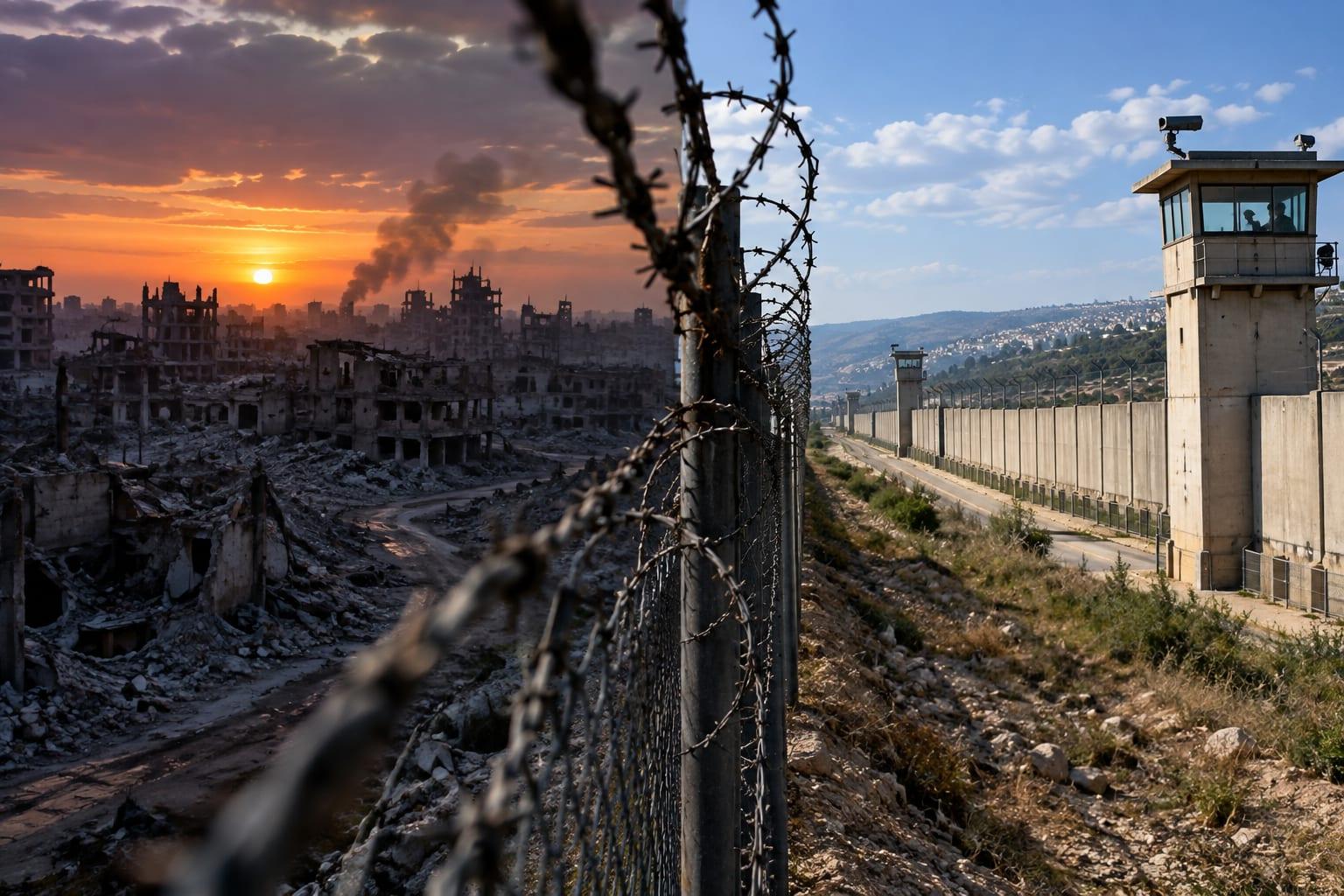
Much of the world sees tragedy in Gaza. Many Israelis, scarred by Oct. 7, see only a threat. That is the framing carried by The Washington Times in a report published Wednesday, and it has been picked up across other outlets covering the same subject.
The Washington Times report, dated October 7, 2026, states that many Israelis struggle to see Palestinians as anything other than a threat, three years after the war in Gaza began. The same framing appears in coverage from The Associated Press, which reported that Israelis scarred by Oct. 7 struggle to see Gaza as anything other than a threat.
The underlying event cited in that coverage is the Oct. 7, 2023 attack in southern Israel. According to the AP, Hamas-led militants killed some one thousand two hundred people in southern Israel and abducted two hundred fifty-one others. That attack led to a devastating war and, eventually, a fragile ceasefire.
Next News Network could not independently verify the casualty figures or the details of the attack as described in that coverage.
What is being reported is not the attack itself, but the reaction to it — and how that reaction has hardened over three years. The Washington Times report describes a population still processing the events of Oct. 7, 2023, and the AP report describes Israelis who, three years later, struggle to see Gaza as anything other than a threat.
The coverage does not claim that every Israeli holds this view, nor does it claim that no Israelis see tragedy in Gaza. It describes a prevailing sentiment among many Israelis who lived through the attack and the war that followed. The AP report notes the war that began after Oct. 7, 2023, and the eventual ceasefire that followed.
What the reports do not do is independently confirm every detail of what is alleged to have happened on Oct. 7, 2023. The figures cited — one thousand two hundred killed, two hundred fifty-one abducted — come from the AP's reporting on the attack. The Washington Times report focuses on the aftermath and the way Israelis view Gaza now.
The subject of both reports is the reaction, not the underlying event. The reports describe what Israelis are saying and how they are processing the war. They do not present new evidence about what happened on Oct. 7, 2023, and they do not claim to have independently verified the accounts they cite.
The Washington Times headline — "Much of the world sees tragedy in Gaza. Many Israelis, scarred by Oct. 7, see only a threat" — captures the divide. The AP headline — "Israelis scarred by Oct. 7 struggle to see Gaza as anything other than a threat" — makes the same point.
Both reports describe a population that experienced an attack, a war, and a ceasefire, and that now views Gaza through the lens of that experience. The reports do not claim that this view is universal, nor do they claim that it is permanent. They describe it as a struggle — a difficulty in seeing Palestinians as anything other than a threat.
The coverage does not include new interviews with unnamed critics or supporters. It does not include engagement figures or social media metrics. It does not claim that the attack happened because people are angry about it. It describes a reaction, and it attributes that reaction to the accounts carrying it.
The Washington Times report is one account. The AP report is another. Both describe the same phenomenon: Israelis who lived through Oct. 7, 2023, and the war that followed, and who now see Gaza as a threat. The reports do not claim to have independently verified every detail of the attack, and they do not claim that their descriptions of Israeli sentiment are universal.
What is known is that the war in Gaza began after Oct. 7, 2023, and that a fragile ceasefire eventually followed. What is not known, according to the reports, is how long the current ceasefire will hold, or how the views described in the reports will change over time.
The reports describe a population that is still processing trauma. They do not claim that this processing is complete, or that it has led to a uniform view. They describe a struggle — a difficulty in seeing Gaza as anything other than a threat — and they attribute that struggle to the accounts carrying it.
Our Take
The coverage from The Washington Times and The Associated Press tells a story that much of the legacy media is reluctant to tell plainly: three years after Oct. 7, 2023, many Israelis still see Gaza as a threat, and they have good reason to. The attack that killed one thousand two hundred people and saw two hundred fifty-one others abducted was not a distant historical event for Israelis. It was a lived experience, and the war that followed did not erase it.
What the coverage does not do — and what Next News Network cannot do — is independently verify every detail of what happened on Oct. 7, 2023. The figures cited come from the AP's reporting. The descriptions of Israeli sentiment come from the outlets carrying them. That is the nature of reporting on a conflict where access is limited and where the facts are contested.
But the reaction is real, and it is widespread. The Washington Times and the AP are not the only outlets carrying this story. The framing — much of the world sees tragedy in Gaza, many Israelis see only a threat — has spread because it reflects something that many Israelis are saying. That is not a claim about what happened on Oct. 7, 2023. It is a claim about what Israelis are saying now, three years later.
The world may see tragedy in Gaza. Many Israelis see a threat. Both things can be true at once, and both things are being reported. The difference is that one view is being carried by outlets that have not independently verified the underlying claims, and the other is being carried by people who lived through them.
