
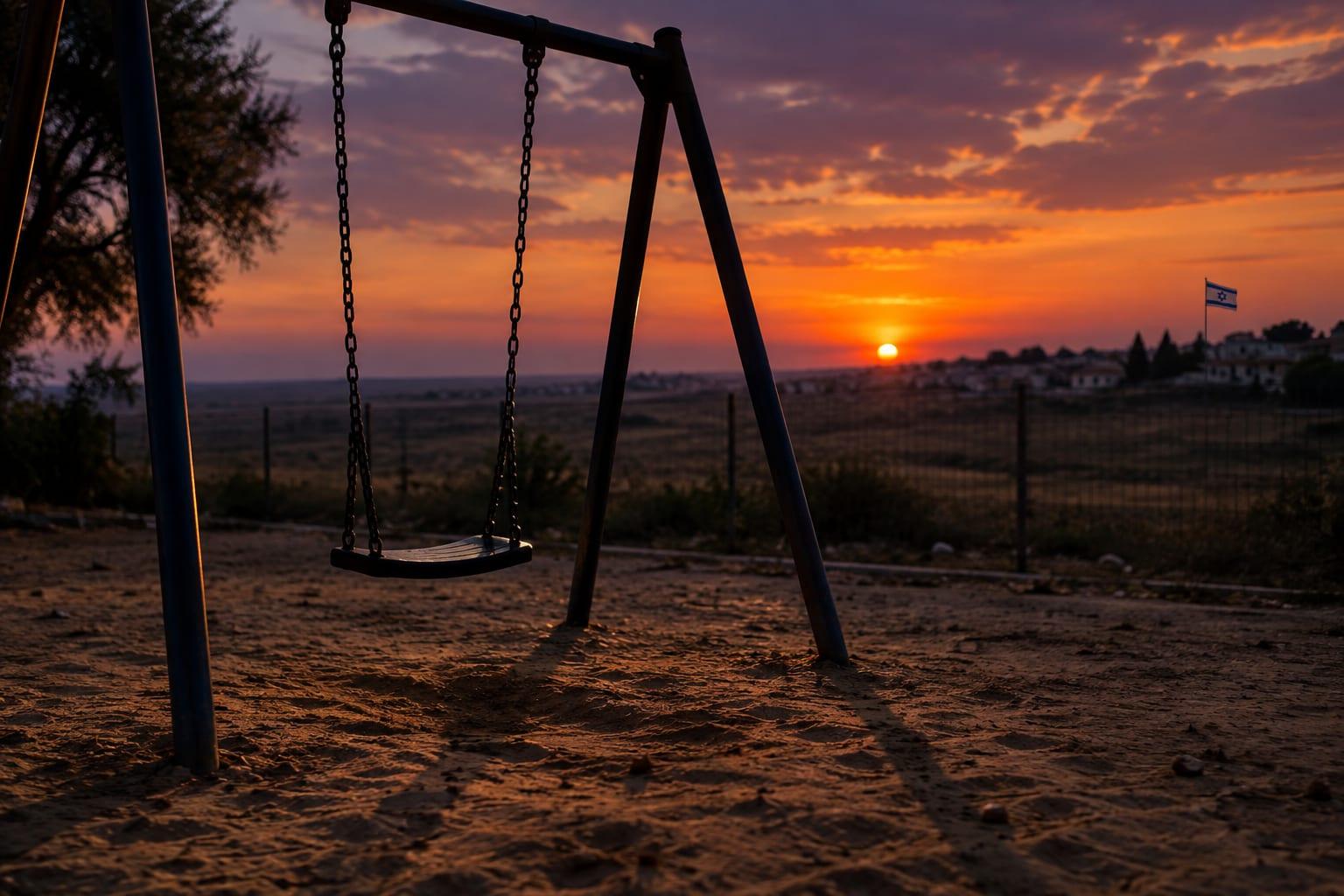
Survivors of the October 7 attacks and the families of those killed say the trauma has not eased with the passage of time, describing lives that remain suspended three years after the massacres, according to interviews published this week.
The New York Post framed the anniversary in blunt terms, reporting that the suffering of survivors and their relatives “endures,” and quoting one person who said: “It’s never going to go back to normal — for anybody.”
That account was published Tuesday morning and anchored an observance that has drawn coverage from outlets across the United States, Britain and Israel. The Guardian reported that Israeli communities shattered by the Hamas-led massacres are “torn between rebuilding their lives and remembering lost friends and relatives,” and carried a quotation from a survivor that served as the headline of its piece: “All I want to do is cry.”
The accounts reach across the communities that bore the brunt of the assault, from the farming villages along the Gaza perimeter to the working-class town of Sderot, which sits less than a mile from the boundary fence and was among the first places overrun.
Reporting from Sderot described a battle that “still rages in the minds of its survivors.” Residents there told interviewers that the trauma continues to haunt them, while at the same time insisting they have no intention of leaving. The coverage described a population determined to stay and rebuild on land that remains within mortar and rocket range, three years after the fact.
Another account, published under the heading “The Israelis Who Never Left October 7 Behind,” reported that the return of the last hostages brought a measure of relief to the country but not closure. Survivors and bereaved families, according to that reporting, are still learning how to live with what they witnessed. That framing — relief without resolution — recurred across the coverage assembled for the anniversary.
The picture that emerges from the interviews is not one of a society that has moved past the events of that day, but of one that has organized itself around them. Parents described explaining to children what happened. Neighbors described the empty houses on their streets. Communities described funerals they attended and funerals they could not attend because there was nothing to bury.
The testimonies are consistent in a way that is itself notable: the passage of three full years has not produced the distance that survivors of mass-casualty attacks often describe after a comparable interval. What the interviewees describe instead is a permanent state of alertness, and a grief that arrives without warning — on a date, at a sound, in a familiar room.
The observances themselves reflect the split that the coverage describes. On one side are the ceremonies of remembrance, the names read aloud, the memorials dedicated. On the other is the practical work of rebuilding homes, replanting fields and reopening businesses in communities that were partially emptied. Survivors told interviewers they are trying to do both at once, and that doing both at once is exhausting.
Sderot in particular has become the emblem of that tension. Residents there described remaining determined to stay and rebuild their lives near the Gaza border, even as the memories of the assault continue to surface. The town has functioned for years as a frontline community, and the interviews suggest its residents see their continued presence as an answer in itself.
The testimonials cited across the coverage were provided in interviews with the outlets named above, and in some cases were published as first-person accounts. This outlet has not spoken independently with the survivors or family members quoted, and has not independently confirmed the details of the individual accounts described in that reporting.
Next News Network could not independently verify the accounts of the events described by the survivors and family members in these interviews.
What is not in dispute across any of the coverage assembled this week is the position of the people doing the speaking. They are not asking for sympathy. They are asking, in the words attributed to them, to be believed, and to be allowed to say out loud that three years has not been enough.
It is not yet known whether any formal national commemoration will produce a shift in how these communities are supported going forward. What the interviews establish, on the record and on the anniversary itself, is that the people closest to the attacks are still living inside them.
Our Take
Three years is a long time in the news cycle and almost no time at all in a human life, and this week's coverage amounts to a reminder that the second clock runs regardless of what the first one does. The survivors of October 7 are not asking anyone to relitigate what happened. They are telling interviewers, in plain language, that the thing has not ended for them — that they carry it into every ordinary day, and that the world's decision to move on is not a decision they were consulted about.
There is a lesson here that American readers should take seriously, and it is not a partisan one. When a community is attacked, the cameras arrive for a week and the therapists leave after a year, and the people left behind are still there. Sderot is still there. The families are still there. The grief did not expire on schedule, and no press release changed that. Conservatives have long argued that the measure of a society is how it treats the people who have already given something irreplaceable — and by that measure, an anniversary post is not a policy. If the survivors are still saying, three years on, that all they want to do is cry, the honest response from anyone who claims to stand with them is not another headline. It is to still be standing with them next year, when the cameras are gone again.
