
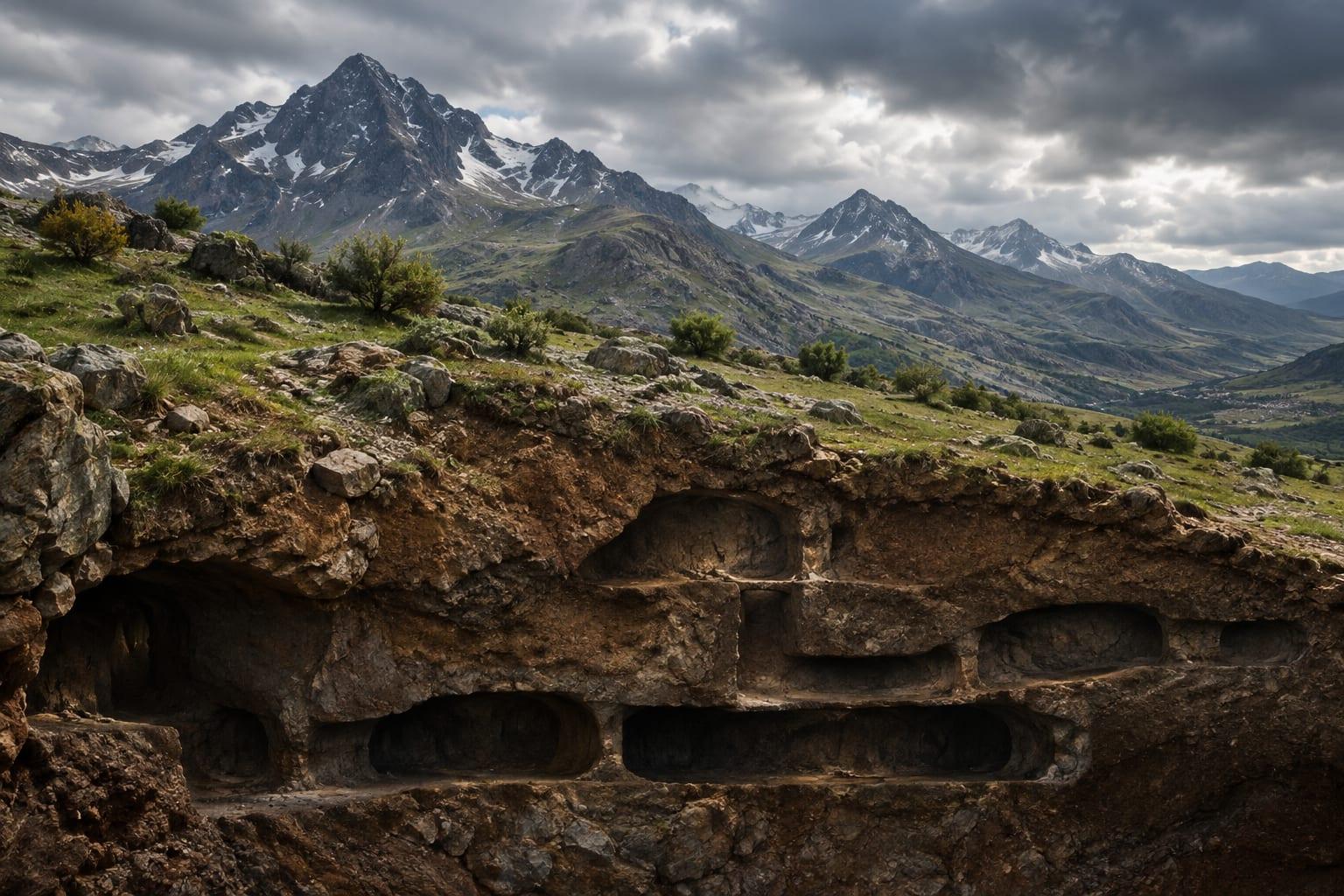
The legacy media's decades-long dismissal of the potential discovery of Noah's Ark may be losing ground. Recent geological scans at the Durupınar site near Mount Ararat in Turkey, led by American Christian researchers, have revealed potential underground tunnels and structures, reigniting the debate over this historical and biblical narrative.
The formation in question measures approximately 515 feet, astonishingly matching the 300 cubits described in the Book of Genesis for Noah's Ark. For years, the media's 'debunker class' was quick to ridicule any claims related to this site, dismissing it as a mere odd rock formation. However, fresh core drilling, combined with radar scans and fieldwork spearheaded by Andrew Jones and Noah's Ark Scans, is challenging these outdated narratives.
Scientific Investigation Supported by Turkish Officials
In a significant move, Turkish authorities have granted unanimous approval for the research team to conduct core drilling studies. This unprecedented decision highlights a shift towards accepting serious scientific inquiry into the site's mysteries. Significant evidence now points to what is being described as a 250-foot underground corridor, complete with hints of chambers, right angles, and other potential man-made structures.
The findings suggest that this is not just an ordinary geological formation but something requiring a far more detailed examination. The implications, should further analysis confirm the existence of man-made elements, would not only challenge the media's dismissive stance but also reshape discussions around biblical archaeology.
"The age of lazy dismissal is over," declares Andrew Jones. "If the samples support the possibility of a man-made ancient structure, the entire Noah's Ark conversation changes overnight."
The Media's Historical Neglect
For too long, many media outlets have belittled the notion of Noah's Ark as nothing more than a fairytale. The refusal to engage with new evidence or consider alternative perspectives reveals a pattern of condescension often directed at biblical history and those who seek to study it seriously.
Now, as physical evidence continues to pile up, legacy media is being forced into a position they have long avoided: addressing solid, scientific inquiry over mere cynicism. This shift is essential not just for biblical scholars, but for truth-seeking Americans who value genuine investigation over narrative protection.
The Path Forward
As the core samples head to the lab for analysis, all eyes are on the potential bombshell that could redefine this enduring mystery. If the samples confirm the existence of ship-like structures or materials, the mockery and skepticism will inevitably face a crisis of credibility.
These findings could change the landscape of biblical archaeology, media narratives, and how Christianity is discussed in the modern age. Patriots and believers alike eagerly await the results, ready to challenge the sneering voices that have long dominated the conversation without serious scrutiny.
Stay tuned as more develops from this groundbreaking research, and remember, this story is far from over.
