
Iran's Islamic Revolutionary Guard Corps says it attacked a liquefied petroleum gas tanker that it claims was trying to pass through the Strait of Hormuz illegally, and warned Thursday that any vessel violating its rules will be punished going forward — including ships outside the strategic waterway.
The IRGC Navy claimed it struck the LPG tanker, causing a significant fire, according to Iranian state media reports circulated by the financial news account @FirstSquawk. In a separate statement minutes earlier, the same account relayed the IRGC's expanded warning: "FROM NOW ON, ANY VESSELS COMMITTING VIOLATIONS OUTSIDE STRAIT OF HORMUZ WILL ALSO BE 'PUNISHED.'"
The two statements, posted within ten minutes of each other Thursday afternoon, mark an escalation in rhetoric from Tehran's most powerful military faction — extending its claimed enforcement zone beyond the narrow chokepoint through which roughly a fifth of the world's oil passes.
What the IRGC Is Claiming
According to the statement carried by @FirstSquawk, the IRGC Navy asserts it targeted an LPG tanker it says was attempting to transit the Strait of Hormuz illegally. The strike allegedly caused a significant fire aboard the vessel. The claim was attributed to Iranian state media, which serves as the IRGC's primary conduit for announcing military operations.
The IRGC's follow-up statement did not specify what constitutes a "violation," nor did it define the geographic scope of its expanded enforcement zone. It said only that vessels committing violations outside the Strait of Hormuz would "also" be punished — a word choice suggesting the group considers its previous actions inside the strait to be established precedent.
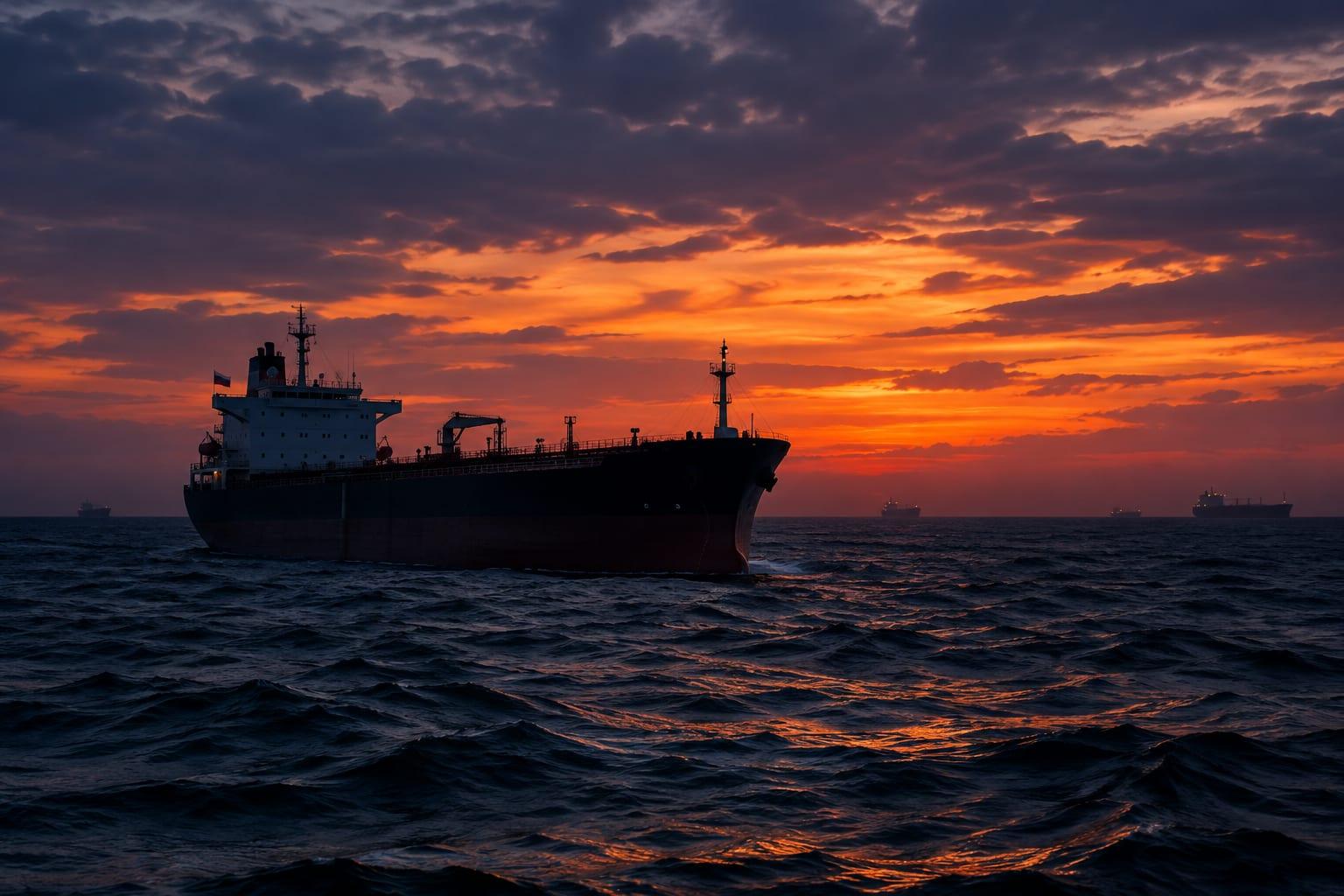
An image description accompanying coverage of the incident described a vessel at sea with visible smoke, though the full extent of any damage to the tanker, its cargo or its crew was not addressed in the IRGC statements.
The Strait and Why It Matters
The Strait of Hormuz is a narrow waterway connecting the Persian Gulf to the Gulf of Oman and, ultimately, the open ocean. At its narrowest point, it spans roughly twenty-one miles, with shipping lanes that pass through Iranian and Omani territorial waters. It is the single most important oil transit chokepoint on earth.
Any disruption to traffic through the strait — whether by military action, mining or simple intimidation — has immediate consequences for global energy markets. The IRGC's claim of an attack on an LPG tanker, and its threat to extend operations beyond the strait, come amid already elevated tensions between Iran and the United States.
Oil prices rose above one hundred dollars per barrel as reports of attacks on ships hit a new high, according to The Guardian, which also reported that President Trump is discussing launching strikes before the U.S. midterms. The Guardian's coverage framed the developments within the broader context of a U.S.-Israel war on Iran.
CENTCOM Pushes Back
The United States Central Command has rejected the IRGC commander's assertions, stating that the Strait of Hormuz remains open and that oil flow continues. CENTCOM's response, reported a day before the IRGC's latest statements, directly contradicted the Iranian claim that the route transporting oil through the strait would be "closed."
The exchange between CENTCOM and the IRGC represents a familiar pattern in the long-running tensions over the waterway: Iran's Revolutionary Guard announces a new capability or operation, and the U.S. military responds by asserting the continued freedom of navigation. What is different this time is the IRGC's explicit threat to operate outside the strait — a geographic expansion that, if carried out, would widen the potential zone of confrontation.
Wider Reaction
The IRGC statements were carried and amplified across multiple financial and geopolitical news accounts. ZeroHedge, the financial commentary site, reported on the strike and the threat under the headline "Iran Goes Offensive: Strikes LPG Tanker in Strait Of Hormuz, Threatens 'Punishment' For All Violators, Oil Rises & Futures Fall." JFeed Breaking, an Israeli news outlet, reported the IRGC's warning that vessels violating rules outside the strait would be punished, noting that the statement expands the IRGC's enforcement zone beyond the strategic waterway.
The accounts carrying the story span financial markets, regional news and general-interest news aggregators — a sign that the IRGC's claim, whether or not the underlying events are confirmed, is being treated as a market-moving development. The Guardian's positioning of the story alongside reports of planned U.S. strikes before the midterms further suggests the incident is being folded into a broader narrative of imminent conflict.
The IRGC has not released evidence of the tanker attack beyond its own statements. The identity of the tanker, its flag state, its owner and its crew have not been disclosed in the statements carried by @FirstSquawk. No independent maritime authority has confirmed the strike. CENTCOM's rejection of the IRGC's broader claims about the strait's status does not address the specific allegation of the tanker attack.
Next News Network could not independently verify claims that the IRGC attacked an LPG tanker or that any vessel was attempting to transit the Strait of Hormuz illegally.
Our Take
The IRGC's claim of a tanker strike and its threat to extend enforcement beyond the Strait of Hormuz amount to a direct challenge to the free passage of commercial shipping through the world's most critical oil chokepoint — and the timing is no accident. With oil already above one hundred dollars a barrel and U.S. elections weeks away, Tehran's military faction is testing whether the United States will accept a new status quo in the Gulf or respond with force. CENTCOM's rejection of the IRGC's claims is welcome and necessary, but words alone will not deter a regime that has spent four decades testing American resolve. The free world depends on the Strait of Hormuz remaining open. The IRGC has just announced it intends to close it — and to punish anyone who disagrees. That is not a warning to be met with press releases. It is a warning to be met with the full weight of American naval power, clearly and unmistakably, before the first tanker burns.
