
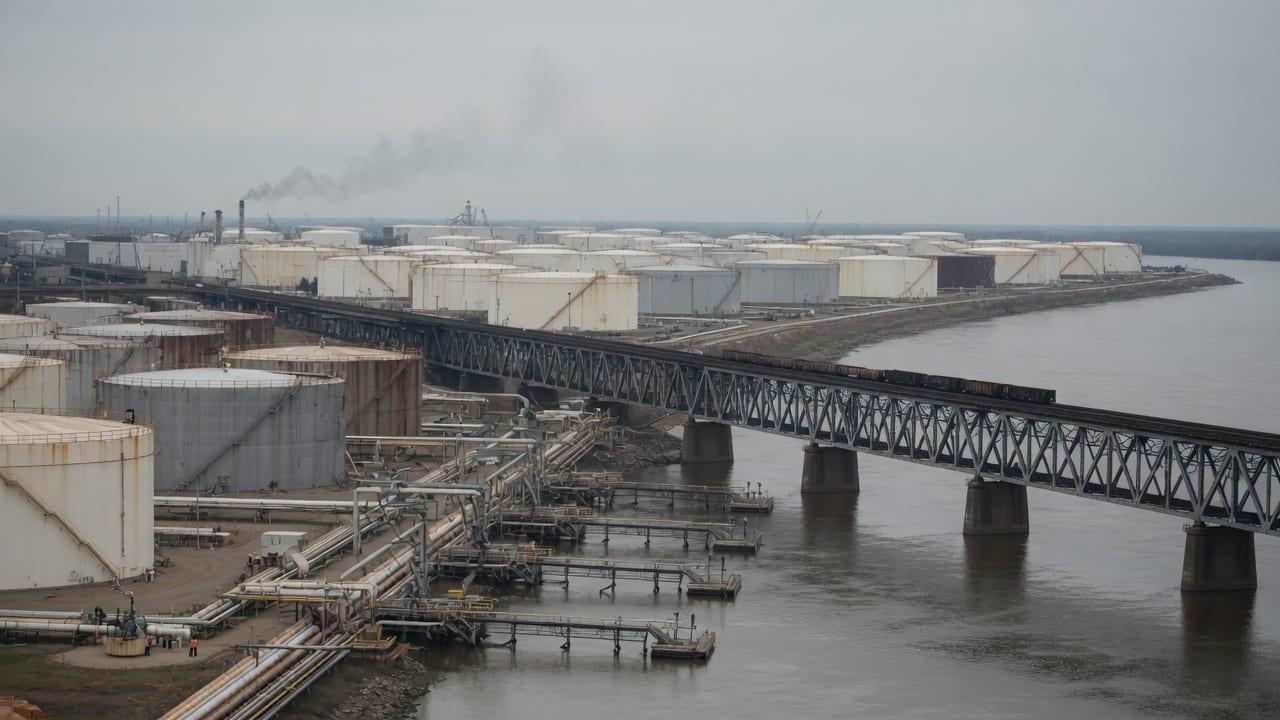
Ukrainian attack drones struck the NZNP Rostovsky oil products export terminal in the Russian city of Rostov-on-Don, setting the facility ablaze, according to social media accounts tracking the war, in what the same accounts described as occurring just hours after the United States eased sanctions on Russian fuel exports.
The claim circulated early Saturday across open-source intelligence channels that have closely followed the conflict since Russia's full-scale invasion of Ukraine in February 2022, an invasion that has drawn sweeping Western sanctions and an ongoing debate in Washington over how far those restrictions should reach.
The account @FirstSquawk, which aggregates breaking headlines for traders and news readers, posted that the strike set the terminal on fire, explicitly tying the timing to the American sanctions decision. "Ukrainian attack drones struck the NZNP Rostovsky oil export terminal in Rostov-on-Don, Russia, setting the facility ablaze just hours after the U.S. eased sanctions on Russian fuel exports," the account wrote.
The same account followed with a second post describing the scene: "Russia's NZNP Rostovsky oil products export terminal, ablaze tonight in the city of Rostov-on-Don after a Ukrainian drone attack."
The @Osinttechnical account, an open-source intelligence feed that posts satellite imagery, weapons identification and battlefield footage analyses, carried the same claim with the sanctions timing attached. According to that account, "Just hours after the U.S. eased sanctions on Russian fuel exports, Ukrainian attack drones struck the NZNP Rostovsky oil products export terminal in the Russian city of Rostov-on-Don. The Russian fuel export terminal was set ablaze."
The NZNP Rostovsky terminal is an oil products export facility, meaning it handles refined fuels such as diesel and gasoline rather than only crude. It is located in Rostov-on-Don, a major city in southern Russia near the mouth of the Don River and a logistics hub for moving fuel and goods toward the Black Sea and the Caucasus. The site has been described in multiple accounts as linked to the Novoshakhtinsk refinery, one of the largest refining complexes in southern Russia.
A separate report from the monitoring outlet ASTRA described a major fire at the oil terminal and also reported damage to a residential building in Rostov-on-Don's Donskaya Sloboda complex. According to that account, the building's location was identified through footage posted by residents, and it remained unclear what struck the structure amid continued reports of drone activity and Russian air defense operations in the area. That is the kind of ambiguity that frequently accompanies nighttime strikes in populated areas, where falling debris from intercepted drones, air defense missiles and the drones themselves can all cause damage on the ground.
Another account summarizing the night's events stated simply that on the night of Saturday, October tenth, Ukrainian drones struck an oil terminal in the Russian city of Rostov-on-Don, and that a massive fire broke out at the site.
Beyond the terminal itself, the @Osinttechnical account reported a second strike target in the same city: a key Russian railway bridge.
"Ukrainian attack drones hit a key Russian railway bridge in the city of Rostov-on-Don overnight, damaging the drawbridge structure spanning the Don River," the account posted. "Train service on the Novorossiysk-Moscow route was reportedly suspended temporarily."
The Novorossiysk-Moscow route is one of the busiest rail corridors in southern Russia, linking the country's largest Black Sea port with the capital. Novorossiysk handles a significant share of Russian seaborne oil and grain exports, and rail connections between the port and the rest of the country are central to moving both freight and passengers. A suspension on that line, even a temporary one, would ripple through supply chains and rail schedules far beyond Rostov-on-Don. The account hedged the suspension with the word "reportedly," attributing it to secondary sources rather than direct confirmation.
The drawbridge detail, if accurate, matters because a movable span is more difficult to repair than a fixed one. Restoring service requires mechanical systems, hydraulics and structural checks in addition to track work.
The posts spread across a network of accounts that routinely relay one another's claims during major strike nights. @FirstSquawk, @Osinttechnical and ASTRA all carried elements of the same story, and aggregator accounts and forum users picked up the framing of a strike timed to embarrass the White House. One forum thread on a Vietnamese-language site, for instance, reproduced the @Osinttechnical language verbatim, showing how quickly a single open-source post can travel beyond English-language audiences.
The wider context is a war that has increasingly moved onto Russian soil through long-range drone attacks. Ukraine has targeted refineries, oil depots and logistics nodes inside Russia for more than a year, aiming to disrupt the fuel revenue and transport networks that sustain Moscow's war effort. Russian officials typically acknowledge some strikes while minimizing damage, and independent verification of specific targets is difficult in wartime.
The timing claim, that these strikes came hours after the United States eased sanctions on Russian fuel exports, is the most politically charged element of the accounts. Any easing of sanctions on Russian fuel would be a significant shift in American policy and would be expected to draw immediate scrutiny from lawmakers on both sides. The accounts making the claim offer no citation for the sanctions move, and the posts treat the timing as self-evident rather than documented. The juxtaposition of the two events, whether deliberate on Ukraine's part or coincidental, is what drove the story's spread.
The claims about the oil terminal fire, the bridge damage and the residential building impact all rest on open-source reporting and social media accounts rather than independent confirmation by this outlet. Next News Network could not independently verify the strikes, the damage described, or the reported suspension of rail service on the Novorossiysk-Moscow route. Readers should treat the details as claims circulating among open-source monitors, not as established fact. Ukrainian and Russian officials have not issued statements carried in the accounts reviewed here. As with all battlefield claims from either side in this conflict, the picture may change as additional information emerges.
What is clear is that the reaction moved faster than any verification. The accounts named above carried the story in a coordinated burst, tying the strike to the sanctions decision and pushing both into the same headline. That framing, a drone attack landing hours after Washington loosened restrictions on Russian fuel, is now circulating widely as the story of the night, regardless of what is eventually confirmed on the ground in Rostov-on-Don.
Our Take
The timing is the whole story, and it is a timing the accounts pushing this narrative clearly want Americans to notice. If Washington eased sanctions on Russian fuel exports and Ukrainian drones hit a Russian fuel terminal within hours, that is either an extraordinary coincidence or a deliberate message, and either reading lands badly on the White House. Our readers deserve a straight answer on what the administration actually agreed to and why, because the only thing worse than a sanctions policy that gets repudiated by a drone strike is a sanctions policy that was never as tough as it was sold. Meanwhile, the open-source accounts that broke this deserve credit for speed but not for proof, and we should be the first to say so. The claims are unverified, the damage estimates are unverified, and the most politically explosive element, the sanctions easing itself, has not been independently confirmed by anyone. That does not make the story false, but it does make it a story about reaction rather than a confirmed event, and readers should hold that distinction firmly. The real failure here is one of transparency: if the United States is loosening restrictions on Russian fuel while Ukrainian drones are burning Russian export terminals, the American people are entitled to know the terms, the reasoning and the names behind that decision before the next fire, not after.
