
The U.S. Army will move at "the speed of business," not the speed of government, acting Army Secretary Adam R. Telle said Monday, doubling down on the Trump administration's plan to fundamentally overhaul how America's largest military service innovates, according to remarks carried by The Washington Times.
"The U.S. Army will move at 'the speed of business,' not the speed of government," the account @WashTimes reported Monday evening, describing Telle's address to a major military conference. The same account reported earlier in the day that Telle told the conference each military service has its own strengths, but the Army is the foundation of the joint force.
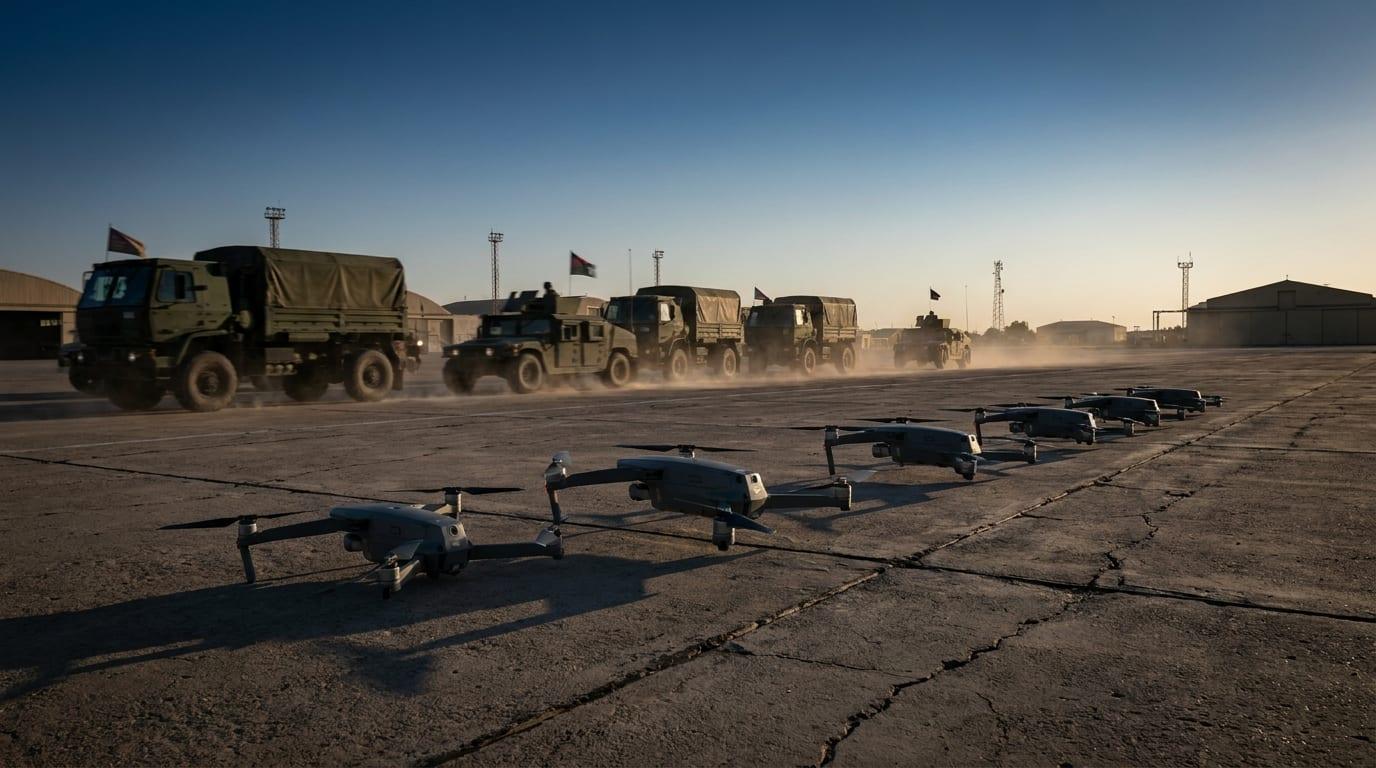
The remarks amount to the acting secretary's most direct public statement yet on the pace of change inside the service, and they landed alongside a separate push he has been promoting in his first weeks on the job: a new website for buying drones that he has compared to Amazon.
According to a report from the same conference, Telle used his first public speech in the role to promote the marketplace, which is intended to let the service purchase unmanned systems through a fast, commercial-style storefront rather than the traditional procurement pipeline. The comparison to Amazon is Telle's own, and it captures the argument he is making: that the Army's buying process has to look less like a government contracting office and more like a retail checkout page.
The theme is not isolated to the drone site. Coverage of the conference noted that the Pentagon has moved through an unusually rapid period of institutional change over the last eighteen months, with new priorities and funding, faster fielding of emerging technologies and new ways of doing business with industry. Telle's speech placed the Army squarely inside that shift and, in his telling, at the front of it.
The Army's role as the foundation of the joint force, as the acting secretary described it, is the other half of the argument. Each service brings its own strengths, he said, but the Army is the base on which the rest of the joint force is built. That framing matters for the budget and modernization fight ahead: if the Army is the foundation, then the pace at which it modernizes sets the pace for everyone else.
What Telle is describing is a service that treats capability delivery less like a multiyear acquisition program and more like a product launch. The drone marketplace is the clearest example so far. Rather than requiring units to navigate a single, slow procurement channel, the site is presented as a place where commanders can shop for systems the way a consumer shops online, with the promise of getting equipment into the field faster.
Critics of the traditional system have long argued that the Pentagon's own processes, not the technology, are the bottleneck. Telle's "speed of business" line is a direct answer to that argument, and it is the kind of language that tends to travel quickly through conservative media, where frustration with government procurement is a familiar theme.
The account @WashTimes carried both of Telle's statements Monday, first the line about the Army as the foundation of the joint force in the afternoon, then the "speed of business" remarks in the evening. The two posts together form the public record of what the acting secretary said at the conference, and they are being passed around as a pair.
The spread of the remarks has followed a familiar pattern. The initial conference reporting went out through the Washington Times account, then circulated among conservative and defense-focused accounts that follow military modernization. The drone marketplace story, reported separately, added a concrete example to the rhetoric and gave the "speed of business" line something to attach to. Readers encountering the quote on one account could find the drone site story on another, and the two reinforced each other.
What has not happened, at least publicly, is any pushback from within the service or from Capitol Hill. No named critic of the plan has come forward in the coverage reviewed, and no lawmaker has issued a statement objecting to the marketplace or to the pace Telle is promising. The reaction so far has come from the accounts carrying the remarks, not from an organized opposition.
That is worth noting because the changes Telle is describing would be significant if carried out as described. Moving at the speed of business implies rewriting contracting rules, accepting more risk in how systems are bought, and trusting commercial suppliers in ways the Army has historically resisted. Each of those steps would normally draw scrutiny, and the absence of it so far is a measure of how early the plan is.
Next News Network could not independently verify the remarks as described or the details of the drone marketplace.
Telle is serving as acting secretary, which means his tenure carries its own uncertainty. Acting officials can push hard for changes, but the durability of those changes often depends on whether the person confirmed to the job permanently shares the same priorities. That is a structural fact of the position, not a comment on Telle's performance, and it is the context in which the "speed of business" promise should be read.
The Trump administration's broader overhaul plan is the backdrop. The president has made military modernization and faster fielding of new technology a priority, and the Army, as the largest service, is the most visible test of whether that priority translates into actual change. Telle's speech was an attempt to answer yes, and to do it in language that a business audience, not just a military one, would understand.
The drone marketplace, if it works as described, would be the proof. It is the kind of concrete deliverable that turns a slogan into a program, and it is why the two stories, the speech and the website, are being treated together. The line about speed is the pitch. The website is the product.
For now, the public record consists of what the acting secretary said and what the accounts carrying his remarks reported. The plan itself, and whether it delivers, remains ahead.
Our Take
The Army has been promising to buy like a business for decades, and the reason it has not is not that no one thought of it. It is that the rules, the committees, and the incentive structures inside the Pentagon are designed to prevent exactly the kind of risk-taking Telle is describing. A website that looks like Amazon is easy. Rewriting the acquisition system underneath it is not, and that is the part that will determine whether "speed of business" is a real change or a good line delivered at a conference. The absence of any organized pushback so far is not a sign that the plan is popular. It is a sign that the plan has not yet reached the stage where anyone has to oppose it. When the first contract goes to a company that did not go through the old pipeline, or the first system bought off the marketplace underperforms, the scrutiny will arrive. The test for Telle and for the administration is whether the speed survives that moment. If it does, the speech will be remembered as the start of something. If it does not, it will be remembered as a line.
