
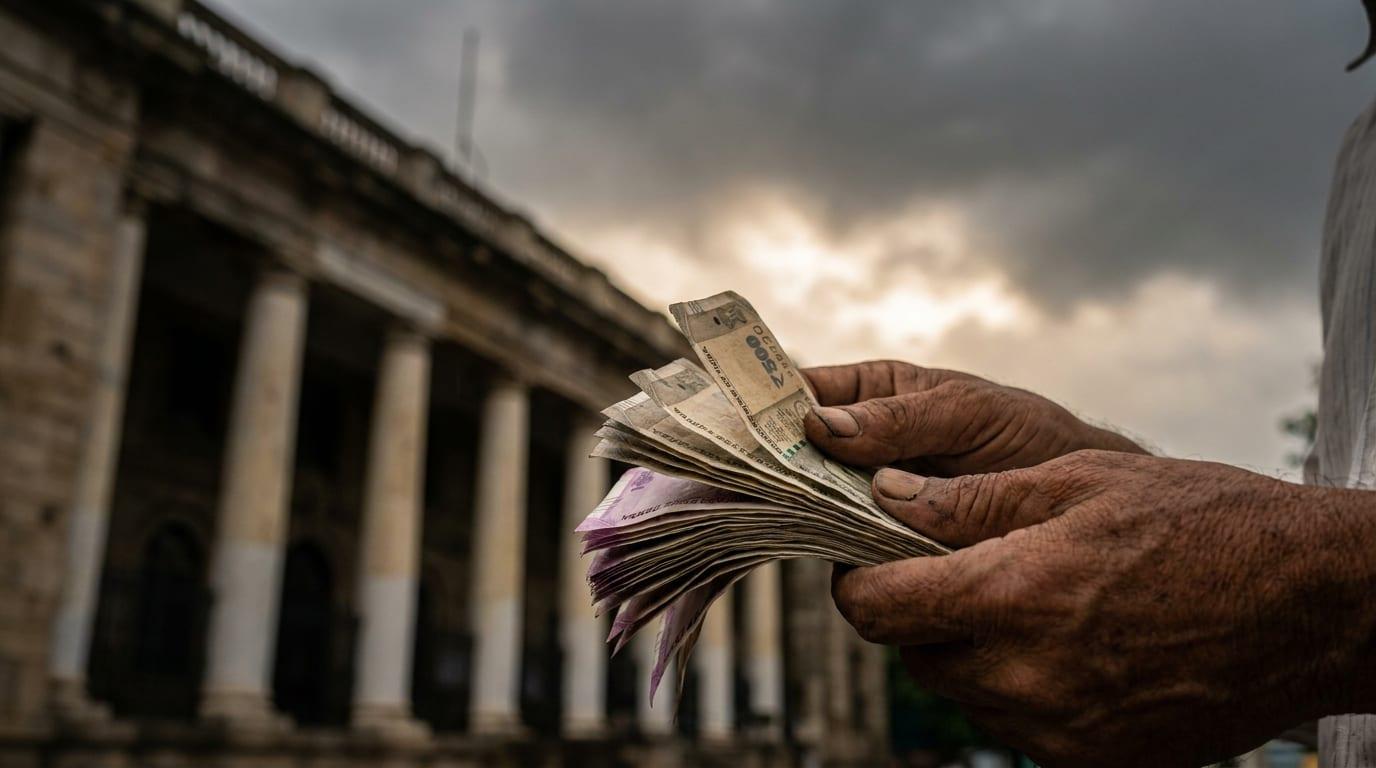
India's central bank has pulled the trigger on its first interest rate hike since 2023, a move CNBC Economy reported is aimed squarely at inflation risks building inside the world's most populous nation. The Reserve Bank of India's decision lands alongside a second front in its fight: a fresh package of measures to prop up the embattled Indian rupee, which opened sharply higher against the U.S. dollar on Monday.
According to FXStreet, the USD/INR pair fell 1% to near 95.80 in opening trade after the RBI unveiled weekend measures designed to curb dollar demand. Those steps, per a Reuters report cited by FXStreet, include a special central bank window to cater to U.S. dollar demand from Public Sector Undertaking Oil Marketing Companies, easing pressure on the spot market, and tighter hedging rules.
The timing is not accidental. India imports the bulk of its crude oil, so every dollar of energy cost feeds directly into its inflation math. FXStreet noted that crude prices fell sharply after an energy ceasefire between Russia and Ukraine was announced, with the MCX Crude Oil contract expiring October 19 down 2.22% to near Rs. 8,684. Cheaper oil is a tailwind for a currency like the rupee, which is among the most sensitive to external factors including crude prices, the value of the dollar, foreign investment levels, and direct RBI intervention in foreign exchange markets.
Markets are not treating this as a one-and-done. CNBC Economy reported that both HSBC and Goldman Sachs expect the RBI to raise interest rates again in December.
Investors now turn to India's retail Consumer Price Index data for September, scheduled for release at 4:00 PM local time (10:30 GMT), per FXStreet. That print will either vindicate the RBI's hawkish turn or deepen the pressure on policymakers who have spent years trying to keep inflation near their 4% target through rate adjustments and currency market intervention.
Technically, FXStreet reported the USD/INR pair trading at 95.75 on the daily chart, turning bearish as spot fell below the 20-period Exponential Moving Average at 96.07. The 14-period Relative Strength Index slid to near 45.00. On the upside, initial support sits at the 20-day EMA near 96.0, while a continued decline could extend toward 95.00.
The broader picture matters for Americans watching global trade. India is a major U.S. trading partner and a counterweight to Chinese manufacturing dominance in the region. When its central bank is forced to hike rates and defend its currency, the ripple runs through supply chains, commodity markets, and the cost of doing business with one of Asia's largest economies. Neither the RBI's rate decision language nor a full breakdown of the December expectations from HSBC and Goldman Sachs was detailed in the reporting reviewed here.
What is clear is the direction: India's central bank is tightening while its currency was, until this weekend, under sustained pressure. The RBI's special window for oil marketing companies is a direct acknowledgment that spot-market dollar demand had become a problem the bank could no longer ignore.
The rate hike is the first since 2023 — a signal that the easy-money era in New Delhi has officially closed, at least for now.
Our Take
This is what sound money policy looks like when a government actually cares about its citizens' purchasing power. India's central bank saw inflation risks building and did what the Federal Reserve spent years pretending wasn't necessary: raise rates before the problem metastasizes.
Compare that with the Biden years, when the American people got told inflation was "transitory" while grocery bills and rent spiraled. The Trump-Vance administration inherited that mess and has been untangling it ever since, with energy dominance and deregulation doing more to cool prices than any bureaucrat's talking points ever could.
Notice too what India is doing on the currency front. The RBI didn't sit back and lecture the markets about "stability." It rolled out a special window for oil marketing companies, tightened hedging rules, and intervened directly. That's a nation defending its own monetary sovereignty against dollar demand and external shocks — not outsourcing its economy to globalist institutions or UN climate frameworks that would have India sacrificing growth at the altar of carbon targets.
And here's the part the legacy media won't connect for you: the energy ceasefire between Russia and Ukraine that sent crude lower is exactly the kind of de-escalation that pays dividends across the global economy. Cheap oil is a gift to every importing nation on earth, India included. The establishment warmongers who profit from perpetual conflict never want to admit it, but peace drives prices down and stable currencies up.
India's rate hike is a reminder that nations which put their own people first — their own currency, their own energy needs, their own inflation fight — are the ones that survive global turbulence. That's America First in action, just a few thousand miles east.
The September CPI print drops Monday afternoon. Patriots should be watching closely. If inflation comes in hot, the RBI's December hike from HSBC and Goldman becomes a near certainty, and the global fight over who controls monetary policy — sovereign nations or unaccountable central planners — only intensifies.
The question for us: will Washington ever learn the same lesson?
