
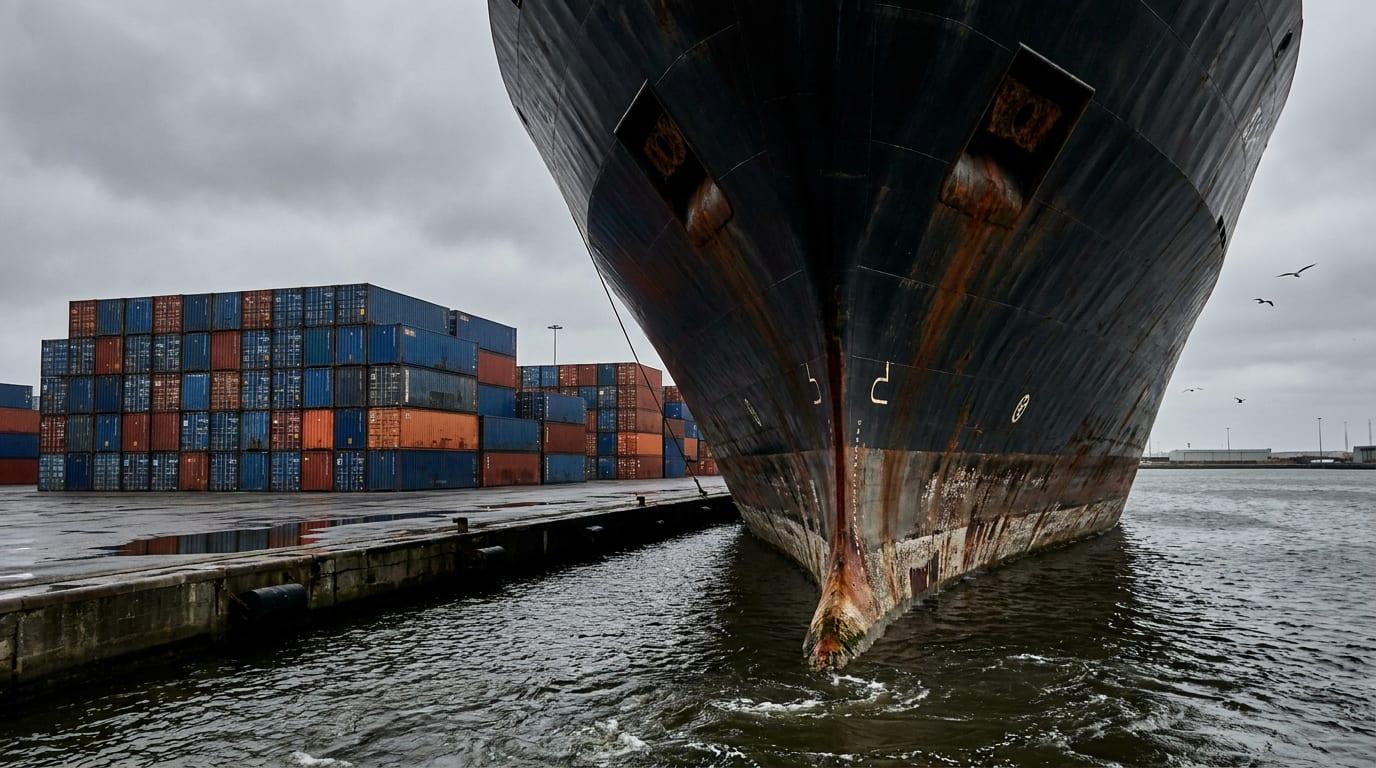
The U.S. trade deficit surged to $105.6 billion in August, the widest monthly gap since just before President Donald Trump's sweeping tariffs took effect last year, according to Commerce Department data reported by CNBC. The figure marked a 13.7% jump from July and blew past the Dow Jones consensus estimate of $102 billion.
On its face, the number is ugly. A wider deficit means America imported $105.6 billion more in goods and services than it sold abroad that month. And the legacy media wasted no time framing it as the moment Trump's "America First" trade agenda collapsed.
But here is what the headline writers left out: the deficit spiked in part because American importers front-loaded orders ahead of the next round of tariff hikes — the same pattern seen repeatedly under Trump's first term and again during the 2018-19 trade war. Companies racing to beat the clock legally buy more foreign goods today, which widens the short-term gap before the tariff wall fully bites.
What is not in dispute is the political reality. With less than a month until the Nov. 3 midterms, the White House is holding the line. As the Globe and Mail and ABC News reported this week, Trump is sticking with tariffs even as polling shows most American adults disapprove, with more than 64% saying he has gone too far — up from 58% in January.
The administration's legal foundation shifted in February when the Supreme Court struck down Trump's use of the 1977 International Emergency Economic Powers Act to impose "reciprocal" tariffs on dozens of countries. Rather than retreat, the White House turned to Section 301 of the Trade Act of 1974 — the same statute used against China in Trump's first term — to slap duties of 10% to 12.5% on imports from 60 economies, including the European Union, India, Japan, Canada and Mexico, according to ABC News.
"Despite higher prices, criticism from trade experts and displeasure among voters, Trump holds fast to his belief that imposing the highest import duties on U.S. trading partners since the Great Depression is a winner," the Globe and Mail reported this week.
The criticism from economists is loud and familiar. Mainstream analysts argue tariffs are a tax paid by American importers, passed on to consumers, and that the post-war open trading system boosted U.S. growth and kept prices low. Studies from the New York Fed and Harvard, cited by ABC News, found that overseas companies largely did not absorb the cost — American buyers did.
That argument has merit on the ledger. It also ignores why the policy exists. For three decades, both parties shipped American manufacturing overseas, hollowed out the Rust Belt, and let China — which exported $3.4 trillion last year, second only to the U.S. — build the largest industrial base on earth while Wall Street booked the profits. Trump's tariffs are an attempt to reverse that, even if the early scoreboard looks bad.
The August number matters for one more reason: it is the last major trade data release before voters head to the polls. Democrats will cite it in every competitive House and Senate race. Republicans will counter that the deficit is a lagging indicator and that front-loading always distorts the months before new duties hit.
What is certain is that the deficit is not shrinking on its own. It widened by double digits in a single month, and the trendline since tariffs began is not the one the White House promised. Whether that is a temporary artifact of importers gaming the calendar or a sign the strategy is misfiring will not be settled by November. But the voters will render their verdict anyway.
Our Take
Let's be honest about what the media is doing here. CNBC drops a $105.6 billion number, the Globe and Mail runs a poll, and by lunchtime every cable chyron screams that Trump's trade war failed. That is not reporting. That is a coordinated pre-election hit job dressed up as economics.
Patriots, ask yourself one question: why does the same establishment that spent forty years telling us outsourcing was "efficient" suddenly care so much about a trade deficit? Because the deficit is the excuse, not the argument. The argument is whether America should make things again — steel, chips, medicine, cars — or keep begging China and Europe for them.
The import surge ahead of tariff hikes was predictable. Every trade warrior from Alexander Hamilton to Ronald Reagan understood that front-loading distorts the data. What the establishment will never admit is that the alternative — doing nothing — is what got us here. Empty factories in Ohio, Michigan and Pennsylvania. A $1.2 trillion annual goods deficit. A supply chain hostage to the CCP.
Trump is not backing down. That is exactly why the polls are being weaponized three weeks before the midterms. The question for every American patriot is simple: do you want the men who shipped your job overseas telling you how to vote on trade? Or do you want the president who is willing to take the short-term hit to bring it back?
