
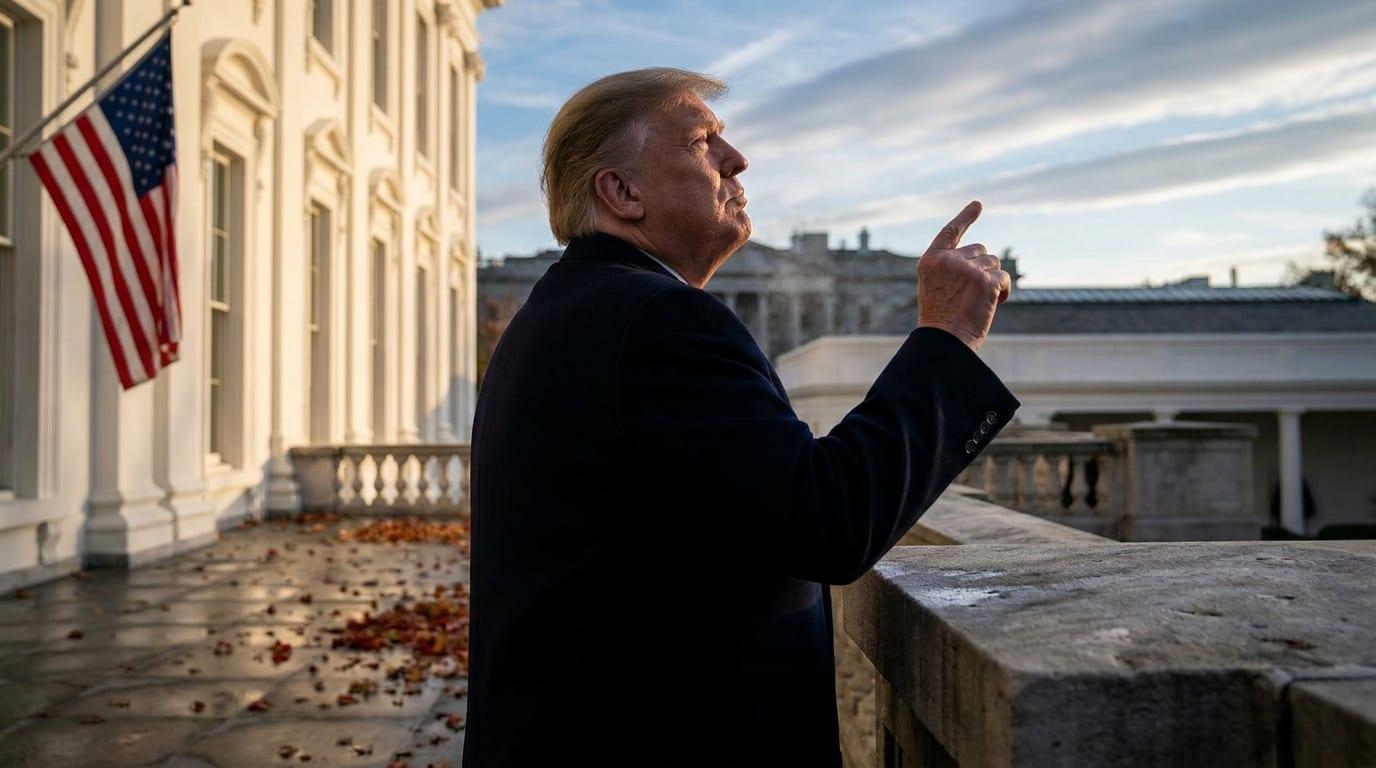
President Donald Trump marked Columbus Day at the White House on Friday and his administration has already put its position in writing: the 2026 proclamation, issued October 7, honors Christopher Columbus for a life of "valor, adventure, and ingenuity" and pledges that the administration will "never allow his legacy to be erased by radical extremists."
The holiday itself is Monday, October 12. What Americans actually get depends on where they live. According to a Pew Research Center analysis cited by Newsweek, 30 states recognize Columbus Day in some form — but only 20 make it a paid holiday for state government employees. The rest have replaced it with Indigenous Peoples' Day, recognize both, or treat the second Monday in October as an ordinary workday. Newsweek reports Washington state fixes its observance on October 12 and Puerto Rico marks Columbus' arrival there on November 19.
The map is the fight. Every state that swapped the name of the holiday did so through a political process, and the outcome of that process is what Americans live with on Monday morning — a paid day off, a renamed commemoration, or a normal shift.
The Federalist argues that Indigenous Peoples' Day "has never been neutral or dispassionate" and calls it part of "a broader ideological program to remake our great nation." That is a stated opinion, and it is the clearest articulation of the case the White House is now making from the podium.
The Los Angeles Times published a contributor piece on Saturday that approaches the dispute from a different angle, arguing the Columbus Day argument never resolves because it is not really a historical dispute. The piece traces the holiday to 1892, established in significant part after the 1891 lynching of 11 Italian immigrants in New Orleans — a moment, the contributor writes, when Italian Americans were widely regarded as something less than fully American. Columbus became the answer to a specific question: is there an Italian who belongs at the center of the American story? The same piece notes Indigenous communities experience Columbus as the opening chapter of a genocide — the man who inaugurated a process of disease, displacement and violence that eliminated the overwhelming majority of the pre-contact population of the Americas.
Native American advocates and other critics have opposed celebrating Columbus because of his treatment of Indigenous people and the consequences of European colonization. Columbus Day has historically also served as a celebration of Italian American heritage — two facts that sit alongside each other in every version of this fight.
What has changed is who is in the room. Trump has embraced Columbus as part of a broader effort to defend traditional American historical figures and symbols, a posture that drew a White House celebration on Friday and a proclamation three days earlier. The administration's language — "safeguard his story" — frames the holiday as something to be protected rather than debated.
For Italian American families in states that renamed the day, the practical effect is that a heritage celebration tied to their grandparents' arrival has been folded into a different observance or dropped from the calendar entirely. For state employees in the ten states that recognize Columbus Day as a public or legal holiday without a paid day off, Monday is a workday with a designation attached.
None of this was settled by the proclamation. Holiday observance is set at the state and local level, and Pew's numbers make clear there is no national consensus to enforce. What the White House can do is what it did this week: put the full weight of the presidency behind the name on the calendar, and dare the other side to argue with it in public.
Monday will show which states take the dare.
Our Take
Rename a holiday and you are not being inclusive. You are editing the country.
Columbus Day was never really about a 15th-century navigator. The Los Angeles Times contributor admits as much — it was a claim staked on American belonging by Italian immigrants who had just been lynched in the streets of New Orleans and needed to know whether this country had room for them. That is a real story about real people who built real neighborhoods in this country. Wiping the name off the calendar does not undo colonization. It tells the descendants of those immigrants that their claim on the American story was provisional.
And notice how the swap happened. Not by referendum in most places. By commissions, city councils, and school boards deciding that a heritage celebration for one group had to become a political statement about another. The same people who tell you Columbus is complicated never apply that standard to the figures they install in his place. The erasure is the point.
Trump's proclamation said the quiet part out loud: the legacy of American heroes will not be erased by radical extremists. Good. It should be said from the White House, in writing, every single year.
Patriots, check your state. If your governor folded Columbus Day into something else while you weren't looking, you have a primary election and a phone number. A holiday is a statement about who belongs. Make yours heard before the next October.
