
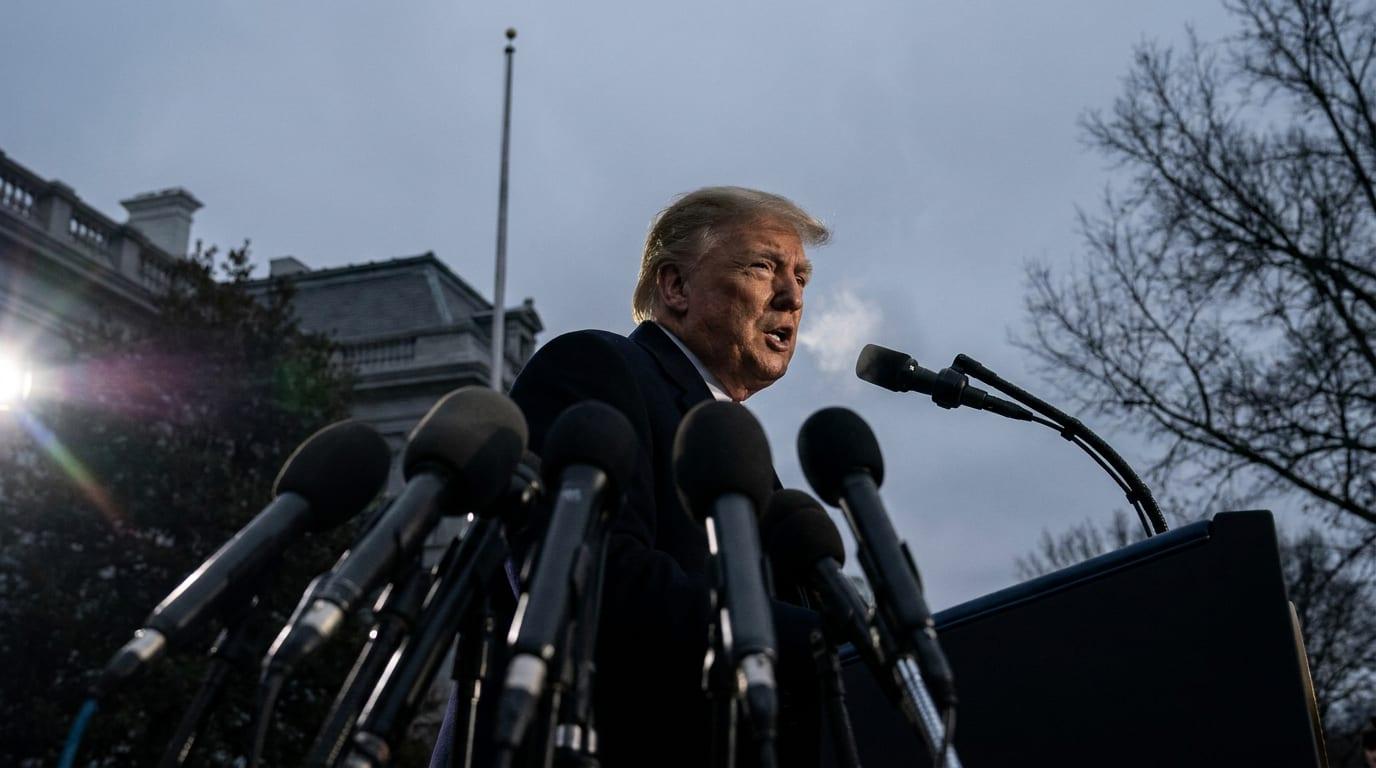
President Donald Trump said Russia and Ukraine agreed to a ceasefire because he told them to, dismissing a reporter's question about both sides denying any such agreement.
"Well they agreed, you know why? Because I said 'you agree.' That's why," Trump said, according to a post from the account @atrupar. The account @clashreport carried the same exchange: "Q: You said Russia and Ukraine agreed to a ceasefire, but both sides say they have not agreed to that. Trump: They agreed. You know why? Because I said, 'You agree.' That's why."
The exchange came after a separate question about whether Russia had violated the ceasefire by attacking Ukraine the night before. "Well I'm not sure about that," Trump replied, per @atrupar. "But all I know is that Zelenskyy and Putin have to get together and end that ridiculous war."
Video of the remarks, posted by @atrupar, captures the same sentiment. "I'm not sure about that and we'll take a look," Trump says on camera. "But all I know is that Salinsky and Putin have to get together and end that ridiculous war. This month they lost 32,000 people in that war and it's ridiculous. So they have to get together and get it done."
In the second clip, Trump repeats his claim: "They agreed because they agreed because I said they agreed and that thing has to get settled."
The remarks prompted pushback and commentary from accounts across the platform. The account @MarioNawfal posted about an explosion in Ukraine, describing a video in which a sixteen-year-old on a scooter can be seen riding directly into where a missile lands. The post, credited to a writer named Marie, asks: "If Trump says he got a ceasefire in place... Why did this happen just yesterday?" The image described in the post shows the moment before impact; the description came from a vision model examining the picture and is not a confirmation of what occurred.
The account @WallStreetMav posted about reports that the United States had cut off intelligence sharing and early warnings of Russian missile launches. That post ties the alleged cutoff to Ukraine threatening to attack Russian diesel shipments to the United States. The @WallStreetMav post frames the intelligence pause as something being discussed in reports, not as confirmed policy.
The account @marklevinshow weighed in on a different question, asking when Russian President Vladimir Putin would face real elections and noting that Putin has been running Russia far longer than Volodymyr Zelenskyy has been president of Ukraine.
The underlying claim about an energy ceasefire has been disputed from the start. Ukraine's president said the deal was "news to me," according to The Guardian, and earlier rejected a United States call for Kyiv to stop bombing oil refineries, saying Moscow must first end attacks on energy infrastructure. Zelenskyy later said he would support such a truce if Moscow did. Another Guardian report described Zelenskyy saying it was "increasingly clear" Russia does not want an energy ceasefire after strikes on energy facilities, and noted Zelenskyy had proposed a sixty-day total ceasefire to allow Ukraine to hold presidential elections.
Trump has made a similar announcement before. As one report noted, the president made a comparable announcement a month ago, only for the two sides to continue their aerial attacks on each other's energy facilities. But this time around, the president insisted the agreement was real and that his own involvement was the reason.
Next News Network could not independently verify the claim that Russia and Ukraine agreed to a ceasefire, or the reports that the United States cut off intelligence sharing and early warnings.
The reaction spread across accounts on X, with @atrupar, @clashreport, @marklevinshow, @MarioNawfal and @WallStreetMav all carrying versions of the story. The accounts did not coordinate their posts; each addressed a different angle, from the exchange in the room to the strikes on the ground to the question of elections in Moscow.
What remains consistent across the posts is that the president is describing a ceasefire that Ukraine's leadership has not confirmed and that the reporter's question assumed was broken. Trump's answer did not address the contradiction directly. He said both sides had agreed because he said so, and he said the two leaders need to get together and end what he called a ridiculous war.
Our Take
The president's answer is the kind of thing that would have ended a press conference in a different era. Asked why both sides deny an agreement, he said they agreed because he said they agreed. That is not diplomacy. That is a man who believes his own announcement is the agreement. The problem is that wars do not end because a president says they have. Missiles do not check with the White House before they land. A sixteen-year-old on a scooter does not stop because a deal was declared at a podium.
Ukraine's president said the deal was news to him. Then he said he would support it if Moscow did. Then strikes continued on energy facilities. This is the pattern: Trump announces, the ground contradicts, and the president doubles down. His supporters will say he is forcing the issue, creating facts on the ground through sheer force of will. His critics will say he is claiming credit for something that has not happened. Both can be true at once, but only one of them is verifiable.
The reports that the United States cut off intelligence sharing and early warnings are more troubling. If true, it means Ukraine is being left blind while Russian missiles fly. The explanation offered is that Ukraine threatened Russian diesel shipments to the United States. That is not a reason to stop warning a partner about incoming attacks. It is a reason to have a serious conversation about escalation, not to pull the plug on early warning systems that save lives.
Mark Levin's question about Putin's elections is worth asking. Putin has been in power for decades. Zelenskyy was elected in a free and fair vote. The comparison is not close, and it should not be treated as though it is. If the president wants to talk about who needs to hold elections, he should start with the man who has not faced a real one in years.
The bottom line: the president says there is a ceasefire. Ukraine says there is not. Russia has not confirmed one. The strikes continue. And the American intelligence community, according to reports, may have stepped back from warning Ukraine about what is coming. That is not a recipe for peace. It is a recipe for more of the same, with fewer people alive to talk about it.
