
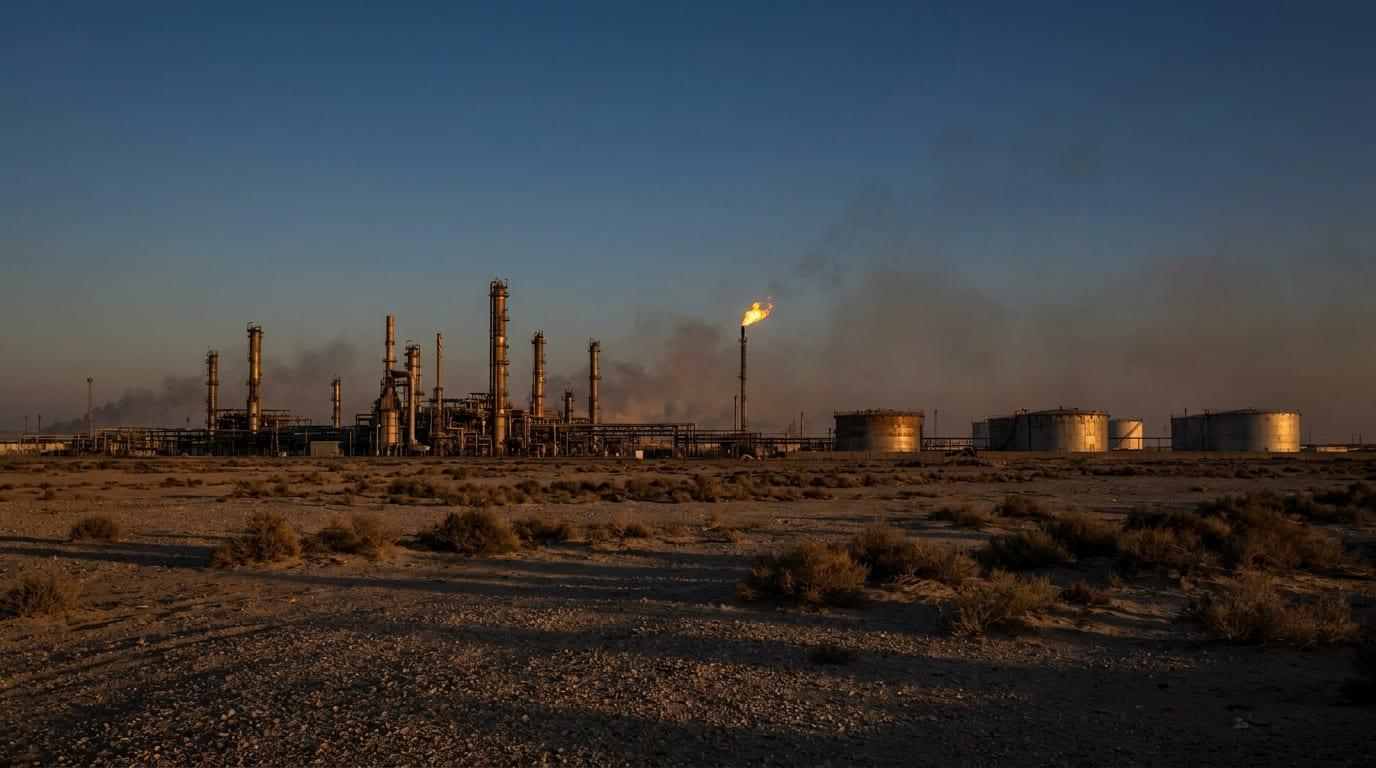
Loud booms were heard in Dhahran in the vicinity of Saudi Aramco's headquarters, according to the account @FirstSquawk, which attributed the report to six sources.
A second post from the same account, citing the Iranian state-linked outlet ISNA, said an explosion was heard in the Sharqiya region of Saudi Arabia. The two posts were published minutes apart on Monday evening, with @FirstSquawk reporting the Sharqiya explosion at 18:35 UTC and the Dhahran booms at 18:36 UTC.
Dhahran sits in Saudi Arabia's Eastern Province, in the Sharqiya region, and is the site of Saudi Aramco's corporate headquarters. The reports of booms in the vicinity of Aramco facilities followed a warning published earlier in the day by Yemen's Houthi movement identifying potential targets in the Saudi capital.
At 15:26 UTC, the account @MarioNawfal carried a post stating that the Houthis had published a map identifying three potential targets in Riyadh. According to that post, the warning named King Khalid International Airport, the Aramco refinery and Aramco's headquarters. The post described the warning as carrying a message urging civilians to take action, though the text of that message was cut off in the post itself.
The sequence matters: the target map circulated in the early afternoon, and the first reports of explosions in Saudi Arabia's Eastern Province came roughly three hours later. The Houthis have not claimed responsibility for any explosions in Dhahran or the Sharqiya region in the material reviewed here. No Saudi official has confirmed an attack on Aramco facilities in the hours covered by these reports.
The Houthi warning is not the first threat directed at Saudi infrastructure in recent days. Al Jazeera's Houthis News coverage, published four hours before the Dhahran reports, described explosions in Sanaa shortly after the Saudi-led coalition issued an evacuation order, and said the Houthis promised a "harsh" response. That coverage placed the Houthi threats against Saudi Aramco facilities and airports in the context of an escalating exchange between the Houthis and the Saudi-led coalition.
The day before the Dhahran reports, the account *Walter Bloomberg on X, citing a Reuters witness, posted that three booms were heard in Riyadh. That claim, like the one in Dhahran, came through the same layer of social media accounts that have been carrying the fast-moving developments out of Saudi Arabia and Yemen.
By Monday evening, the accounts carrying the Dhahran and Sharqiya reports were the same ones that had been tracking the Houthi target map and the Riyadh booms, forming a chain of claims rather than a single confirmed event. Cedar News, reporting roughly twenty-five minutes after the first @FirstSquawk post, described residents in Dhahran as having reportedly heard loud booms near Saudi Aramco's headquarters, attributing the initial report to six sources. Cedar News did not name the sources or provide further detail on what caused the booms.
The target map itself is a document released by the Houthis, not an official Saudi or American assessment. The post from @MarioNawfal described the map as identifying King Khalid International Airport, the Aramco refinery and Aramco's headquarters as potential targets, and as urging civilians to act on the warning. The post did not include the full text of the Houthi message, and the account did not say when the map was published or through what channel.
Saudi Aramco's headquarters in Dhahran is one of the most heavily secured corporate facilities in the world, and the company has been a repeated target of Houthi attacks in past years. The refinery referenced in the Houthi map is a separate facility from the headquarters, though both carry the Aramco name and both appear on the Houthi list.
King Khalid International Airport is Riyadh's primary commercial airport, located north of the city. The airport has not been reported as struck or evacuated in the material reviewed here.
The reported booms in Dhahran and the Sharqiya region, if confirmed, would mark an expansion of the Houthi campaign beyond the Yemeni border and into Saudi Arabia's oil-producing Eastern Province. But the reports rest on accounts citing unnamed sources, and the accounts themselves have not published evidence of what caused the sounds. The Houthis have published a target list, and the accounts carrying the news of the booms have not connected the two events with a claim of responsibility.
What is clear from the sequence is that the Houthi warning circulated widely before any reports of explosions in Saudi Arabia emerged. The account @MarioNawfal published the target map at 15:26 UTC. The first reports of an explosion in the Sharqiya region came at 18:35 UTC. The first reports of booms near Aramco headquarters in Dhahran came at 18:36 UTC. The following day's Reuters witness account of three booms in Riyadh, carried by *Walter Bloomberg on X, preceded all of it.
Next News Network could not independently verify the reported explosions in Dhahran, the Sharqiya region or Riyadh, nor could it independently verify the authenticity of the Houthi target map or the specific locations it names.
Saudi officials have not issued a public statement on the Dhahran reports in the material reviewed here. Saudi Aramco has not commented. The Houthis have not claimed responsibility for any explosion in Saudi Arabia in connection with the target map. The accounts carrying the reports have not published photographs, video or official statements from Saudi authorities confirming what caused the sounds.
The reports come amid a broader escalation between the Houthis and the Saudi-led coalition, with Al Jazeera reporting explosions in Sanaa after a coalition evacuation order and the Houthis promising a harsh response. The exchange has moved quickly across social media, with the same accounts that carried the Riyadh booms now carrying the Dhahran and Sharqiya reports, and with the Houthi target map circulating alongside them.
Our Take
What we have here is a warning followed by reports of explosions, in that order, and the American public should understand the difference between a claim and a confirmed attack. The Houthis published a map naming three targets in Riyadh, including the airport and two Aramco sites. Hours later, accounts citing unnamed sources reported booms near Aramco's headquarters in Dhahran and in the Sharqiya region. The two events may be connected, and the timing certainly suggests they are. But no one has claimed responsibility for the booms, no Saudi official has confirmed an attack, and the reports rest on the same social media layer that has been carrying every development in this conflict.
That does not mean the threat is not real. The Houthis have spent years striking at Saudi oil infrastructure, and the map is a public document naming civilian and industrial targets inside the Saudi capital. The question for Washington is whether the United States will treat a Houthi target list and reports of explosions near Aramco facilities as a regional problem or as a direct threat to the oil markets that Americans depend on. The administration's posture toward the Houthis and toward Saudi Arabia has been muddled for months, and the events of the past twenty-four hours suggest that ambiguity has not deterred the Houthis.
The reporting here is thin. The booms were heard, not seen. The damage, if any, has not been described. The sources are unnamed. But the direction of travel is clear: the Houthis are advertising their targets in advance, and the region is bracing for what comes next. For the United States, the question is not whether the Houthis mean what they say. It is whether anyone in this administration is prepared to do anything about it.
