
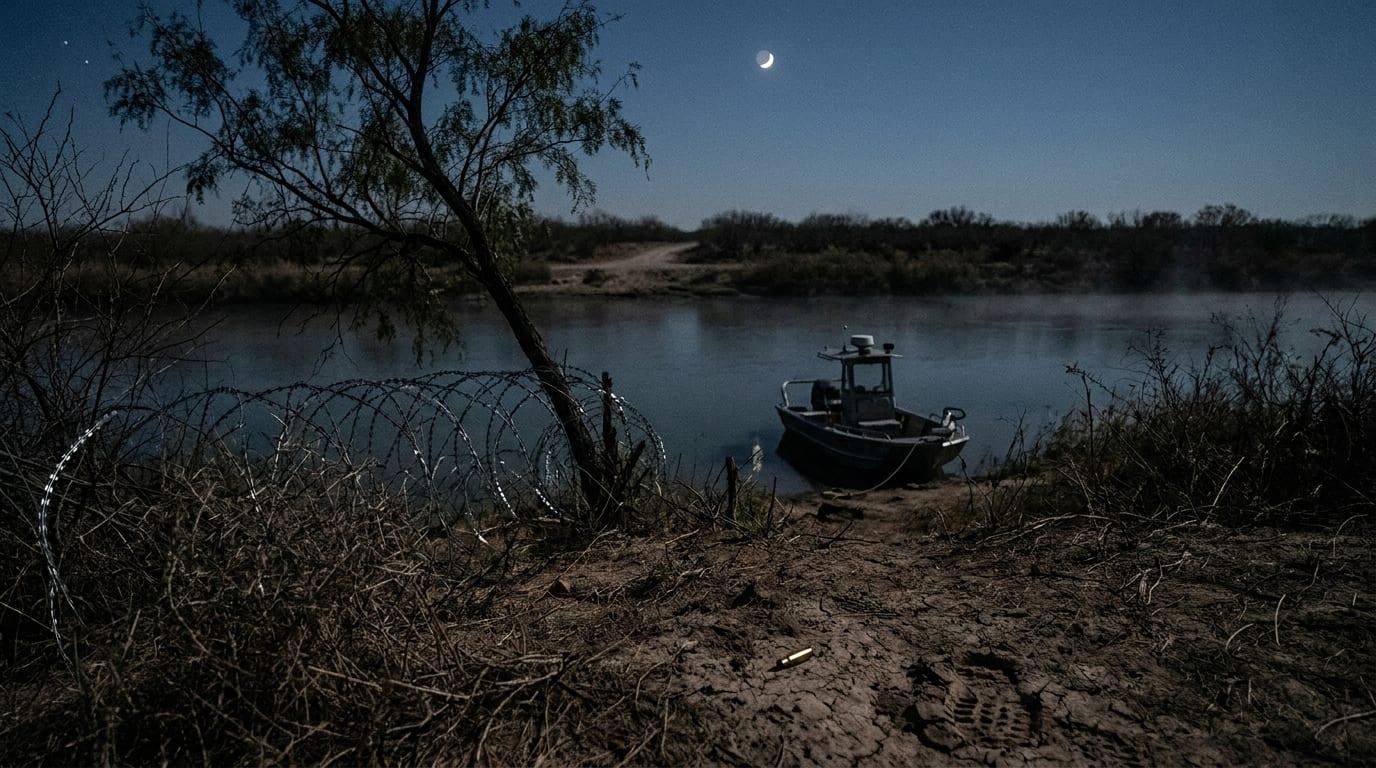
American Coast Guard personnel operating on the Rio Grande came under gunfire from Mexican territory during a joint interdiction operation near Garceno, Texas, on September 26 — and fired back, according to the Coast Guard. Nobody was hit. No boats or equipment were damaged. The incident is under investigation.
What followed is a diplomatic fight the shooting itself never quite became. After U.S. Ambassador to Mexico Ronald Johnson publicly announced that Coast Guard personnel had been fired on, Mexican President Claudia Sheinbaum demanded proof.
"We asked for all the evidence because we have no evidence," Sheinbaum told reporters in Mexico City, per Fox News Digital, adding that Mexican security forces had not detected shots coming from their side of the border.
The State Department pushed back. A spokesman told Fox News Digital that Coast Guard personnel "were fired upon from Mexican territory on September 26, and we have shared what we have with the Government of Mexico through official channels." The department did not say what was shared or when. U.S. officials have not publicly named any shooters or explained how they determined where the rounds came from.
That gap is the whole dispute. Washington says it knows the fire came from Mexico. Mexico City says it has seen nothing proving that. Neither side has released the underlying evidence to the public.
The shooting happened during Operation River Wall, a Coast Guard initiative launched in October 2025 to interdict illegal migration, drug smuggling and other threats along roughly 300 miles of the Rio Grande. A Coast Guard spokesperson told Fox News Digital the service has deployed more than 1,000 personnel and more than 30 assets to the region over the past year under what it calls Operation Sable.
Mexico's Navy Ministry, led by Secretary Raymundo Morales-Angeles, said it has deployed 159 naval personnel, 11 vehicles and two drones to the Tamaulipas sector, according to Fox News Digital. U.S. Northern Command, meanwhile, told Fox News Digital that American troops are being repositioned along the border.
The stretch of river in question sits across from Miguel Alemán, Mexico — a border city that Fox San Antonio, reporting from Roma and Laredo, noted has a long history of cartel-related violence. The same reporting warned that cartels are now using drones to surveil U.S. law enforcement along the river, a technological escalation layered on top of an old problem.
The geography matters for understanding why a firefight and a joint operation can happen in the same place at the same time. The Army has been flying reporters into the Rio Grande Valley — ABC News joined Lt. Col. Ray Richards at a monitoring post in Roma this week — to show off a frontier that has gone quiet. Richards pointed to water that once carried "multiple rafts full of people trying to get to this side." Now a Blackhawk drops soldiers onto a river island, Border Patrol fan boats run the channel, and an infantry vehicle sits under camouflage netting between houses. U.S. officials told ABC the troop surge follows elevated cartel activity and has come alongside what they describe as increased cooperation from the Mexican military.
So the official story is coordination. The Coast Guard says the September 26 operation was a joint interdiction. Mexican naval forces are in the same sector. And yet, when Americans took fire and shot back, the two governments could not agree on a basic fact: where the bullets came from.
Sheinbaum's demand for evidence is not unusual in diplomatic terms — governments routinely challenge incidents on their soil or their side of a shared boundary before accepting responsibility. What makes this one harder to wave off is that it involves armed U.S. personnel, a public American ambassador, and an operation the two countries are supposed to be running together.
It is not yet known what information the State Department shared with Mexican authorities, when it was shared, or whether Mexico considers it sufficient. It is not known who fired, what they fired with, or whether the shooters were cartel gunmen, rogue actors or something else. What is known is the U.S. position: the Coast Guard was shot at from Mexico on September 26, the Coast Guard shot back, and the matter remains under investigation.
Our Take
Here is the thing about "show us the evidence." Sometimes it is a legitimate demand. Sometimes it is a stall — and the stall only works as long as the American public agrees to look away from the water.
We have a President who campaigned on securing the border, an operation literally named River Wall, more than a thousand Coast Guard personnel on the Rio Grande, a Border Patrol fleet of fan boats, Army infantry staged behind houses in Roma, and Mexican naval units deployed to the same sector by their own government's accounting. That is what cooperation looks like on paper."
Notice who is left holding the burden of proof. Not the cartels. Not the shooters. Not the government whose territory the rounds came from, by Washington's account. The United States — the one whose personnel were on the water at the time.
Patriots, ask yourself a simple question: If a foreign national fired on American military or law enforcement from the other side of the border in any other country on earth, how long would the evidence fight last before somebody got serious? Here, the transaction apparently runs the other way. Washington shares what it has through official channels. Mexico's president tells the press she has none of it. The investigation drags on. The river stays quiet for the cameras.
The real escalation is not the bullets. It is the drones. Cartels are now running surveillance on U.S. law enforcement from the air, according to reporting out of Webb County, and no one in this exchange has told the American people how many of those eyes are Mexican military, how many are cartel, and how many are the same thing wearing different hats.
Congress has the subpoena power. The administration has the ambassador on the record and the Coast Guard's report in hand. If there is evidence that shots came from Mexican soil — and the State Department says there is — the American people should see what was shared, and when. Transparency is not a concession to Mexico. It is accountability to the Americans whose sons and daughters are on that river.
And the next time someone demands "all the evidence" before admitting shots were fired across our border, remember the order of operations: the shots came first. The demands came after.
