
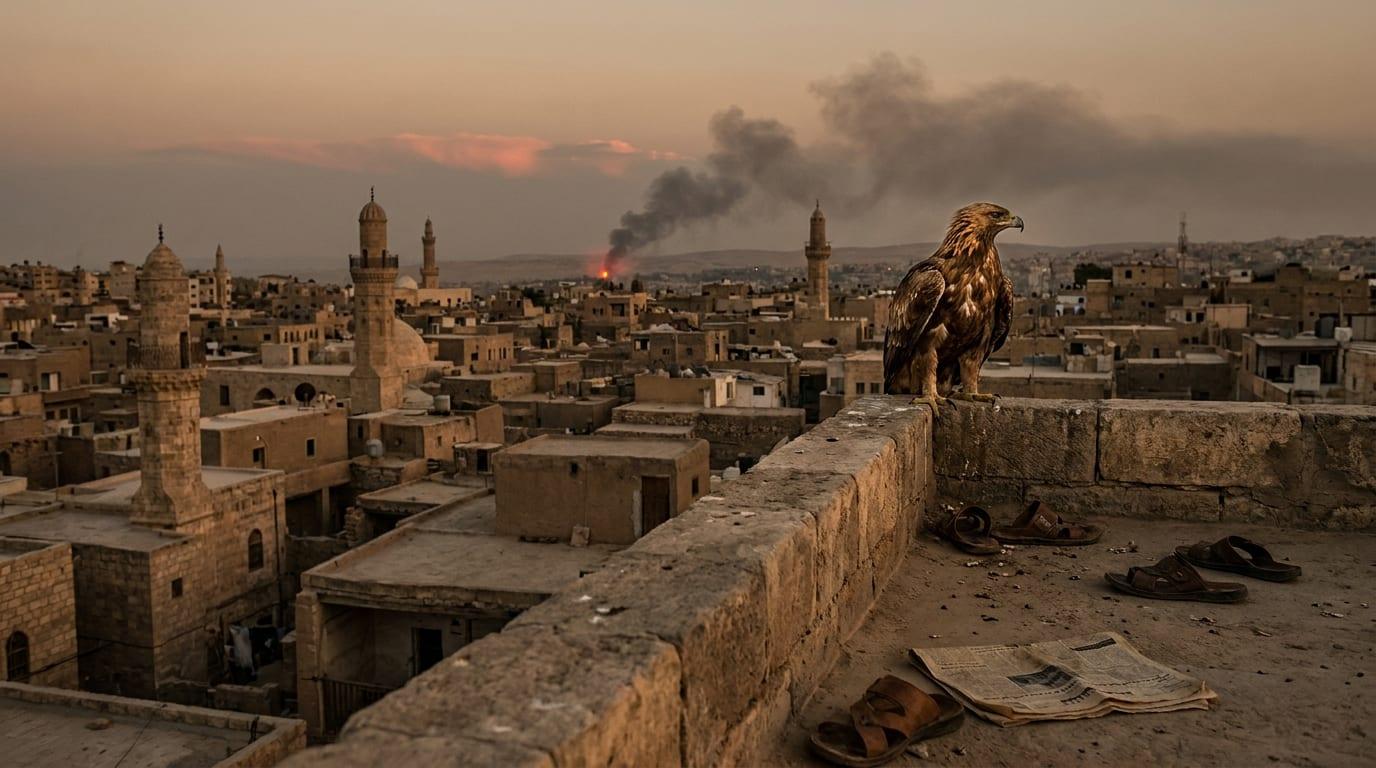
Egypt will support Saudi Arabia against the Houthis 'without any reservation,' Foreign Minister Badr Abdelatty said Tuesday, according to a post from the @clashreport account on X. 'Whatever is being asked by the Saudis, of course we will respond,' Abdelatty was quoted as saying. 'Without any reservation we are providing all kind of support.' The statement came as Saudi Arabia absorbed a fresh wave of Houthi missile and drone attacks, including strikes on Riyadh's airport that killed thirteen people and injured more than three hundred over the weekend, according to coverage from The Guardian and other outlets.
The @clashreport post described Egypt as having 'strong' ties with Saudi Arabia, a line that matches the two countries' long-standing military and economic partnership. Cairo has previously joined the Saudi-led coalition in Yemen, though its role has been limited in recent years. Abdelatty's remarks, as carried by the account, suggest a willingness to deepen that involvement if Riyadh requests it.
The attacks themselves have been reported by multiple outlets, with Reuters noting that airlines have canceled flights to Saudi Arabia following the strikes on Riyadh's airport. The Guardian reported that Saudi Arabia's energy minister said 'fear has no place in the Saudi lexicon' as the paramilitary group again breached the kingdom's stretched defenses. Reuters and other outlets also reported that the Saudi-led coalition said a projectile struck a terminal at Riyadh's airport on Sunday, a day after a missile attack killed thirteen people and injured three hundred nine.
The conflict has drawn the attention of the White House, with reports that President Trump is considering joining Saudi Arabia in attacking the Houthis. The Houthis have threatened the United States with a 'swift and painful' response if it does so, according to live updates from the region. The Iran-backed group, which rules over most of northwest Yemen, has disrupted global trade and energy markets with attacks on cargo ships and tankers in the Red Sea.
The economic ripple effects are already visible. The @MarioNawfal account noted that Brent crude jumped from around ninety-seven dollars to over one hundred seven dollars a barrel in less than a week as attacks on Saudi Arabia intensified. The account added that the price is 'still hovering around one hundred five, with traders nervous' about further disruptions. That post tied the spike directly to the risk of supply interruptions, a concern that has echoed through energy markets since the Houthis began targeting Saudi infrastructure.
While the Middle East escalates, European diplomats are pressing for a greater role in negotiations over the war in Ukraine. Polish Foreign Minister Radosław Sikorski, in comments carried by both @MarioNawfal and @clashreport, said that listening to Russian Foreign Minister Sergey Lavrov's speech at the United Nations Security Council 'mostly a rant against Europe' told him that Moscow has 'just realized that actually they can't fix this just with the United States.'
Sikorski added that 'Europe is paying for this war, Europe is consistent in supporting Ukraine, and we'll continue to do so irrespective of what anybody else does.' The transcript of his remarks, posted by @clashreport, confirms that he and another official were both in New York for the Security Council session. The Polish minister's statement suggests a growing frustration in Europe that Washington and Moscow might seek to shape a settlement without European input, despite Europe's significant financial and military contributions to Kyiv.
That sentiment was echoed by Norway's Foreign Minister Espen Barth Eide, who said in a post from @clashreport that 'it doesn't really make sense that people who are not paying much for supporting Ukraine are those who have the key role in negotiations.' Eide added that 'we need a strong European voice' in the process. His comments reflect a broader push among European officials to ensure that any future peace talks include the continent's major stakeholders, not just the United States and Russia.
The two diplomatic threads — Egypt's pledge to Saudi Arabia and Europe's call for a louder voice — illustrate how regional conflicts are reshaping alliances and economic pressures. In the Middle East, Egypt's willingness to back Riyadh could widen the war in Yemen, potentially drawing in more regional actors. In Europe, the debate over who negotiates with Moscow could determine the terms of any eventual ceasefire or settlement in Ukraine.
For American readers, the immediate concern is the price at the pump. The @MarioNawfal post warned that the Houthi missile strikes on Riyadh 'could end up (once again) at your gas pump.' With Brent crude already up more than ten dollars a barrel in a week, any further escalation — especially if the United States joins the fight — could send energy costs higher. The White House has not announced a decision on whether to participate in Saudi-led strikes, but the president's comments have kept the option open.
Next News Network could not independently verify the claims made in the social media posts or the reported details of the attacks. The quotes from Abdelatty, Sikorski and Eide are as carried by the accounts and transcripts cited.
Our Take
Egypt's unconditional support for Saudi Arabia is a welcome sign of resolve in the face of Iran-backed aggression. The Houthis are not a legitimate government; they are a paramilitary group that has disrupted global trade and killed civilians. Saudi Arabia has every right to defend itself, and Egypt's willingness to help is a step toward restoring stability in the region. Meanwhile, Europe's demand for a stronger voice in Ukraine negotiations is understandable, but it should not come at the expense of American leadership. The United States must remain the indispensable nation, and any talks with Moscow should be conducted from a position of strength, not appeasement. As for the oil markets, the Biden administration's failed energy policies have left Americans vulnerable to price spikes. We need to restore American energy independence and stand with our allies, not apologize to our adversaries.
