
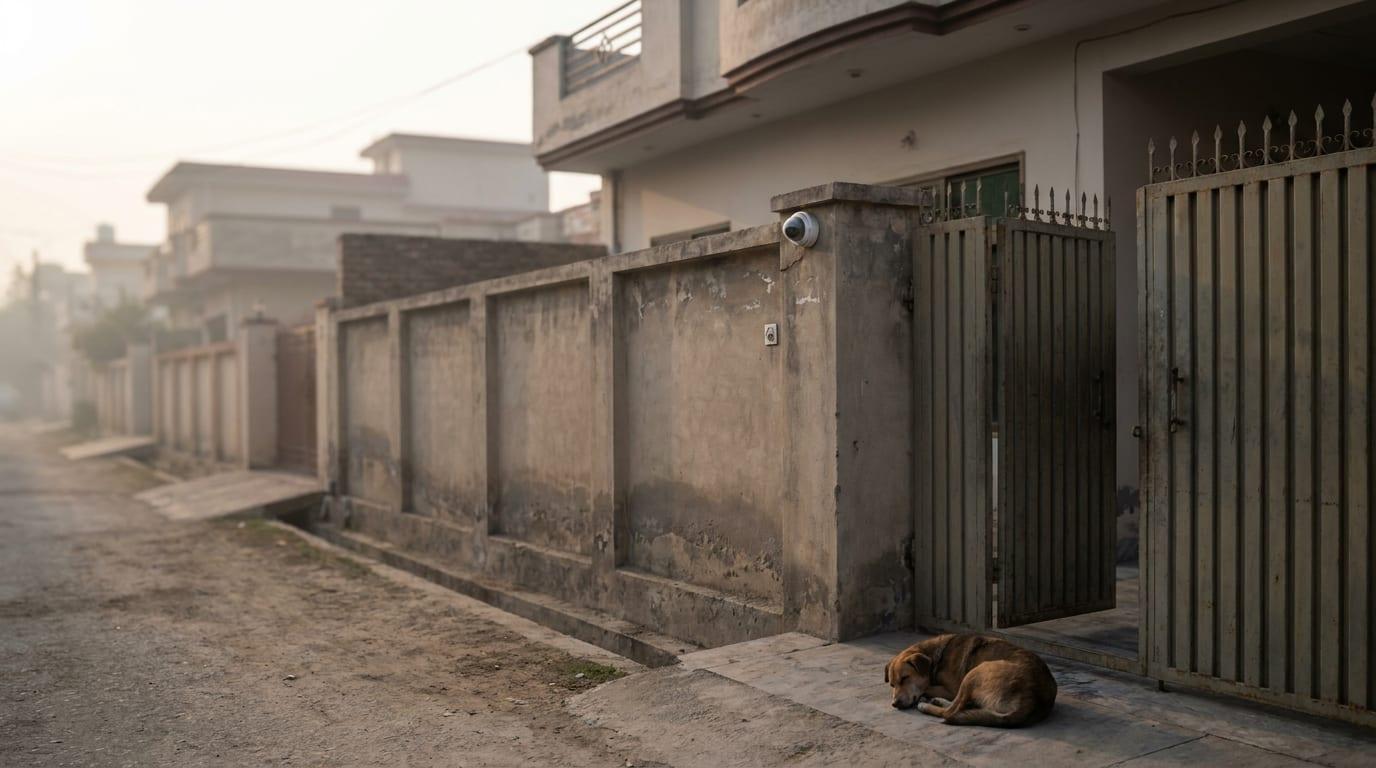
Pakistani police searched the home of a former provincial minister linked to jailed former prime minister Imran Khan's political party, according to the account @MarioNawfal, which reported that officers raided the residence of Yousafzai, a onetime provincial minister from Khan's Pakistan Tehreek-e-Insaf (PTI) party, as they reportedly searched for his brother, Liaquat. The account described the operation as the latest in a series of raids on homes tied to Khan's party.
The reported raid follows a broader crackdown in Khyber Pakhtunkhwa, the northern province that had been the only province controlled by Khan's party. According to reporting by CNA, Pakistani authorities detained hundreds of members of Khan's PTI after emergency rule was imposed in the province. Two police officials, speaking to AFP on condition of anonymity, described the scale of the detentions.
Al Jazeera reported that Islamabad says the PTI failed to lead the fight against armed groups in the province, the stated justification for the federal intervention. Analysts cited by the outlet questioned that takeover. The Independent reported that Khan's party warned of "further instability" after the federal government moved to suspend provincial authority. Reporting on the detentions noted that protests called in response have faltered.
The reaction from Khan's supporters and allied accounts has centered on the raids themselves. The account @MarioNawfal framed the search at Yousafzai's home as part of a pattern, writing that police were "RAIDING the homes of people linked to jailed fmr. PM Imran Khan's political party." The same account identified Yousafzai as a former provincial minister and said officers were looking for his brother, Liaquat.
That framing was echoed across accounts carrying the story, which presented the search as the newest example of pressure on PTI households rather than an isolated law-enforcement action. The underlying claim — that police conducted the search and that it is part of a wider campaign — has not been independently confirmed by Next News Network.
The detentions in Khyber Pakhtunkhwa came after emergency rule was imposed in the province, a step that stripped the provincial government of its authority. Khan's party had governed the province, making it the last seat of institutional power remaining to a movement whose founder has been jailed.
The federal government's stated rationale, as reported by Al Jazeera, is that the PTI failed to lead the fight against armed groups operating in the region. Analysts quoted in that coverage questioned whether the takeover was justified on those grounds, suggesting the move was politically motivated. Khan's party, for its part, warned of "further instability" in the aftermath, according to The Independent.
By the account of the detentions reporting, the protests that PTI hoped would answer the takeover have not materialized at the scale the party sought. Pakistani authorities detained hundreds of party members, and the demonstrations that followed were described as faltering. The sequence has left Khan's movement facing a federal government that has already moved against its last stronghold.
Khan has been jailed, and his party has been the target of a sustained crackdown. The search at Yousafzai's home, as described in the @MarioNawfal post, fits that pattern: officers arriving at the residence of a former provincial minister, looking not for him but for his brother. The post did not say whether either man was located, and it did not describe the outcome of the search.
The accounts carrying the story have focused on the human dimension of the raids — homes, family members, the search for a brother — rather than the legal or constitutional questions raised by the federal takeover. That emphasis has driven the reaction, with the story circulating among accounts that frame the events as persecution of Khan's supporters. Whether the raids are as widespread as those accounts suggest is not something this reporting can establish.
What is established is the basic sequence: emergency rule in Khyber Pakhtunkhwa, hundreds of detentions from Khan's party, a federal government pointing to armed groups as the reason, and a party warning that the move will bring more instability. The raid reported by @MarioNawfal is the latest item in that sequence, and the reaction to it has followed the same lines as the reaction to the detentions.
Next News Network could not independently verify the reported raid or the circumstances surrounding it.
The federal government has not publicly detailed the individual cases behind the detentions, and the police officials who described the numbers did so anonymously. Khan's party has not said how many of its members remain in custody or what charges, if any, they face. The account @MarioNawfal did not identify the source of its information about the search at Yousafzai's home.
The story has spread through accounts that follow Pakistani politics closely, with the @MarioNawfal post serving as a focal point for the reaction. The post's framing — police raiding homes, a jailed former prime minister, a party under pressure — captures why the events in Khyber Pakhtunkhwa have drawn attention beyond Pakistan. The province had been the one place where Khan's movement still held formal power. With that gone, the raids and detentions are the visible remainder of the confrontation.
Khan's party has said it expects the situation to worsen. The federal government has said its actions are about security, not politics. Between those two positions, the search at Yousafzai's home and the hundreds of detentions are the facts on the ground, as reported by the accounts and outlets covering them.
Our Take
The pattern here is familiar to anyone who has watched Pakistan's treatment of Imran Khan's party over the past several years: a federal government moves against the one province it does not control, and the justification offered is security. Islamabad says the PTI failed to fight armed groups. That may be true, or it may be a convenient reason to finish off the last institution Khan's movement still held. What is not in dispute is that the provincial government was suspended, hundreds of party members were detained, and police have now been reported at the homes of people connected to the party. The reaction from Khan's supporters — and the warnings of further instability — should be read in that context. So should the fact that the protests have not materialized at the scale the party hoped. A movement that cannot fill the streets and cannot hold a province is a movement in trouble, and the government appears to know it. The question for Washington and for anyone who cares about the direction of a nuclear-armed state is whether a Pakistan that jails its most popular opposition leader and then dismantles his party's last redoubt is a Pakistan that is stable, or merely quiet. Our bet is on quiet, for now. The claims about the raid itself remain unverified by this network, and readers should treat them as they would any account of events from a country where independent reporting is difficult and official accounts are contested. But the broader trajectory is not hard to see, and it is not encouraging.
