
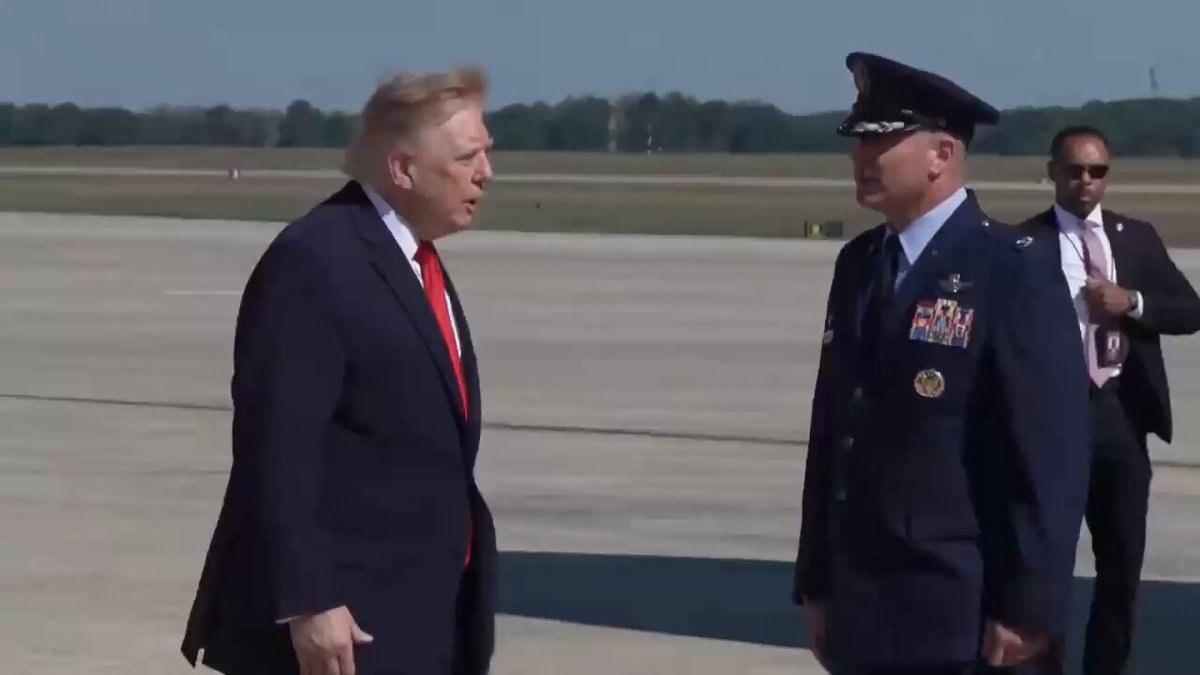
President Trump departed the White House for Alaska on Tuesday, with the administration framing the trip as a return to a state that has already benefited from his second term.
"President Trump is wheels up for the Great State of Alaska," the Rapid Response account posted as the president left. The official White House account followed with a simple "WHEELS UP TO ALASKA."
The trip is being billed by the White House as "President Trump Visits Alaska: Delivering Results for the Last Frontier."
Tax Cuts, Energy and Arctic Security
In a release accompanying the trip, the White House said the president returns to Alaska "with a proven record of results that put Alaskans first: lower taxes, responsible development of the state's vast energy and mineral resources, safer communities, strong support for fisheries, and major investments that create jobs and reinforce America's Arctic security."
The release credits the president's Working Families Tax Cuts with "delivering direct relief to Alaska workers, families, and seniors."
On energy, the White House said Trump "is reversing years of restrictions, unlocking responsible development of Alaska's oil, gas, and critical minerals." The administration also says it has "moved quickly to restore historic names, support Alaska's vital fishing industry, and expand care for the state's veterans."
The release points to new investment in Alaska's military installations, saying Trump and Republicans in Congress "have directed major new investments into Alaska's bases, creating jobs and modernizing facilities that strengthen U.S. security in the Arctic."
The Choice for Alaskans
The White House summarizes the administration's approach as "America First policies that put Alaska first: lower taxes, responsible resource development, safer communities, and major investments in the state's military and economic future."
It closes by drawing a contrast for voters in the state: "Alaskans face a clear choice between continuing this progress, or returning to the higher taxes, energy restrictions, and open border policies of the past."
