
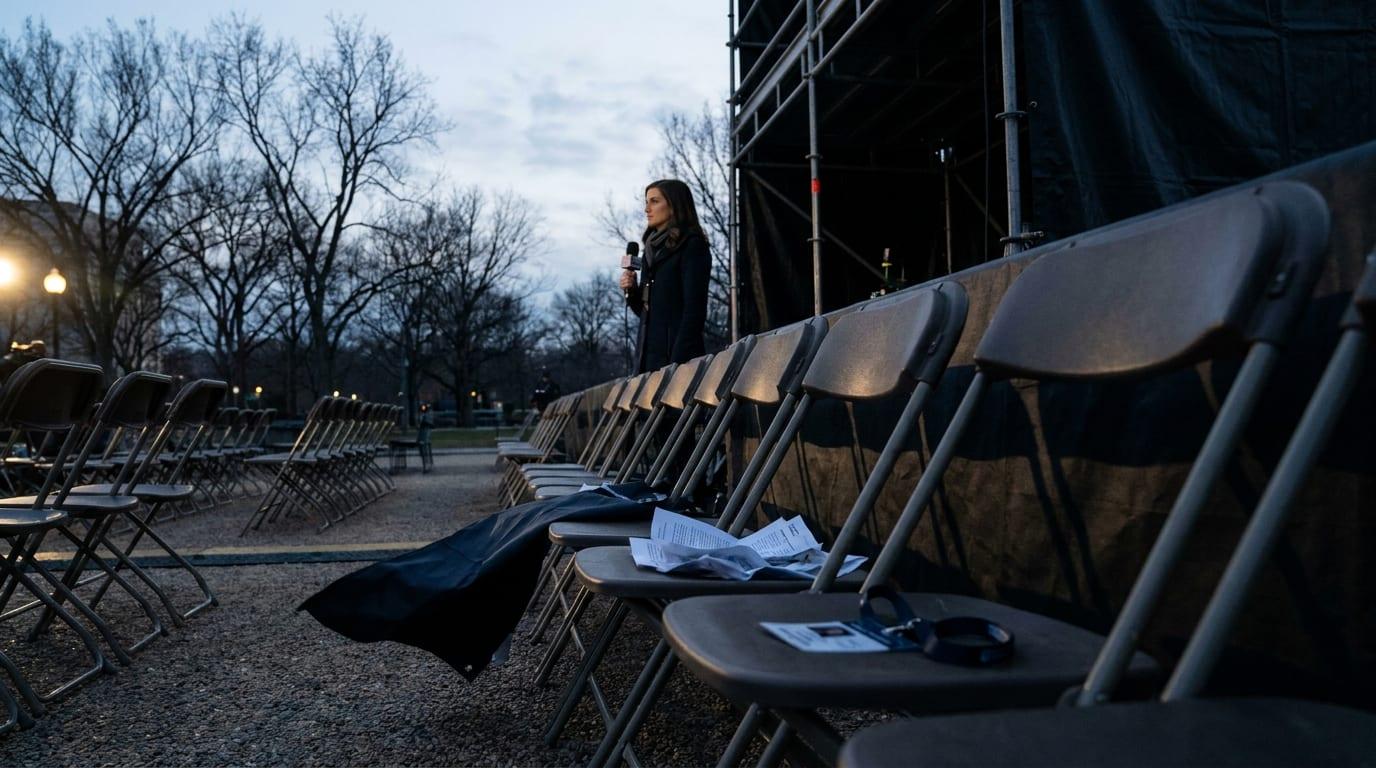
The White House communications operation criticized CNN anchor Kaitlan Collins over her claim of "vacant seats" at a presidential event, saying the seats she pointed to were blocked from view by press risers positioned directly in front of them.
In a post from the Rapid Response account, the White House said: "The only one humiliated here is @kaitlancollins. These 'vacant seats' had an obstructed view due to the gigantic press risers directly in front of them. Just more Fake News bullshit."
The response directly names Collins and frames the episode as another example of media coverage that does not match what was actually happening on the ground.
Who said what
Collins, an anchor for CNN, had raised the issue of empty seating at the event. The White House response did not dispute that seats were visible as empty in her view, but said the reason was structural — the press risers themselves — rather than a lack of attendees.
The account's message was blunt and personal: "The only one humiliated here is @kaitlancollins." That line signals the White House is not treating the claim as an innocent mistake but as a talking point it intends to counter directly.
Press risers at the center of the dispute
According to the White House, the seats in question sat behind "gigantic press risers" — the elevated platforms built to hold cameras and press crews covering the president. That placement, the account said, gave those seats an obstructed view, which is why they appeared unfilled.
The rebuttal reframes the story from a question about attendance to a question about how the event was covered. The White House's position is that the visual Collins described was manufactured by the press setup itself.
This is the second half of the exchange that matters: the White House is not arguing about seating charts. It is arguing that a reporter used a camera angle created by her own colleagues' equipment to suggest something false about the room.
Why it matters
The White House has repeatedly targeted what it calls "Fake News" coverage of the president's events, and this post follows that pattern. The response came from the Rapid Response account, the rapid-fire communications arm that pushes back on press coverage in real time.
For readers who watched the event coverage, the White House's explanation offers a concrete physical reason — the risers — for what appeared on screen. The claim that Collins was "humiliated" is the administration's characterization, not a neutral finding, but the underlying factual dispute is specific: obstructed view versus genuine vacancy.
The White House answer was posted publicly and tagged Collins directly, meaning the administration chose to escalate rather than ignore the segment. That decision is itself part of the story — the White House is signaling it will contest these characterizations of presidential events as they happen.
