
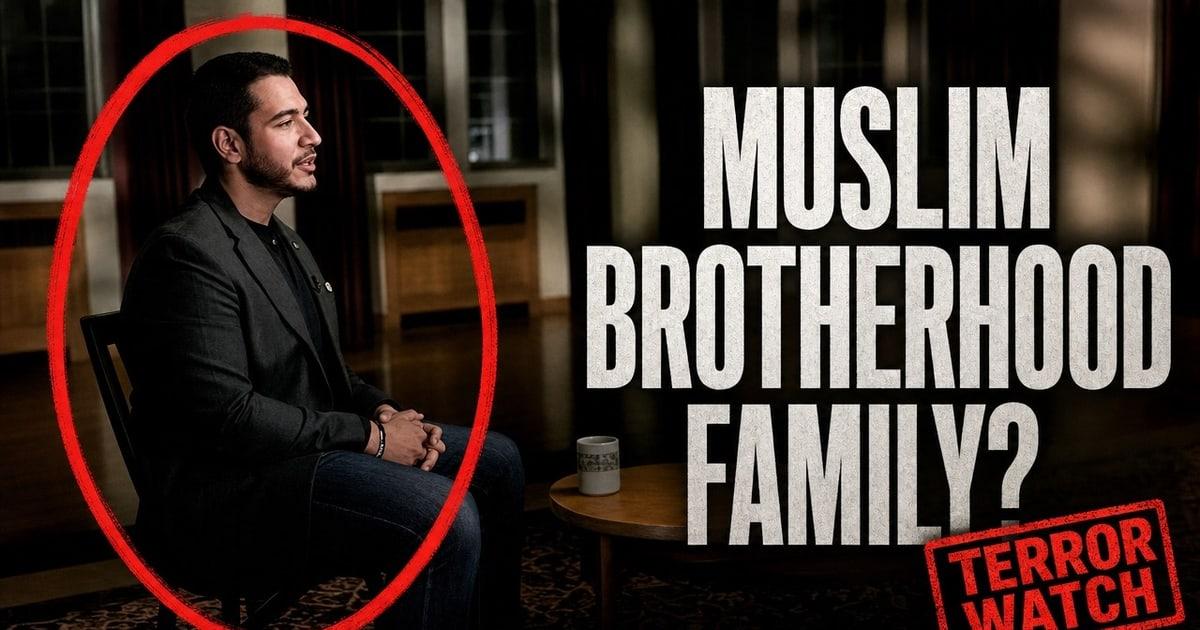
Abdul El-Sayed looked straight into a Michigan camera and declared no Muslim Brotherhood ties—none for him, none for his family. But the National Republican Senatorial Committee and Fox News are now asking why his own half-sister posted something very different in 2012, and why El-Sayed still won't answer.
When Fox News asked the El-Sayed campaign if the half-sister's words were accurate, they got no direct answer. El-Sayed called the NRSC's questions racist and untrue and moved on. The silence is now a Mike Rogers campaign ad, and Michigan voters are left to decide whether their next senator can even rank the Iranian Revolutionary Guard Corps as a bigger threat to America than Israel.
Refusing the Iran Question
In a state with one of the nation's largest Arab-American communities, El-Sayed is betting that pro-Palestinian and anti-Israel signaling outweighs the national security concerns of ordinary voters. But Mike Rogers forced the issue in a way that cut through the noise. Rogers pressed El-Sayed on his relationship with a jailed funder and an Arabic op-ed that aligned with Muslim Brotherhood talking points. Then Rogers asked the question that should end the conversation.
When asked whether Iran and the Islamic Revolutionary Guard Corps are a bigger threat to America than Israel, El-Sayed would not say yes. Not after Rogers named the U.S. Marines Iran killed in Iraq. Not after Rogers named the troops Iran maimed with IEDs. Not after Rogers named the IRGC assassination plot that was being developed inside Washington, D.C., against Americans on U.S. soil.
A man running for the United States Senate cannot answer whether the world's leading state sponsor of terrorism is a bigger threat to the United States than Israel. That is not a difference of opinion. That is a disqualifying national security failure.
If Abdul El-Sayed cannot make that call, he cannot sit on committees where those judgments decide who gets a warning or a funeral.
The Half-Sister's Words
Before anyone calls this a smear, read what the half-sister posted in 2012: 'my family has long been in B.' That is not a random phrase, and it did not appear randomly. It aligns with documented discussions of Muslim Brotherhood membership that have followed El-Sayed across multiple campaigns. He counted on the evidence disappearing. The evidence is still there.
El-Sayed's response was not to refute the substance. It was to call the questions racist and move on. That is the standard political escape hatch for Democrats who cannot defend the facts. And in this case, the facts include a funder and an Arabic op-ed that El-Sayed would prefer never see the light of a general election in Michigan.
West Bank Before West Detroit
The broader problem for Michigan Democrats is that El-Sayed is not some fringe figure in their coalition. He is running for the seat in a state where Teamsters, autoworkers, and Great Lakes families still expect a senator to care more about the cost of ground beef than the latest escalation in the West Bank. A lifelong Michigan Democrat put it plainly: Abdul cares more about the West Bank than West Detroit.
That is the actual stakes in this Senate race. Not a difference about tax brackets or spending levels. A Republican senator reads intelligence on Iranian terror, Hamas cells, and assassination plots. Those same reports decide whether Americans get a warning or a funeral. Abdul El-Sayed cannot be trusted with that intelligence, and he has demonstrated it every time he refuses to answer the most basic national security question about a regime that killed Marines and plotted to kill a U.S. ambassador.
The race is now one live question: will Abdul El-Sayed answer what his half-sister posted, what the Arabic op-ed shows, and why he refuses to rank Iran's Revolutionary Guard as a bigger threat than Israel? He will not, because he cannot. Michigan voters should not hand a national-security application to a man who cannot give a national-security answer.
