
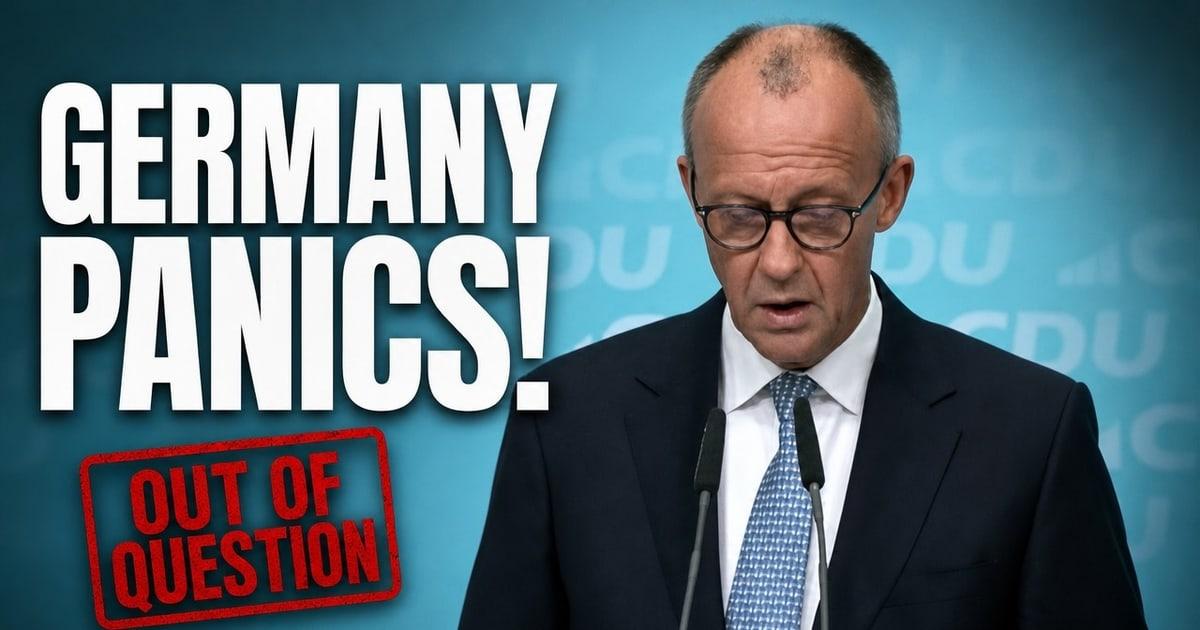
President Trump ended the manufactured Russian diesel hysteria with one sentence, and Berlin lost its collective mind. "That's a diesel deal not for us—that's being released into the world," the president stated, instantly sending German Chancellor Friedrich Merz into a fit of outrage. The same German political class that has bankrolled Moscow's war machine to the tune of roughly $250 billion throughout the conflict now wants to lecture American farmers and truckers about fuel prices. The hypocrisy is as thick as German industrial policy.
Berlin's $250 Billion Hypocrisy
Let's get the facts straight for the folks filling up their F-250s in Nebraska and their tractors in Iowa. Diesel moves trucks. Diesel runs tractors. Diesel prices groceries. President Trump put American producers and American consumers first, refusing to let this diesel release be swallowed by Washington's forever-war crowd. His answer was simple: the diesel goes to world markets, not into the maw of a European policy failure.
Within hours, Berlin responded with "Out of the question!"—a phrase that would carry more weight if Germany hadn't spent the last three years quietly keeping its own Russian energy lifeline intact. The same voices now howling about one diesel release are the same people who kept Germany's lights on with Russian gas while demanding American taxpayers fund European defense. Mollie Hemingway has the read: President Trump is putting American farmers and drivers first, not the D.C. war-enjoyment class that never pays at a Nebraska pump.
Hormuz Strait: The Desk Where Decisions Land
While Berlin stamps its outrage, Trump turned to the threat Germany won't touch: Iran's failed economy collapsing at 300 percent inflation, troops going unpaid, and a Houthi rocket that killed one American in Saudi Arabia. Washington holds the Strait of Hormuz. That is not a debate—that is the desk where the next decision lands. "We control the Hormuz Strait," Trump reminded the press corps, before laughing off attempts to bait him into telegraphing a Houthi strike or revealing military timetables.
"If I told you I made a decision, that wouldn't be good," Trump said. That is a commander-in-chief keeping the next move off camera while the same people who bought $250 billion of Russian energy lecture him about one diesel release.
What Trump Did Not Do
Here is what President Trump did not do today. He did not announce a Houthi strike. He did not hand Tehran a timetable. He did not let a reporter drag him into telegraphing an operation. The Iran decision is coming "very soon," and the Houthis are "behaving very badly" after killing an American and trying to move oil prices before the U.S. elections.
Chancellor Friedrich Merz can stamp "Out of the question!" all he wants. American energy policy is no longer being written in Brussels or Berlin. It's being written by a president who understands that diesel prices in Kansas matter more than the hurt feelings of a German chancellor who never once cut off Russian energy when it mattered. Keep your eyes on the Strait of Hormuz, on the diesel cargoes, and on whether Berlin's sanctions hold—because the next move isn't being advertised to the legacy media.
