
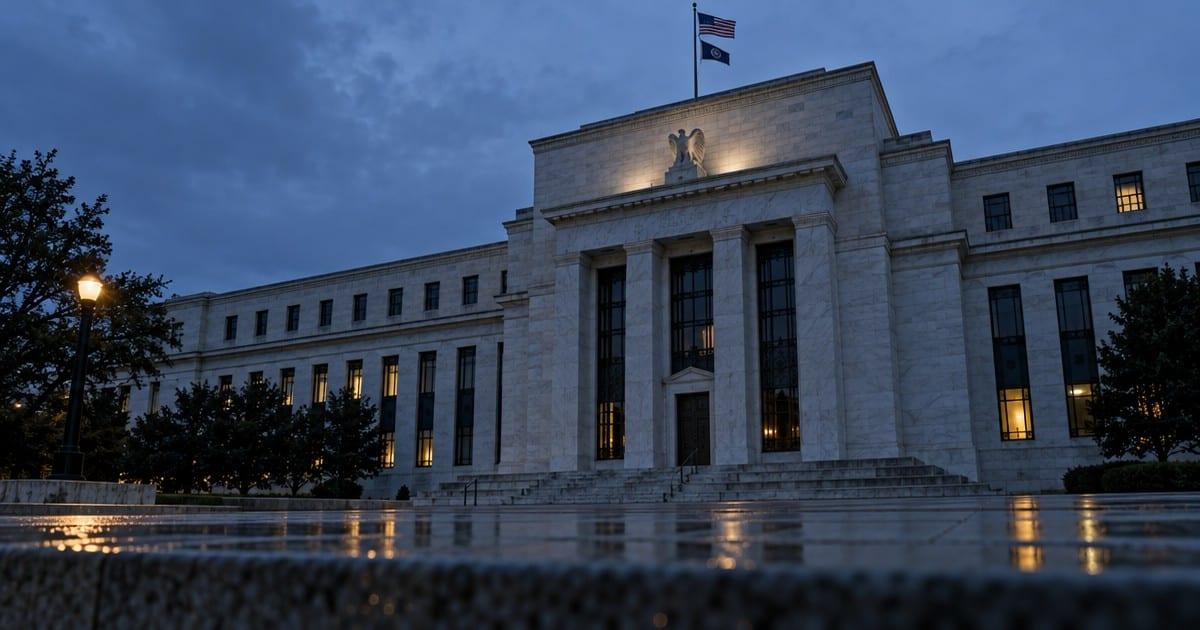
The Federal Reserve Board announced on Wednesday that it has finalized a set of changes to its annual bank stress testing framework, a move the central bank says will enhance transparency and public accountability while smoothing out volatility in the capital requirements that stem from the tests.
The stress tests, mandated by the Dodd-Frank Act, require large banks to demonstrate they can survive severe economic downturns. The results determine how much capital those institutions must hold to absorb losses. In recent years, the tests have produced sharp year-over-year swings in required capital buffers, drawing criticism from banks and some policymakers who argue the process is opaque and unpredictable.
According to the Federal Reserve's announcement, the finalized changes are intended to provide the public with a clearer view of how the central bank arrives at its stress capital buffer requirements. The Board did not immediately release the full text of the final rule, but the description states the changes are designed to reduce volatility in stress-test-related capital requirements.
The move comes as Federal Reserve officials have publicly emphasized the importance of explaining their decisions. Beth Hammack, president and CEO of the Federal Reserve Bank of Cleveland, said in an October 12 speech to the National Association of Business Economics in Cleveland that explaining the Fed's reaction function provides "accountability through transparency," arguing that the complexity of monetary policy decisions is a reason for policymakers to communicate more, not less, according to a report by Central Banking.
Hammack's remarks were focused on monetary policy, but they reflect a broader push inside the Fed toward clearer communication. The stress test changes appear to align with that philosophy, though the Board has not detailed the specific mechanics of the final rule.
The Federal Reserve's most recent Beige Book, released Tuesday, painted a picture of an economy growing slowly. Two of the twelve Fed districts reported moderate growth, three reported modest growth, four reported slight growth, and three reported no significant change. Most districts described little or no net change in employment levels. Labor supply was generally adequate, though shortages persisted for specialized, technical, and skilled trade workers. Five districts reported that some firms had reduced staffing through attrition, delayed hiring, or anticipated less job growth.
Against that backdrop, the stress test changes could affect how banks plan their capital positions heading into next year's exercise. The Fed has not said whether the final rule will change the severity of the hypothetical scenarios used in the tests or alter the timeline for results.
It is not yet known whether the changes will be welcomed by the banking industry or by consumer advocates, who have historically clashed over the stringency of the tests. The Fed's announcement did not include a comment period summary or a fact sheet detailing the differences between the proposal and the final rule.
The Federal Reserve Board's H.15 selected interest rates release for October 14 showed no immediate market reaction tied to the stress test announcement. The daily effective federal funds rate, as of March 1, 2016, is a volume-weighted median of transaction-level data collected from depository institutions, according to the Fed's release notes.
Banks subject to the stress tests have long argued that the annual exercise produces unpredictable capital demands that can constrain lending. Critics of the banks counter that the tests are a critical safeguard against another financial crisis and that any loosening of the framework risks repeating the mistakes of 2008.
The Fed's final rule follows a proposal period that has not been fully detailed in the Board's public description. The central bank has not indicated when the changes will take effect or whether they will apply to the 2027 stress test cycle.
Our Take
Here's what the Fed isn't saying out loud: the stress test has been a black box for years, and the bankers who have to live with its outputs have been complaining about the whiplash for just as long. A capital requirement that swings wildly from one year to the next isn't a safety feature — it's a planning nightmare that makes banks hoard capital when they should be lending to small businesses and families.
But let's be clear about what this is and isn't. This is the Federal Reserve, an institution that answers to no one at the ballot box, tweaking its own process. It is not deregulation passed by Congress. It is not a rollback of Dodd-Frank. It is the administrative state adjusting its own dials, and we should never confuse transparency theater with actual accountability.
The real question is whether these changes will reduce the Fed's ability to bail out its friends on Wall Street while crushing Main Street with tight credit. If the new rules make the tests more predictable and less arbitrary, that's a win for community banks and the small businesses that depend on them. If they simply give the biggest banks a clearer roadmap to gaming the system, then the Fed has done nothing but polish the cage.
Hammack is right that transparency matters. But transparency from an agency that operates outside the bounds of democratic oversight is only as good as the people wielding it. Patriots should be watching whether this final rule is published in full, whether the public gets a real chance to weigh in, and whether the next stress test cycle produces fewer bailout-bait headlines and more lending to the forgotten middle class.
The Fed just told us it wants to be more open. Fine. Let's hold them to it.
