
A sparsely populated red state that national Democrats couldn't find on a map is now the most financially sound state in America — and voters in New Jersey, California, Illinois and Connecticut are paying the price for their leaders' failure.
North Dakota ranked No. 1 in Truth in Accounting's 2026 Financial State of the States report, closing fiscal year 2025 with $21 billion more than it needed to pay its bills, according to reporting first flagged by Fox News Politics. That cushion gave North Dakota the highest taxpayer surplus in the country at $72,300.
To be clear about what that number is: the taxpayer surplus figure does not mean North Dakotans get a check for $72,300. It represents each taxpayer's share of the state's surplus under the group's methodology. But it does mean something real — the state has the money it owes and then some.
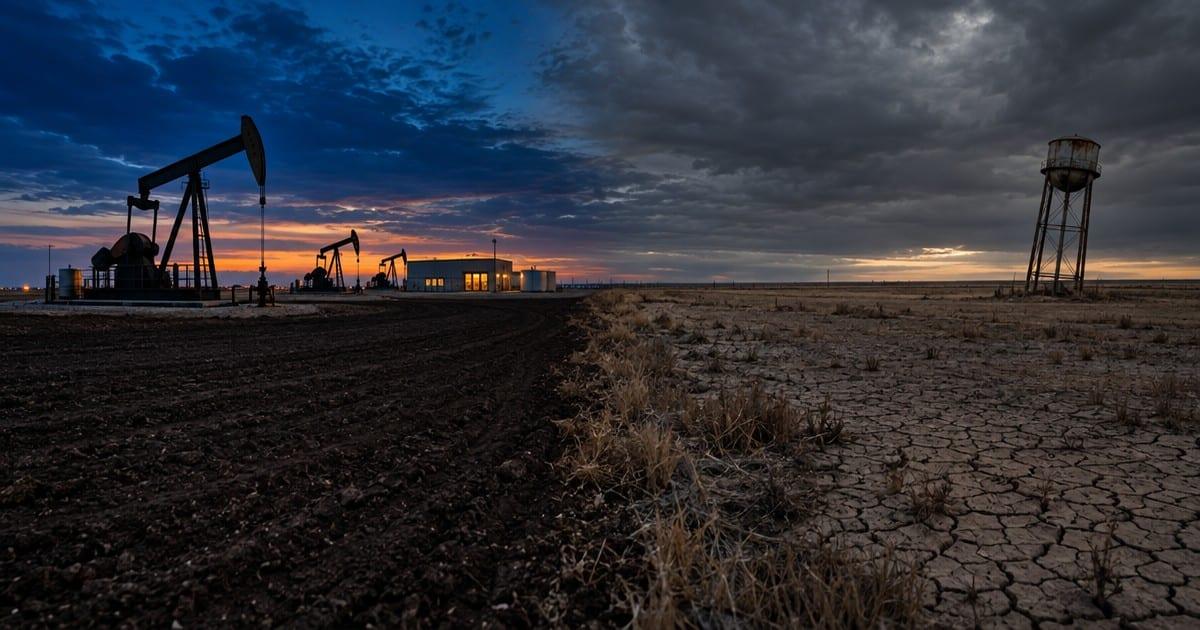
North Dakota's secret isn't a secret. It's oil money, invested instead of spent.
The state's position was bolstered by its Legacy Fund, a state investment fund built with oil tax revenue. Though oil, gas and coal tax revenues declined amid lower energy prices, strong investment earnings and federal grant revenue helped offset the drop, per the report.
North Dakota was followed in the rankings by Alaska, Wyoming, Utah and Tennessee. All five ran taxpayer surpluses, ranging from $11,400 in Tennessee up to North Dakota's $72,300.
Five states out of fifty. That's how narrow the island of fiscal sanity has become.
Across the country, 24 states don't have enough money to cover their bills. States carried $775 billion in unfunded pension liabilities and $490 billion in unfunded retiree health care obligations in fiscal 2025, according to Truth in Accounting.
New Jersey ranked dead last with a $162.3 billion shortfall. Truth in Accounting translates that gap into a $45,800 taxpayer burden — the highest in the country. Connecticut came in 49th, followed by Illinois, Massachusetts and California at 48th, 47th and 46th. The bottom five carried taxpayer burdens from $16,000 in California up to New Jersey's $45,800.
And notice the pattern: the states at the bottom are the ones that have been run by Democrats for a generation.
Why does it matter? Because the bill comes due eventually. States with stronger balance sheets have more room to weather downturns, maintain public services and meet retirement obligations. States carrying large unfunded debts face tougher choices over taxes, spending and borrowing when revenues fall.
Translation for working families: when the next downturn hits, New Jersey and California politicians will come looking for you. Again.
North Dakota's model is embarrassingly simple. Tax energy production. Put the money in a fund. Don't spend it all. Don't promise pensions you can't pay. It's the opposite of what Illinois, California and New Jersey have done for decades — promising lavish benefits to public-sector unions, borrowing against the future and kicking the problem to the next administration.
The divide is also a direct rebuke to the spend-now, apologize-later playbook that has ruled blue states for years. The blue-state story is always the same: higher taxes, bigger promises, worse results. The red-state story in North Dakota is the boring one that actually works.
Our Take
None of this is an accident, and none of it is complicated. North Dakota is a conservative, energy-producing, low-tax, low-debt state. The states at the bottom of this list are high-tax, high-debt, union-captive states that have spent decades promising things they can't pay for.
The left's answer to this is always to demand more money from Washington. Bail out Illinois. Bail out New Jersey. Let the productive states carry the dead weight. That's the game — and it's why the fight over state bailouts and federal spending is going to be one of the defining battles of the Trump-Vance era.
Republicans should be screaming this report from every rooftop in Trenton and Sacramento. The question for every voter in a broke blue state is simple: how many more decades of this before you demand your politicians run things the North Dakota way?
The numbers are on the table. Your state's ledger is public. Go look at it — then ask your governor why North Dakota's taxpayers are $72,300 ahead and you're $45,800 behind.
