
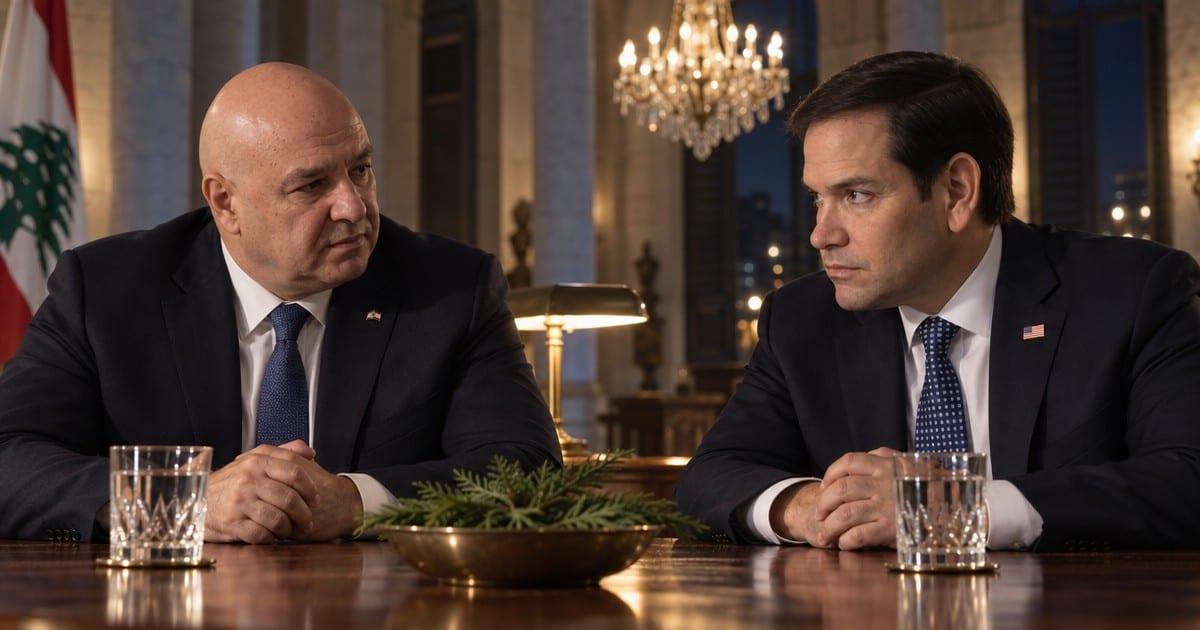
Secretary of State Marco Rubio spoke with Lebanese President Joseph Aoun on Thursday after Lebanese authorities seized Hezbollah explosives that one official said were meant for use in targeting Israeli forces, according to the Washington Times.
The seizure and the call between Washington and Beirut come as the Trump administration has pressed Lebanon over the presence of the Iran-backed militia on its territory. In the days before the call, the State Department sharply criticized a legal complaint filed in Lebanon against the country's ambassador to Washington over her reported outreach to her Israeli counterpart, calling the case "embarrassing."
In his post, CBS News national security correspondent Olivia Gazis reported the call and the seizure, describing the explosives as intended for use against Israeli forces according to one official. The claim about the explosives' intended target has not been independently confirmed, and no further details about the cache or the call were released by either government.
The Rubio-Aoun call follows a pattern in which the administration has tried to keep pressure on Beirut while also defending its ambassador, Nada Hamadeh Moawad, who reportedly spoke with her Israeli counterpart after his son was injured in a ramming attack. The National reported that the complaint against Hamadeh Moawad stemmed from that contact. The State Department described the case as "embarrassing" as the administration seeks to keep Lebanon focused on the Hezbollah file.
Separately, in a story that drew national attention across sports and campus safety circles, Arizona State University announced Thursday that it had reached a "mutual agreement to part ways" with ice hockey coach Greg Powers, nearly two months after twenty-one-year-old sophomore Matthew Mayich collapsed during a workout and had to be put on life support. The university said it had hired Dave Hakstol, previously an assistant coach with the NHL's Colorado Avalanche, as head hockey coach.
Powers had been placed on paid administrative leave late last month after Mayich's parents and several teammates demanded that the staff responsible for the workout that led to the collapse be removed while an investigation was conducted. Mayich was participating in an outdoor workout on Aug. 20 when he suffered heatstroke, according to Robert Carey, an attorney for his family. Carey has said Mayich was placed on life support and is "unlikely to recover," according to CBS affiliate KPHO-TV.
Seven of Mayich's teammates later alleged in an anonymous letter that the school's description of the workout was inaccurate, claiming Mayich was not given any water breaks and had shown signs of distress before the final exercise, during which he collapsed. They also said required emergency equipment, like cold-water immersion tubs, was not on the field. The school asked former Arizona Supreme Court Chief Justice Scott Bales to oversee the independent investigation into the circumstances surrounding Mayich's collapse, KPHO-TV reported.
"Our focus remains where it has been since August 20, on Matthew, and making sure what happened to him is fully understood and never happens to another player," Mayich's family said in a statement Thursday. "It seems more like a negotiated agreement than accountability, and so we believe Justice Bales's investigation must continue with its full scope, gathering all digital evidence and covering everyone involved in that morning's workout and in approving it, and its findings must be made public. Coach Powers's departure should not limit hi"
The family's statement was cut off in the CBS News post; no additional text from the family was included in the material reviewed by Next News Network.
In a statement, the university said: "The university and Sun Devil Athletics are grateful for Coach Powers' work to establish ASU as a Division I hockey program and for his service over the past nearly two decades."
Reaction to the ASU announcement spread quickly across social media, with the CBS News account citing the family's frustration at what they described as a "negotiated agreement" rather than accountability. In a post Thursday afternoon, Mehdi Hasan, a columnist and host, paired the Rubio news with sharp criticism of the secretary of state under the heading "Secretary of Cuck: How Marco Rubio Learned to Love Waging Trump's War on the World." Hasan wrote that Rubio "was once a supposedly reasonable Republican, even the GOP's 'savior.' Now he's Donald Trump's 'Narco Rubio' and overseeing a level of violence his staffers are terrified to question." The post was one of several on the Rubio-Lebanon call circulating among commentators Thursday.
The Washington Times post on the Rubio call and the CBS News post on the ASU coaching change were the two main items driving coverage Thursday evening. The Rubio post is attributed to the Washington Times newsroom account @WashTimes, which reported that Rubio and Aoun spoke Thursday after the explosives seizure. The CBS News account @CBSNews reported the ASU announcement that the university and Powers had reached a mutual agreement to part ways.
Next News Network could not independently verify the claim that the seized explosives were intended for use against Israeli forces, nor the specific circumstances of Mayich's collapse as described by his family's attorney and teammates. Both remain claims as described by the parties involved and the outlets reporting them.
Our Take
The Rubio call with Lebanon's president is the kind of quiet diplomatic win this administration should be advertising from the rooftops, but the State Department's decision to weigh in on a Lebanese legal complaint against its own ambassador reveals how much of the Lebanon file is still being managed through crisis public relations rather than a coherent strategy. Seizing Hezbollah explosives is a real step, and the Lebanese president deserves credit for it, but the White House has yet to explain what comes next if Beirut cannot or will not disarm the militia. Meanwhile, the ASU story is a reminder that so-called mutual agreements often arrive after families have spent weeks demanding answers that institutions should have volunteered on day one. Paying a coach to leave while a former chief justice investigates is not accountability; it is the appearance of accountability, which is exactly what the Mayich family said. The school's moving quickly to name a replacement while the investigation is unfinished sends the message that hockey season matters more than a young man on life support. If the Bales investigation is worth having, its findings should be public and its scope should include everyone who approved that August workout, not just the man walking out the door with a severance package.
