
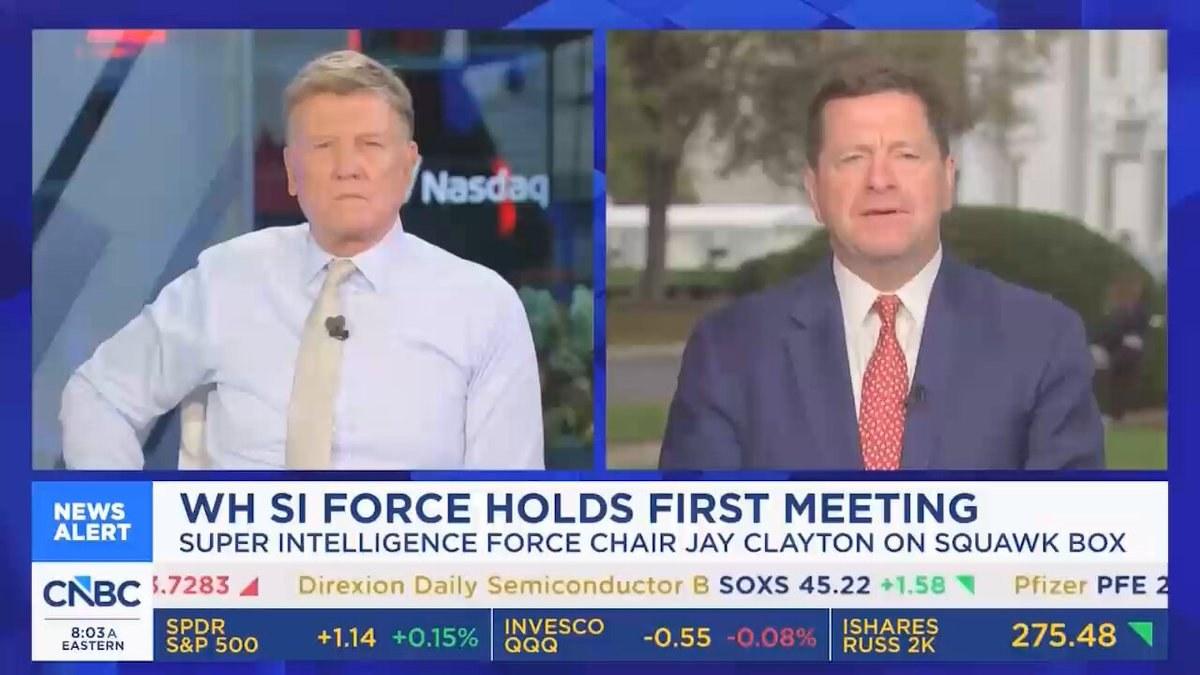
The Super Intelligence Force created by President Trump following last month's historic White House signing of global AI Accords held its initial meeting on Friday, with Chair Jay Clayton outlining the body's first concrete actions to enforce responsibility among the world's leading technology companies.
"It was a very good meeting and it really was a continuation of the historic day we had here at the White House at the end of last month where President Trump brought together the world's leading companies to sign an accord and agree on behalf of the American people that they had responsibility for the products they were produced," Clayton said.
Protocol for Implementing Accords Established
Clayton announced that the Force's first action was to establish a clear path for enforcement of the Accords and direct communication with frontier AI developers. "We set out a protocol and path for making sure those accords are implemented and that we're in dialogue with the frontier labs," Clayton said.
PCAST Tasked with Risk Study
The President's Council of Advisors on Science and Technology, led by David Sachs, has been directed to conduct a comprehensive risk assessment drawing upon top American experts, including Nobel laureates, to identify potential threats posed by superintelligence systems.
Three Committees to Lead Oversight
The Force also established three specialized committees, each led by a vice chair, to address critical areas of superintelligence oversight. Vice Chair Mio Michaels will lead a committee on reporting and response, ensuring a mechanism for superintelligence-related incidents.
"Making sure that we have a reporting and response mechanism for superintelligence issues," Clayton explained.
Vice Chair Scott Cooper will head a task force focused on assessing and hardening critical infrastructure in coordination with the private sector and state and local governments.
"Scott Cooper, vice chair Cooper, is going to lead a committee task force, whatever you want to call it, on assessing critical infrastructure and working with the private sector and our state local governments to try to harden and set out paths for hardening our critical infrastructure," Clayton said.
Law Enforcement and Deterrence
FTC Chairman Andrew Ferguson, whom Clayton credited for leading the fight against fraud across the government, will chair a committee on law enforcement and responsibility. The committee will ensure federal agencies, including the DOJ, FTC, and FCC, have the tools to protect the American people and deter violations of the Accords.
"The DOJ, the FTC, the FCC, all working together, have tools at their disposal to deal with the risks and what I would say is provide sufficient deterrence so that that responsibility is enforced," Clayton stated.
