
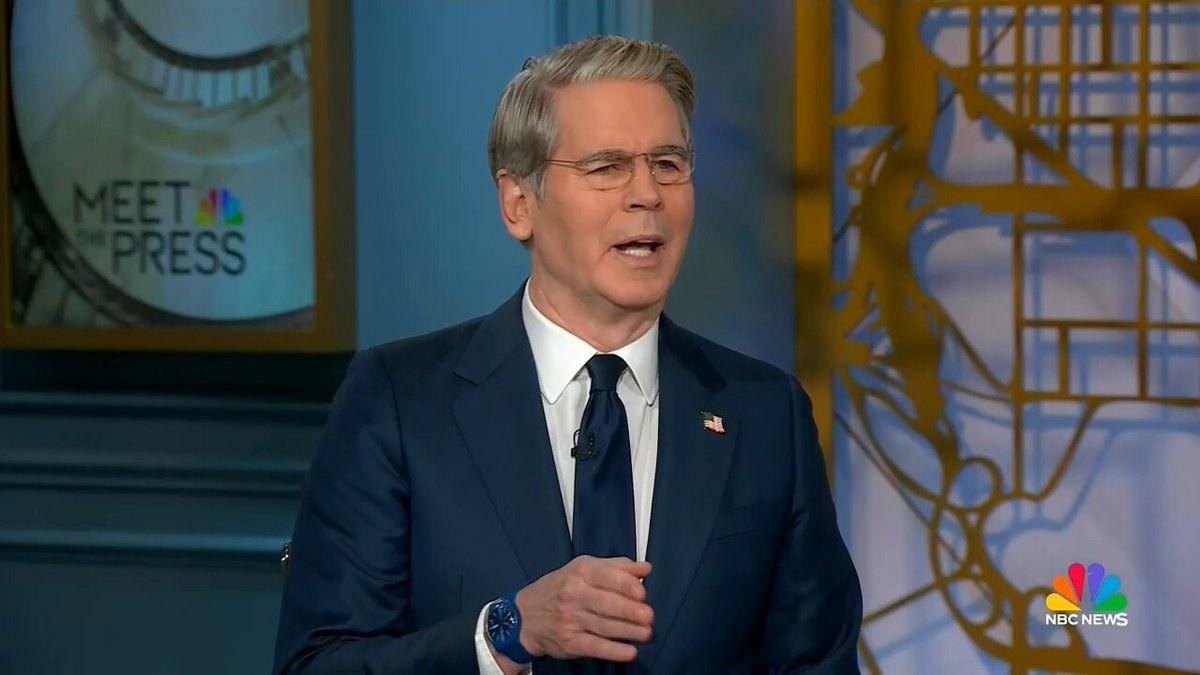
Treasury Secretary Scott Bessent pushed back hard on critics of President Trump's Russia policy, accusing European allies of bankrolling Vladimir Putin while demanding the United States carry the sanctions burden alone.
Speaking to reporters on Saturday, Bessent detailed how Europe continues to buy Russian energy on a massive scale, undercutting the economic pressure campaign against Moscow.
Europe Gorges on Russian Energy, Refuses Tariffs
"The Europeans have given Russia and Vladimir Putin more money than they've given the Ukrainians," Bessent said. "They continue to gorge on Russian energy."
He pointed to the Amal facility, a Russian gas export terminal, where 140 cargoes departed in the first half of the year—136 of those went to European countries including Belgium, Spain, France, and the Netherlands, totaling more than $8 billion.
Bessent said he asked European allies in the spring to join secondary tariffs on China and India, but they refused.
"Why should the U.S. go at it alone?" he asked.
No One Tougher Than Trump on Russian Sanctions
Bessent rejected the suggestion that Trump has been soft on Moscow, citing the administration's actions against Russian energy giants.
"President Trump sanctioned the two largest Russian energy companies, Rosneft and Lukoil, which dealt a catastrophic blow to the Russian energy industry," he said. "No one has been tougher on Russian sanctions than President Trump."
He also rejected claims that sanctions were lifted on Friday.
"That's not true. No sanctions were lifted on Friday," Bessent said. "There was a law that was supposed to put more sanctions in place. The president effectively changed that. No sanctions were lifted."
He noted the only change was a diesel embargo waiver, and pointed out the United Kingdom previously waived its own embargo on diesel and jet fuel made with Russian crude in May.
Ukraine Criticizes U.S. While Europe Funds War
Bessent contrasted the criticism from Ukrainian President Volodymyr Zelensky toward the United States with what he called European complicity in financing Russia's war effort.
"President Zelensky does not criticize his European partners," Bessent said. "The Europeans are financing the Russian war machine."
He noted the U.S. imports only $4 billion of Russian products, $1.8 billion of that fertilizer, while Europe imports more than ten times that amount.
Energy Shock Will Pass
On the economic front, Bessent described recent price increases as an energy shock from the Iran conflict, not a broad inflation problem.
"This is an energy shock. We will get to the other side of the Iran conflict, and those prices will come down," he said.
He noted core inflation has been down for four months in a row, food inflation is below the Fed's target, prescription drugs have seen the biggest decrease in history, and rents are down.
