
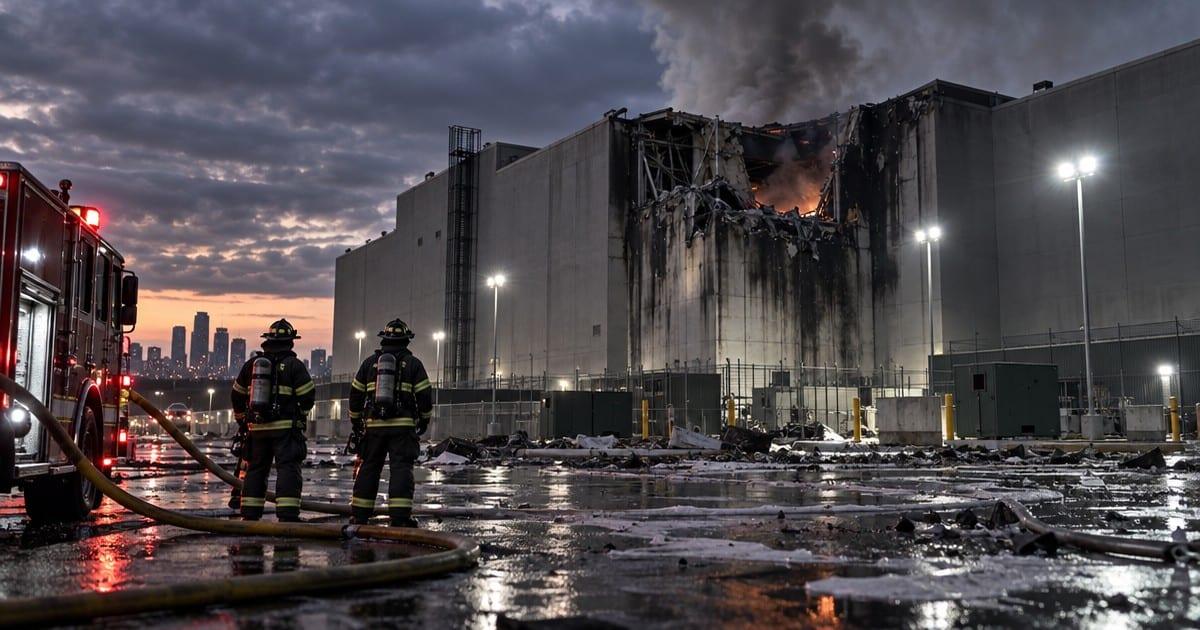
Ukrainian attack drones struck a data center belonging to VK, the Russian social media giant, and set it on fire late Saturday, according to open-source intelligence accounts that track the conflict. The strike, if confirmed, would mark another escalation in Ukraine's campaign against Russian digital infrastructure, coming on the heels of reported strikes on Yandex data centers that reportedly crippled Moscow's bot activity.
Osinttechnical, an open-source intelligence account with 1.9 million followers, posted about the attack shortly after 1:26 a.m. UTC on Sunday, writing that Ukrainian drones hit the facility and that VK's network had begun experiencing disruptions. The account also shared video footage from the scene, which included audio in Russian. In the clip, a speaker can be heard describing their location; the English rendering of those remarks is a translation, not the speaker's own words.
The reported strike on VK's data center follows a broader pattern of Ukrainian attacks targeting Russian technological infrastructure. According to UNITED24 Media, Russian bot activity collapsed by 84 percent following strikes on Yandex data centers, a development that raised questions about whether Ukraine can sustain such disruption to combat Russian influence operations. The outlet reported that Russian disinformation campaigns saw a dramatic drop in activity after the Yandex strikes.
Separately, eyewitness footage from St. Petersburg residents showed what appeared to be Ukrainian drones flying through the air while the city's air defense systems engaged targets, according to reports of flames and explosions amid a large Ukrainian drone attack on the city. The St. Petersburg attack and the VK data center strike appear to be part of a coordinated wave of Ukrainian drone operations against Russian targets.
The timing of the reported VK strike is notable given recent developments in Ukraine's defensive capabilities. Ukrainian President Volodymyr Zelenskyy said that Starlink restrictions are hampering his country's efforts to intercept Russian drones, according to CBS News. The Ukrainian leader's comments came amid reporting from the Daily Mail indicating that Elon Musk was responsible for a slowdown of the Starlink satellite system that stopped Ukraine from intercepting Russian drones. Sources cited by the outlet claimed the tech billionaire and SpaceX founder publicly blamed the US president for the chaos over the decision to restrict Kyiv's access to the satellite system, which has since been restored.
The VK data center strike, as described by Osinttechnical, targeted infrastructure belonging to one of Russia's largest social media platforms. VK, sometimes called the Facebook of Russia, hosts a wide range of services including social networking, email, and news aggregation. A successful strike on one of its data centers would represent a significant blow to the company's operations and potentially to Russian state-aligned information operations that rely on the platform.
The report from Osinttechnical described the scene as drones hitting the facility and setting it on fire, with the platform's network subsequently experiencing disruptions. The account's post included video footage that captured the aftermath of the strike, though the full extent of the damage to the facility remains unclear from the available reporting.
The strikes on Russian data centers come as Ukraine continues to develop and deploy long-range attack drones capable of reaching targets deep inside Russian territory. These operations are aimed at degrading Russia's ability to conduct military operations and information campaigns against Ukraine and its allies. The reported targeting of VK infrastructure suggests Ukrainian planners view Russian social media platforms as legitimate military-adjacent targets in the broader information war.
The reported 84 percent collapse in Russian bot activity following the Yandex strikes offers a window into how effective these attacks on digital infrastructure can be. If similar disruption is achieved at VK, it could further hamper Russia's ability to spread disinformation and coordinate online influence campaigns. However, questions remain about whether Ukraine has the resources and capability to sustain such a campaign against Russian technological infrastructure over the long term.
Next News Network could not independently verify the reported strike on the VK data center or the extent of the damage to the facility and its network.
Our Take
The reported strike on VK's data center is a reminder that the war in Ukraine is not just fought on the battlefield but in the digital domain. While the mainstream media focuses on Starlink restrictions and Elon Musk's role in Ukraine's defensive struggles, they continue to downplay the significance of Ukraine's ability to strike back at Russian information infrastructure. If the 84 percent drop in Russian bot activity after the Yandex strikes is any indication, targeting these data centers may be one of the most effective tools Ukraine has for disrupting Moscow's propaganda machine.
The fact that VK's network experienced disruptions following the reported strike should concern anyone who understands how deeply Russia's disinformation ecosystem relies on these platforms. Yet the corporate media remains fixated on Elon Musk and Starlink, framing Ukraine's defensive challenges as a tech billionaire's fault rather than a complex battlefield reality. The real story is that Ukraine is taking the fight to Russia's digital doorstep, and that is a development that should be celebrated by anyone who values the free flow of accurate information.
As always, we caution that these reports remain unconfirmed, and the fog of war can obscure the facts. But if the pattern holds, Ukraine's campaign against Russian data centers could be a game-changer in the information war that has become so central to this conflict. The West should be supporting these efforts, not second-guessing them.
