
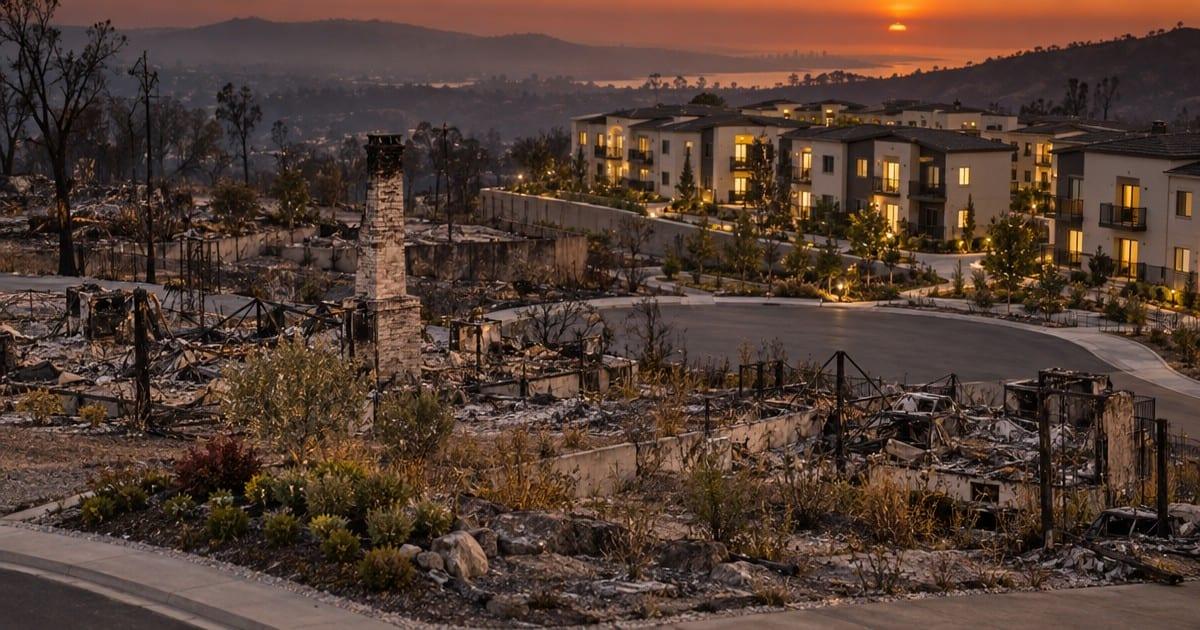
A report published by the New York Post alleges that California directed nearly $369 million in federal wildfire recovery aid to low-income housing developers without requiring those developers to house a single wildfire survivor. The story, attributed to a California Post investigation, has spread across conservative media and social platforms, drawing angry reactions from fire victims and commentators who say the money was meant for people who lost their homes.
The New York Post, an account with 4.2 million followers, posted the story on October 19 with the headline: "California pours $369M in wildfire recovery funds into low-income housing - but reserves none for fire victims." That post is where much of the reaction began, and it framed the allegation in the starkest terms: federal money intended for the deadliest wildfire year in state history, redirected to housing developers while survivors wait.
According to the California Post investigation cited by the Post, the money was awarded to developers while thousands of Californians struggled to rebuild after the 2018 fires, which killed 103 people and damaged or destroyed more than 24,000 structures. The federal government allocated more than one billion dollars to California to help communities recover from those fires, including the Camp Fire, which killed 85 people in Paradise, and the Woolsey Fire, which devastated communities north of Los Angeles. The report states the Woolsey Fire killed three people, destroyed 1,643 structures and caused more than six billion dollars in damage.
The Post's reporting says the $1,017,399,000 allocation from the US Department of Housing and Urban Development was intended to cover recovery costs not paid by insurance or other assistance, and that California's Department of Housing and Community Development oversees the money, dividing it between helping homeowners rebuild and financing affordable rental housing in fire-ravaged communities. The allegation at the center of the story is that the rental-housing side of that split came with no requirement that developers house wildfire survivors.
At the heart of the coverage is Mickey Schechter, a 62-year-old motivational speaker and comedian who lost his Cornell home and $60,000 in plumbing tools when the Woolsey Fire tore through the Santa Monica Mountains, destroying 37 homes in his community. Nearly eight years later, the report states, he is still living in a cramped, 350-square-foot guesthouse that survived the blaze, unable to afford the estimated $2 million it would now cost to rebuild his home.
"That's our money. We're the ones that suffer for it. Give us our damn money. That's bulls—t. I'm pissed," Schechter told the California Post, according to the report carried by the New York Post.
Schechter's quote became the emotional center of the story as it moved outward from the Post's post. The Post's post carried the headline and linked to the full California Post investigation, and the account's framing — money for developers, nothing reserved for victims — is what circulated. The story's spread has been driven by that headline as much as by the underlying reporting, with the Post's post serving as the entry point for readers encountering the allegation for the first time.
The reaction did not stay confined to the Post's own feed. The allegation landed in a broader conversation about California housing policy already underway this fall. Coverage elsewhere has focused on a $11.25 billion housing bond on the November ballot, with supporters saying the state desperately needs money to fund housing construction and critics saying bond financing is not the way to do it. Voters in Massachusetts, California and Florida are also weighing lot sizes, CEQA timelines and property tax breaks on November 3, with varied thresholds. Against that backdrop, the claim that wildfire recovery dollars went to housing developers rather than survivors fits into an existing argument about how the state prioritizes housing spending.
The story also arrives amid active fire coverage in the state. Officials said the Norte Fire ignited midday Friday in San Clemente, burning at least 570 acres in Orange County, with fire officials warning that wind gusts are causing a "dangerous rate of spread." That coverage keeps wildfire response and recovery in front of readers as the funding allegation circulates.
The claim at the center of the Post's post — that California reserved none of the $369 million for fire victims — is being described by the Post and the California Post as the finding of an investigation. Next News Network could not independently verify the allegation.
What is not in dispute is the scale of the loss the reporting describes: 103 dead, more than 24,000 structures damaged or destroyed, and a federal allocation above one billion dollars meant to cover what insurance and other assistance did not. What is being alleged is how a portion of that money was spent, and who was — or was not — required to benefit from it.
For Schechter, the allegation is personal. His quote, carried in the Post's post and the California Post investigation, is the reaction the story has traveled on: a survivor nearly eight years removed from the fire, still in a guesthouse, watching hundreds of millions of dollars go to developers with no requirement that any of it house someone like him.
Our Take
The allegation here is simple and damning: nearly $369 million in federal wildfire recovery money handed to housing developers with no requirement that a single fire survivor be housed. If the California Post's investigation holds up, this is not a accounting error — it is a betrayal of the 103 people who died in the 2018 fires and the thousands who lost everything and are still waiting. Mickey Schechter's words — "Give us our damn money" — are not anger for anger's sake. They are the plain statement of a man who lost his home, his tools, and nearly eight years of his life to a bureaucracy that found a way to spend his money on someone else's project. California's leaders should answer for where every dollar of that allocation went and why survivors were not first in line. The voters weighing a multibillion-dollar housing bond this November deserve to know how the last housing windfall was handled before they are asked to approve another one.
