
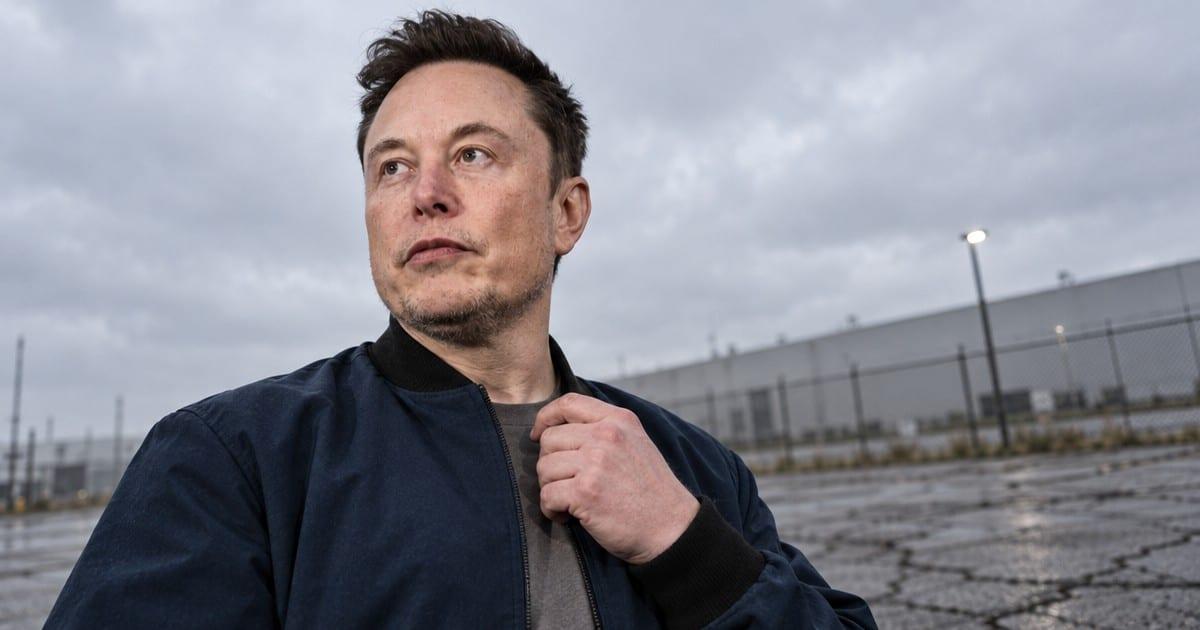
Elon Musk is telling the story of a former Tesla employee at the company's Austin factory who, he says, assaulted a female coworker after she stepped on his prayer rug and was fired for it — and who, months later, killed three students at a bar in downtown Austin. The claim, as Musk tells it, is offered as an argument about who should be allowed into the country.
"We had someone who was working at the Tesla factory in Austin until December of last year," Musk said. "He was fired because he assaulted a woman who stepped on his prayer rug in the factory. She wasn't expecting anyone to be praying in the factory and he was praying in the factory. She actually stepped on his prayer rug and he assaulted her. It violently assaulted her. So he was fired for that. And then a few months later, he went and killed three students in the bar in downtown Austin."
Musk closed the account by asking: "Now I think we shouldn't let people like that into the country. Do you? Where do you get your information? I know you're not particularly fond of legacy media, mainstream media. Is most of it from social media or do you have sources of information?"
Brandon Tatum, whose X account @TheOfficerTatum carries roughly nine hundred fifty thousand followers, circulated the remarks early Wednesday with a blunt framing of his own. "WOW: Elon Musk says a Tesla employee was fired after assaulting a woman who stepped on his prayer rug," Tatum posted. "Months later, Musk says, he killed three students at an Austin bar." Tatum added a line drawing out the immigration angle: "Elon: 'I think we shouldn't let people like that into the country. Do you?'"
The story has moved quickly through a cluster of accounts. A clip of the remarks circulated on X under the name Tony Jacob of FindaClip.com, summarizing it as Musk revealing that "an ex-Tesla employee who assaulted a woman for stepping on his prayer rug went on to kill three students in Austin" and quoting the same passage about the Austin factory and the December firing. Two separate aggregations of the same material followed within hours, one describing it as Musk recalling how a former Tesla Muslim employee who assaulted a woman over accidentally stepping on a Namaz mat went on to kill three people in Austin, the other as Musk revealing the man's path from assault to triple murder — "and the Usual Suspects Are Mad." Next News Network could not independently verify the underlying events Musk describes: the assault at the factory, the firing, or the connection between the fired employee and the three killings in Austin.
The comments landed against a busy news day for Musk's business empire, and the two strands of coverage have been running side by side. The Washington Post reported Wednesday morning that SpaceX was profitable in the third quarter of this year, reversing earlier losses and putting the company on a trajectory that could let it deliver on promises Musk made when he took the company public earlier this year. Reuters, in a separate explainer, examined why Musk would merge SpaceX and Tesla — a question that became live after Musk said publicly that a union of the two companies would be "a good idea" and that special committees had been formed to discuss it. Reuters reported that the disclosure sent shares of the space and technology company up eight percent in extended trading.
The political ground was being worked at the same time. One America News carried remarks by President Trump criticizing former North Carolina Gov. Roy Cooper's disaster response while praising Musk and others for delivering equipment and helping save lives. In the clip OAN posted, Trump describes a response in which "within five hours we had so much equipment" and credits Musk directly: "Elon saved a lot of lives, you all did, you saved a lot of lives." He turns to the governor repeatedly — "your governor didn't do a damn thing" — and ties the recovery timeline to his own return to office: "the only way I got fixed is when I became president on January twentieth." Trump also says damage from the storm was among the worst he has seen: "I've never seen anything like it. I've been to some bad ones."
The left has been circling the Musk story from a different direction. Jacobin took aim at the documentary "Musk," directed by Alex Gibney, arguing that its message — "that it's already too late to resist Elon Musk" — is a form of doomerism that "serves the Right and the Musk-led oligarchy very well." The criticism is notable less for its subject than for what it concedes about the terms of the debate: the argument on the left is no longer about whether Musk's reach can be checked, but about whether telling people it cannot be checked is itself a political gift to him.
For Tatum's audience, the Austin account fits a familiar template — a single workplace incident, a termination, a later atrocity, and an immigration question attached to all three. What the posts carry is Musk's own telling of the sequence, delivered as a challenge to his interviewer about where Americans get their information. That the same remarks are now traveling through aggregator accounts, one of them openly anticipating a backlash ("the Usual Suspects Are Mad"), suggests the story is being positioned less as a news item than as a test of who will repeat it and who will push back.
The details Musk supplies are specific: the Austin factory, December of last year as the end of the employment, a prayer rug, a female coworker who did not expect anyone to be praying on the factory floor, a violent assault, a firing, and a bar in downtown Austin where three students were killed months afterward. Those details are his account. They have not been confirmed by Tesla, by law enforcement, or by any record cited in the material circulating Wednesday, and the speed with which they have been amplified has not been matched by any corresponding documentation.
The merged SpaceX-Tesla question, by contrast, has a paper trail: a public statement from Musk, committee formation, and a share move Reuters could measure. SpaceX's quarterly profitability, likewise, is a reported financial result. The Austin story rests on a single narrator, and the outlets and accounts repeating it are repeating him.
Next News Network could not independently verify the events Musk describes.
Our Take
Musk's account deserves a hearing, and it deserves a records check. He names a factory, a month, a crime and a body count; if the sequence is accurate, the public should see the termination record, the police report and the charging documents that establish it, and Tesla should say plainly whether it employed the man Musk describes. Until then, conservatives who repeat the story as established fact are handing its critics an easy target — and the critics, for their part, have spent the day arguing process and backlash rather than asking the one question that matters, which is whether it is true. The immigration point Musk is making does not depend on a single anecdote, and it is stronger without one that has not been documented. Jacobin's complaint that resistance to Musk is futile is the mirror image of the same mistake: both sides are treating one man's narrative as the whole of reality. The right response to a story this consequential is not amplification and not dismissal. It is verification, and the burden sits with the people making the claim.
