
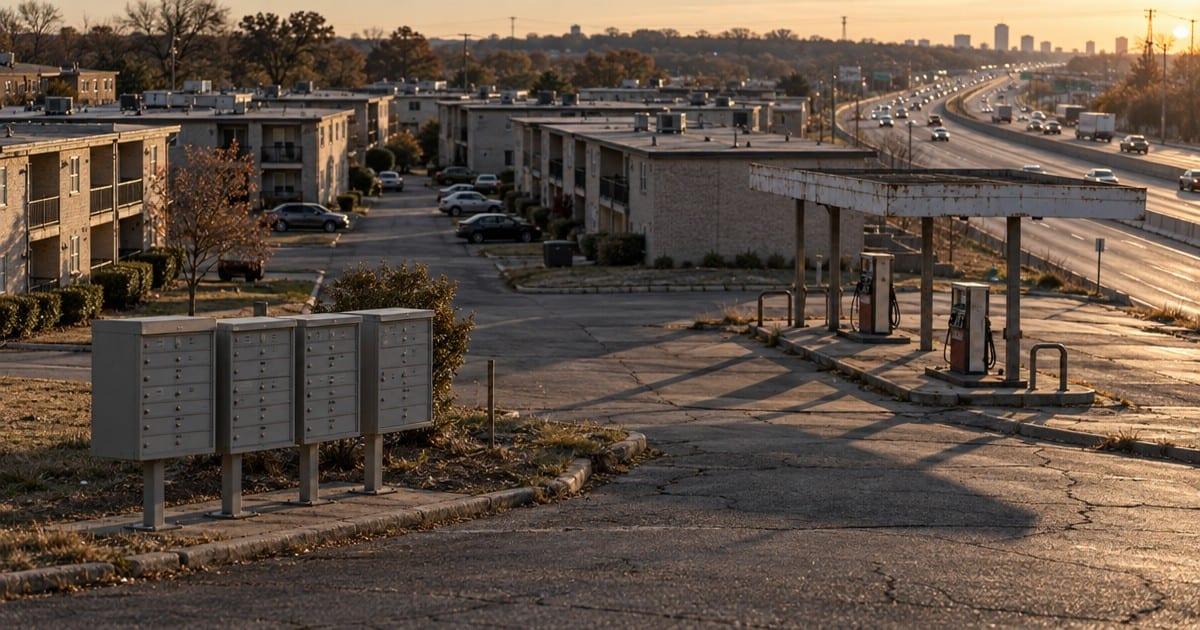
Fulton County, Georgia—the same jurisdiction that produced Fani Willis's presidential indictment over questioning the 2020 election—has now told two of its own voters that their apartment is a gas station. Not a clerical typo. Not a database glitch to be corrected with a phone call. A letter declaring that the address where these citizens sleep, raise families, and receive mail does not exist because a gas station stands there instead.
Two Sandy Springs residents received that letter. Their crime? Being registered voters in a county whose election apparatus now faces 55,000 voter challenges dumped in January. County officials placed 7,000 Fulton County voters on a challenged list, and those voters are expected to prove their eligibility at hearings—some scheduled for Election Day itself.
This is the same political machine that spent years accusing Republicans of voter suppression. Now it is manufacturing a system where a citizen can be challenged without a knock on the door, without a phone call, and without a single obligation to make sure the notice actually reaches the person. A letter can miss a mailbox, and a voter can walk into a polling place on November 3rd to discover they are a defendant in an administrative hearing they never knew existed.
President Trump addressed exactly this when he announced federal monitors heading to Georgia. He did not send them to audit paper. He sent them to make sure nobody stops the vote "in the middle of the night because there's a water main break or something along those lines." The media and activist class mocked that warning as paranoid. Then Fulton County proved it wasn't.
Fani Willis, meanwhile, made her own discovery. A single voter registration bearing her name at Trump Tower is "really actually quite upsetting" to her. One registration with her name in Manhattan is an outrage. But thousands of her own constituents being told they live at gas stations? That's just election administration.
"Her office tells citizens they live at a gas station while she demands charges over a single registration bearing her name."
The gas-station letter is not an isolated mistake. It is a preview of how Fulton County intends to run November 3rd. If a voter can be challenged over a phantom address, then any voter can be challenged over anything—a signature, a middle initial, a hyphen. When 55,000 challenges come in at once, the goal isn't accuracy. The goal is workload. Overwhelm the system. Schedule hearings on Election Day. Tell people they can't vote until they prove they exist.
Trump's monitors are there to watch the count, but more importantly, they are there to watch the process. A water main break. A power outage. A mysterious emergency that requires the polls to close early. That's how elections get stolen—not with paper ballots, but with procedural chaos that only benefits one side.
Any Georgia voter who finds a challenged status on their record should not leave the polls without demanding a provisional ballot and a receipt. The count must happen in the light. The question Fani Willis should answer under oath is simple: what is a legitimate address? Her own county just told two voters their apartments are a gas station. That is the real story from inside the Georgia election machine.
Patriots in Georgia and beyond should be asking why the same office that built a presidential indictment on election questioning is now running an election system that cannot tell the difference between an apartment and a gas station. Is it incompetence, or is it the backup plan for when the votes don't come in the right way?
