
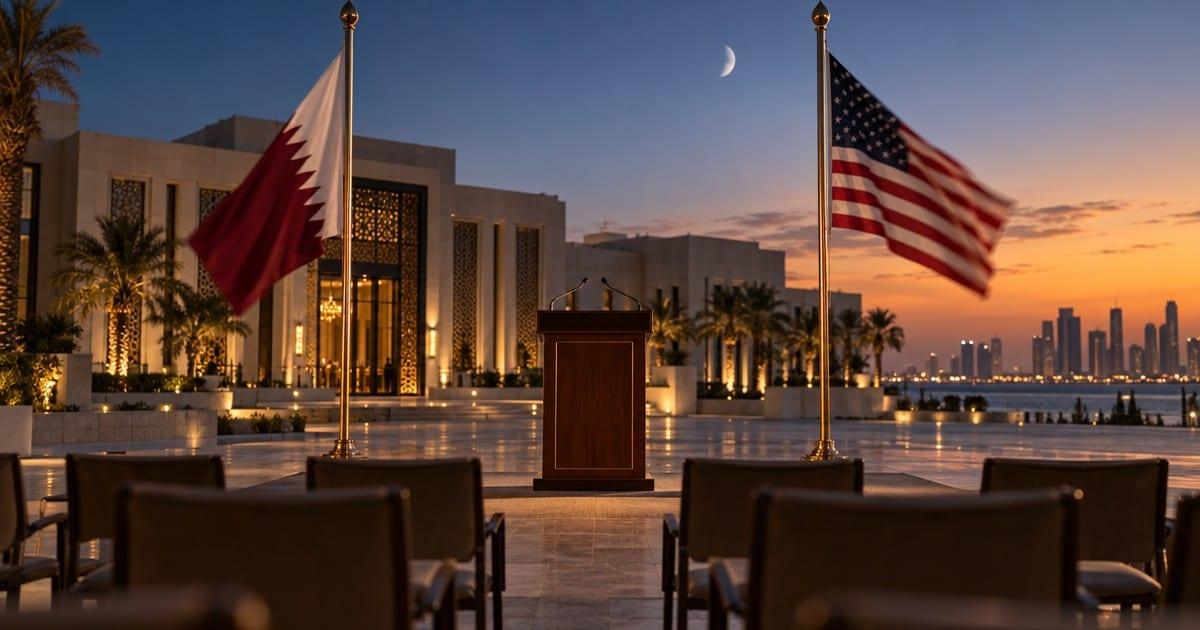
Qatari mediators presented Iran with a new draft deal in Tehran on Sunday, according to an official briefed on the negotiations, and Tehran is considering the proposal with a response expected by the end of the week. First Squawk, a financial news account with 567,000 followers, reported the development Wednesday morning, attributing it to the same official. The draft, as described, sets out a seven-day timeline addressing the concerns of both sides, with each party required to take daily confidence-building steps and the timeline potentially beginning early next week.
In a follow-up post issued seconds after the first, First Squawk reported that several countries would act as guarantors of the deal, again citing an official. The account did not name which nations would serve in that role. The two posts, published roughly half a minute apart, together describe a structure that goes beyond a bilateral arrangement: a fixed calendar of reciprocal steps, backed by outside parties prepared to stand behind the terms.
The reporting spread quickly through Middle East-focused outlets. Iran International, citing Reuters, carried the same account Wednesday, describing Qatari mediators presenting Iran with the new draft in Tehran on Sunday and a response expected by week's end. The Times of Israel, in a report published alongside Israeli election coverage, stated that Qatari mediators presented Iran with a new draft deal on Sunday to end the war, which Tehran is considering and is expected to answer by the end of the week. The National also carried the claim in its Middle East live coverage under the heading that Qatari mediators had presented Iran with a deal to end the war, though the text of its item visible in the coverage concerned a separate statement by Emirati official Anwar Gargash that the UAE remains committed to dialogue amid regional uncertainty.
The details released so far sketch a tightly sequenced process. Under the description provided to First Squawk, the seven-day window would not be a period of open-ended negotiation but a structured countdown in which each side delivers a confidence-building measure every day. Such an arrangement, if accurate, would front-load visible gestures rather than leaving them to the end of the process, and would give guarantor nations defined points at which to assess compliance. None of those specifics — which countries would guarantee the deal, what the daily steps would consist of, or what would happen if a step were missed — has been made public in the accounts circulating Wednesday.
The claim arrives at a moment of intense regional maneuvering. The Times of Israel reported the same day that a Likud-led bloc leads the Israeli election count with fifty-four seats, short of a majority, with an Eisenkot-led bloc at forty-eight and Arab parties at eighteen — a result that leaves coalition arithmetic unsettled. The National's coverage paired the Iran deal claim with comments from Gargash on the UAE's commitment to dialogue, reflecting the broader Gulf interest in any arrangement that reduces regional escalation. Qatar's role as mediator places Doha at the center of those efforts, with Tehran receiving the draft directly and the response clock now running.
What is not yet established is whether the draft represents a breakthrough or an opening position. A response by the end of the week, as described, could take the form of acceptance, rejection or a counteroffer, and the reporting so far does not indicate which is expected. The guarantor framework, if confirmed, would be the more significant structural element: deals of this kind typically require outside parties willing to attach their credibility to compliance, and the involvement of several countries suggests a wider coalition than a single mediator could assemble alone.
The sequence of the reporting itself is worth noting for readers tracking the story. First Squawk published the headline claim at 08:04:10 GMT, the guarantor detail at 08:04:20, and the seven-day timeline at 08:04:37 — three posts building the picture in under thirty seconds, all attributed to an official briefed on the negotiations. Iran International, The Times of Israel and The National subsequently carried versions of the same claim, each crediting an official briefed on the talks, with Reuters identified by Iran International as the original source. The uniformity of the language across outlets, and the reliance on a single unnamed official, means the accounts are not independent of one another.
Next News Network could not independently verify the claim that Qatari mediators presented Iran with the draft deal, that several countries would act as guarantors, or that the draft sets a seven-day timeline with daily confidence-building steps.
Readers should treat the details as what is being alleged by an official briefed on the negotiations and relayed by the outlets named above, not as established fact. The identities of the guarantor nations, the content of the daily steps, and the terms covering each side's core concerns remain undisclosed in the reporting. Whether Tehran's response arrives by the end of the week, and whether it accepts the seven-day structure, are the questions that will determine whether the draft becomes an agreement or remains a proposal.
Our Take
The American public has watched three years of Middle East diplomacy produce headlines that outran outcomes, and this story deserves the same skepticism. What we have is one unnamed official, relayed through a financial wire account and picked up by outlets that are all citing the same source. That is not confirmation; it is repetition. The seven-day timeline and the guarantor framework are the kind of detail that makes a draft sound serious, but detail in a leak is not the same as detail in a signed document, and the countries supposedly standing behind this deal have not been named. Conservatives should insist on a simple standard before cheering: show us the guarantors, show us the daily steps, and show us what happens when Iran misses one. An agreement with no enforcement is a pause, and a pause with a seven-day clock is a public relations exercise dressed as diplomacy. If Qatar and its partners have genuinely built a structure that holds Tehran to daily, verifiable steps with outside nations on the hook, that is worth reporting and worth supporting. Until then, the responsible posture is patience, not a victory lap.
